
PM Surya Ghar Yojana Reaches 60 Lakh Families, Over 2.5 Lakh People Trained for Green Energy Jobs
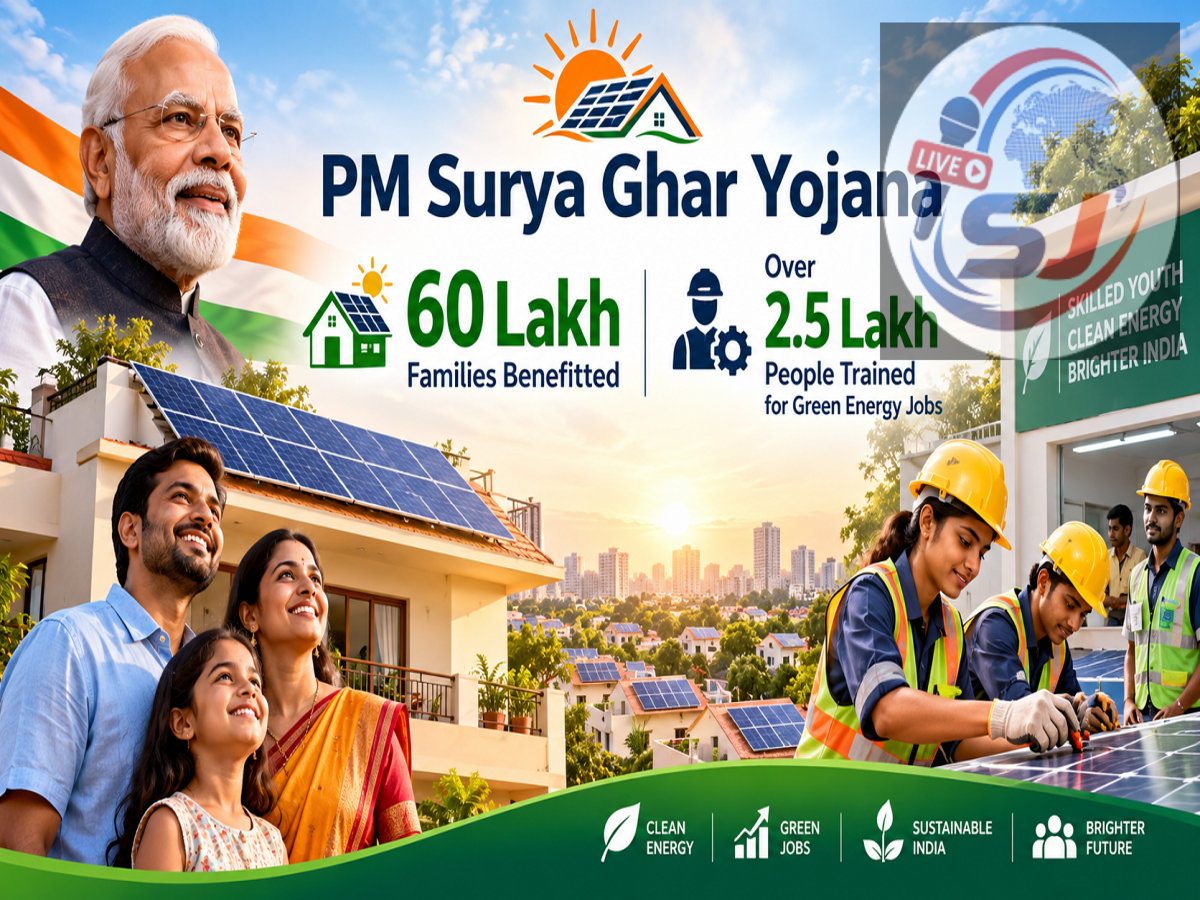
PM Surya Ghar Muft Bijli Yojana 2026: The central government's ambitious rooftop solar programme has reportedly crossed another major milestone, with more than 60 lakh households now covered under the initiative. The PM Surya Ghar Muft Bijli Yojana, introduced to promote affordable solar electricity, is steadily moving towards its target of reaching one crore households across India.
According to figures reported on October 7, 2026, the scheme has reached approximately 60% of its intended household target. More than 20.7 lakh participating families have reportedly recorded zero monthly electricity bills, while over 2.5 lakh individuals have received training for employment opportunities in the renewable energy sector.
The programme is not only helping households reduce electricity expenses but is also creating opportunities for solar technicians, local businesses, equipment suppliers and installation companies.
PM Surya Ghar Scheme Crosses 60 Lakh Household Milestone
The latest reported figures indicate that the PM Surya Ghar initiative has expanded rapidly across the country.
After crossing the 50 lakh household mark, the programme reportedly added another 10 lakh households within approximately two months.
This acceleration reflects growing consumer interest in rooftop solar systems, supported by government subsidies, digital registration facilities and simplified installation procedures.
The central government's objective is to encourage one crore residential households to adopt rooftop solar electricity.
Reaching 60 lakh families represents significant progress towards that goal, although the number of households covered should not be confused with the number of completed solar installations.
Solar Installation Pace Improves Significantly
One of the programme's most notable developments is the reported improvement in the speed at which households are being added.
During the initial phase, it reportedly took 118 days to reach the first one lakh households.
The latest figures suggest that an equivalent number of additional households can now be covered in approximately six days.
This improvement has been supported by greater digital integration, streamlined approval procedures and an expanding network of registered installation vendors.
Faster processing can make rooftop solar adoption more convenient for households that previously faced lengthy administrative procedures.
More Than 50 Lakh Rooftop Solar Systems Installed
Launched on February 13, 2024, the PM Surya Ghar Muft Bijli Yojana has an approved financial allocation of ₹75,021 crore.
According to the supplied figures, 50,99,781 rooftop solar systems have been installed under the programme.
These installations have collectively contributed approximately 17,855.3 megawatts of decentralised solar power capacity.
The expansion comes alongside broader growth in India's renewable energy sector.
The report states that India's total solar capacity has increased from approximately 3 gigawatts in 2014 to more than 168 gigawatts in 2026.
Residential rooftop installations are an important part of this transition because they allow electricity generation closer to the point of consumption.
Over 2.5 Lakh People Receive Green Energy Training
The PM Surya Ghar programme is also contributing to skill development and employment opportunities.
More than 2.5 lakh individuals have reportedly completed training through institutions and organisations associated with the renewable energy industry.
These include the National Institute of Solar Energy (NISE), National Power Training Institute (NPTI) and Skill Council for Green Jobs.
Approximately one lakh trainees are reported to have received training as solar photovoltaic technicians.
Such professionals play important roles in rooftop solar installation, electrical connections, equipment testing, maintenance and system performance monitoring.
The programme has also encouraged the expansion of local solar service businesses.
According to the report, more than 37,000 vendors are now registered across India.
Government projections suggest that the scheme could eventually support approximately 17 lakh direct and indirect employment opportunities across manufacturing, installation, logistics, maintenance and related industries.
These employment figures represent projections rather than confirmed jobs already created.
Government Transfers ₹33,642 Crore in Solar Subsidies
Financial assistance remains one of the central features of the PM Surya Ghar Muft Bijli Yojana.
According to the latest reported figures, the government has transferred approximately ₹33,642 crore in subsidies directly into beneficiaries' bank accounts.
The subsidy mechanism is designed to reduce the initial financial burden associated with installing rooftop solar panels.
The programme also provides for subsidy processing within 15 days of commissioning, subject to the applicable verification and approval requirements.
For eligible residential installations, central financial assistance generally follows the approved capacity-based structure.
| Rooftop Solar Capacity |
Central Subsidy |
|---|---|
| 1 kW |
₹30,000 |
| 2 kW |
₹60,000 |
| 3 kW or above |
Up to ₹78,000 |
The maximum central subsidy for a standard eligible residential household is generally ₹78,000. Actual eligibility depends on programme rules and the installation category.
Approval Process Simplified for Rooftop Solar Installations
The Ministry of New and Renewable Energy has introduced measures intended to reduce delays in residential solar installation.
According to the report, the requirement for a separate technical feasibility examination has been removed for eligible systems up to 10 kW.
The national rooftop solar portal has also been integrated with more than 80 electricity distribution companies.
This digital connectivity allows applicants to complete several stages of the process online, including registration, vendor selection, application tracking and subsidy-related procedures.
However, installation requirements, inspections and grid connection arrangements must still comply with applicable electricity regulations.
Collateral-Free Solar Loans Available for Up to 10 Years
Households concerned about the upfront installation cost may also explore financing options.
The scheme facilitates access to collateral-free loans through participating financial institutions, including options accessible through the JanSamarth portal.
According to the supplied report, concessional interest rates may be available from approximately 5.75%, with repayment periods extending up to 10 years.
The actual interest rate, loan amount, repayment tenure and approval conditions depend on the participating lender and the applicant's eligibility.
Families should compare the total installation cost, expected electricity savings, subsidy entitlement and loan repayment obligations before proceeding.
More Than 20.7 Lakh Families Report Zero Electricity Bills
One of the most significant reported benefits of the rooftop solar programme is the reduction in household electricity expenses.
According to the October 7 report, more than 20.7 lakh participating households have recorded zero monthly electricity bills.
Solar panels generate electricity during daylight hours, allowing households to use solar power instead of relying entirely on grid electricity.
Under applicable net-metering arrangements, eligible consumers may also export surplus electricity to the local distribution network.
The resulting bill savings depend on solar generation, household consumption, local electricity tariffs and state-specific net-metering regulations.
A rooftop solar installation does not guarantee a permanently zero electricity bill for every household. Fixed charges and other applicable fees may still be payable.
How to Apply for PM Surya Ghar Muft Bijli Yojana
Interested residential electricity consumers can begin the application process through the official government portal.
-
Visit pmsuryaghar.gov.in.
-
Register using the required consumer and electricity connection details.
-
Submit the rooftop solar application.
-
Select an eligible registered solar installation vendor.
-
Complete the installation and applicable inspection procedures.
-
Follow the prescribed commissioning and subsidy application process.
-
Track subsidy approval and payment through the portal.
Applicants should confirm their eligibility, available rooftop space, electricity consumption and installation costs before selecting a system.
PM Surya Ghar Yojana 2026: A Growing Opportunity for Households and Workers
The reported progress of PM Surya Ghar Muft Bijli Yojana highlights the expanding role of residential solar energy in India's electricity sector.
With more than 60 lakh households covered, over 50 lakh rooftop systems installed and substantial investments in green energy skills, the initiative is contributing to both household energy savings and the development of the solar industry.
Its long-term success will depend on installation quality, reliable grid connectivity, timely subsidy payments, maintenance support and continued consumer participation.
For households considering rooftop solar, the scheme offers an opportunity to reduce electricity expenses through government-supported installation and financing options, while also supporting India's transition towards cleaner energy.
Editor's note: The scheme statistics and reported milestones are based on the supplied October 7, 2026 article and have not been independently verified against a current government dashboard. Subsidies, loan terms and eligibility should be checked through the official PM Surya Ghar portal before applying.