PM Surya Ghar: 2.20 Lakh Consumers Can Apply for Rooftop Solar, Check Subsidy and Process
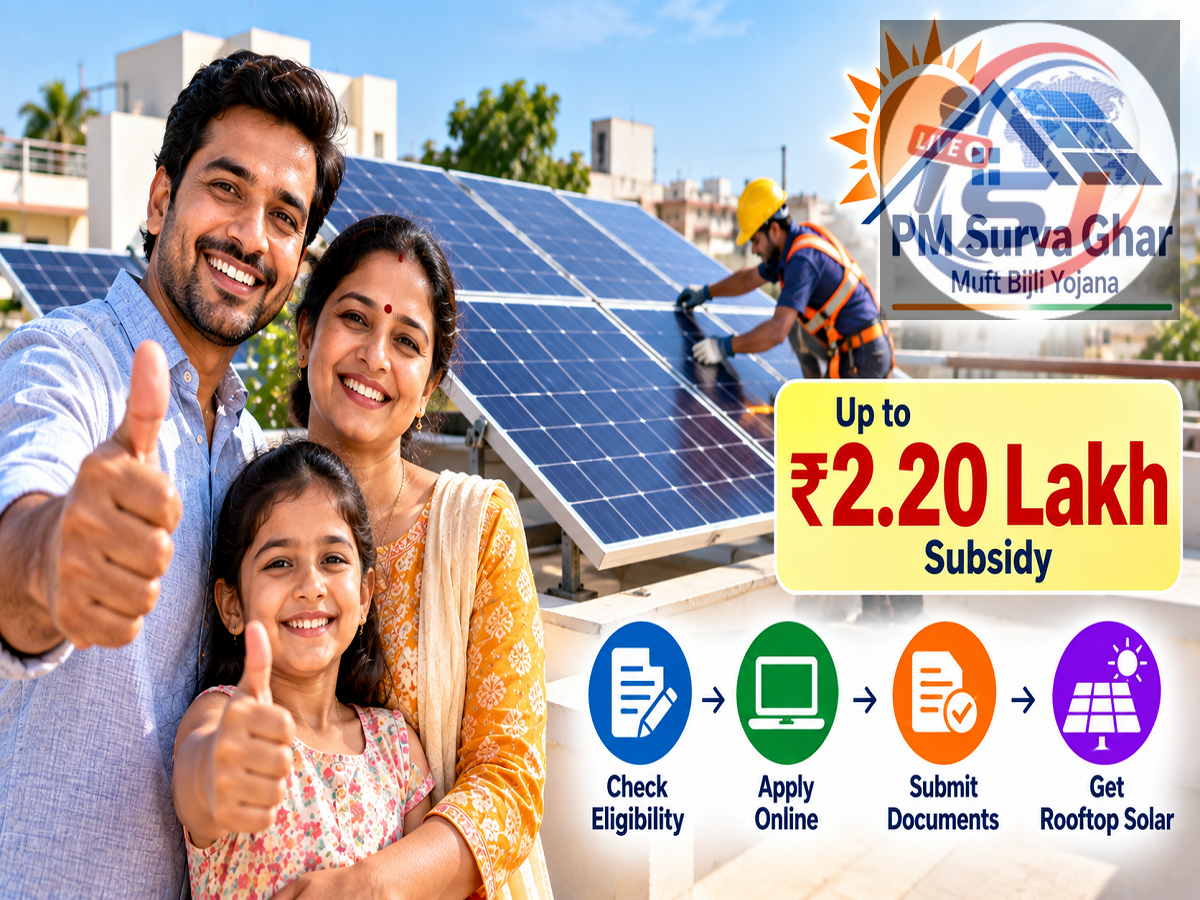
Delhi residents looking to reduce their electricity bills through rooftop solar have a new opportunity under the PM Surya Ghar and Delhi solar programmes. The Delhi government's official solar portal is accepting applications for rooftop solar installations, with the state scheme operating on a first-come, first-served basis for the first 2.20 lakh eligible consumers.
The initiative works alongside the Central Government's PM Surya Ghar: Muft Bijli Yojana, which provides financial assistance for eligible residential rooftop solar systems.
However, households should understand what “Muft Bijli” means before applying. The scheme does not guarantee that every household will receive a completely free solar system or permanently have a zero electricity bill. Savings depend on the size of the rooftop system, electricity generation, household consumption, net-metering arrangements and applicable subsidies.
How Much Central Subsidy Is Available?
Under the current PM Surya Ghar subsidy structure, residential households can receive ₹30,000 per kW for capacity up to 2 kW and an additional ₹18,000 for the third kW.
This means the Central Financial Assistance works out to:
| Rooftop Solar Capacity | Central Subsidy |
|---|---|
| 1 kW | ₹30,000 |
| 2 kW | ₹60,000 |
| 3 kW | ₹78,000 |
| Above 3 kW | Central subsidy capped at ₹78,000 |
The Delhi government's official solar portal confirms this subsidy structure. The appropriate rooftop capacity depends partly on the household's electricity consumption.
For example, the portal indicates that households consuming up to around 150 units per month may consider a 1-2 kW system, while those consuming roughly 150-300 units may consider a 2-3 kW system.
Is a 3-kW Solar System Completely Free?
Consumers should be cautious with claims suggesting that every Delhi household can simply get a 3-kW rooftop solar system at no cost.
Under the standard Central Government PM Surya Ghar framework, the subsidy for a 3-kW residential system is capped at ₹78,000.
Delhi also has its own solar-policy incentives and implementation models. The actual amount a consumer needs to pay can therefore depend on the installation model selected, system cost, applicable Central and Delhi benefits and other programme conditions.
Applicants should use the official Delhi solar portal's subsidy calculator or check the applicable model before assuming that their installation will have zero upfront cost.
Who Can Apply for PM Surya Ghar?
PM Surya Ghar is a demand-driven national rooftop solar programme.
Residential consumers with a grid-connected electricity connection from their local DISCOM can apply for benefits under the scheme, subject to the programme's eligibility requirements.
The Delhi programme is currently being offered on a first-come, first-served basis to the first 2.20 lakh eligible consumers, according to the official Delhi Solar Portal.
The portal also states that the Delhi Solar Muft Bijli Yojana is scheduled to close on February 28, 2027, subject to the scheme's terms and availability.
Can Rooftop Solar Really Make Your Electricity Bill Zero?
It is possible for some households to receive a zero electricity bill in certain billing periods, but this outcome is not guaranteed for everyone.
Solar panels generate electricity during daylight hours. A household can consume this electricity directly, while eligible surplus generation can be exported to the grid under the applicable metering arrangement.
Whether the final electricity bill becomes zero depends on several factors, including solar-system capacity, sunlight availability, household consumption, electricity tariff and the applicable net-metering or billing mechanism.
Official national data released in 2026 showed that many PM Surya Ghar beneficiaries had reported zero electricity bills during at least some billing periods. But that does not mean every participating household will automatically receive a zero bill every month.
What Documents May Be Required?
Applicants should keep their electricity-consumer details and identity information ready before beginning the application.
Depending on the application route and stage of processing, information or documents may include the electricity consumer account number, Aadhaar-linked details, mobile number, bank-account information and details related to the property or rooftop.
Additional documentation may be requested by the DISCOM or implementing agency during verification.
Consumers should follow the document requirements displayed on the official application portal rather than uploading personal documents to unofficial websites.
How to Apply for Rooftop Solar
Delhi residents can begin through the official Delhi Solar Portal or the national PM Surya Ghar application system.
The general process involves registering with the relevant electricity-consumer information, selecting the appropriate DISCOM and completing the rooftop solar application.
The consumer then proceeds through the applicable approval process.
For installations seeking the Central Government subsidy under PM Surya Ghar, Delhi's official portal states that consumers must choose a vendor empanelled with the PM Surya Ghar portal to claim the Central subsidy.
After installation and the required inspection or commissioning formalities, the applicable metering and subsidy processes are completed according to scheme rules.
Choose the Vendor Carefully
Consumers should not hand over money to an unknown installer simply because the company claims to be associated with PM Surya Ghar.
For consumers opting for PM Surya Ghar, the Delhi Solar Portal specifically states that choosing a vendor empanelled under the national programme is mandatory for claiming the Central Government subsidy.
Delhi's portal provides vendor information for consumers served by electricity distribution companies and utilities including BRPL, BYPL, TPDDL and NDMC.
Applicants should confirm the vendor's current empanelment status before signing an installation agreement.
Maintenance Is Also Covered Under the Programme
Installing solar panels is only the first part of rooftop solar ownership. Maintenance is also important for long-term electricity generation.
Delhi's official portal states that under PM Surya Ghar, the vendor installing the rooftop solar system is responsible for cleaning and comprehensive operation and maintenance for five years, including rectification of covered faults without an additional financial burden on the consumer.
Consumers should retain their warranties and installation documents.
The Delhi portal notes that solar panels typically come with long-term warranties, while inverter warranties are generally shorter.
PM Surya Ghar Has Expanded Rapidly Nationwide
The national programme was launched in February 2024 with the objective of bringing rooftop solar to one crore households.
Official figures released in August 2026 showed that more than 50.06 lakh households had already benefited from rooftop solar installations under PM Surya Ghar.
The programme carries a total national outlay of ₹75,021 crore.
The rapid expansion reflects growing adoption of residential rooftop solar, but households should still calculate whether the available rooftop area and expected electricity generation suit their individual requirements.
Beware of Fake Solar Subsidy Offers
The popularity of government subsidy programmes can also attract fraudulent websites and agents.
Consumers should avoid anyone promising guaranteed “free solar panels” in exchange for an advance payment or asking for sensitive banking information over WhatsApp or phone calls.
Never share your OTP, UPI PIN, debit-card PIN, CVV or internet-banking password with a solar vendor or someone claiming to process the subsidy.
Applications and vendor verification should be completed through authorised government and DISCOM channels.
What Delhi Residents Should Know Before Applying
The rooftop solar opportunity can significantly reduce electricity expenses for suitable households, but consumers should not base their decision solely on advertisements promising a completely free 3-kW system or a guaranteed zero electricity bill.
The Delhi government's official portal currently states that the state programme is available on a first-come, first-served basis to the first 2.20 lakh eligible consumers. Meanwhile, under PM Surya Ghar, the standard Central subsidy reaches ₹78,000 for a 3-kW or larger eligible residential installation.
The final cost and savings will depend on the applicable Delhi incentives, installation model, rooftop conditions and electricity consumption.
Consumers interested in applying can use the official Delhi Solar Portal and check the Central subsidy structure before choosing an installer.
Note: Subsidies, eligibility, application limits and solar-policy incentives can be revised. Applicants should check the latest Central Government, Delhi Government and DISCOM rules before paying a vendor or committing to an installation.