
Petrol Diesel Sale Limits: Government Asks Private Fuel Retailers to Remove Purchase Caps, Says Report
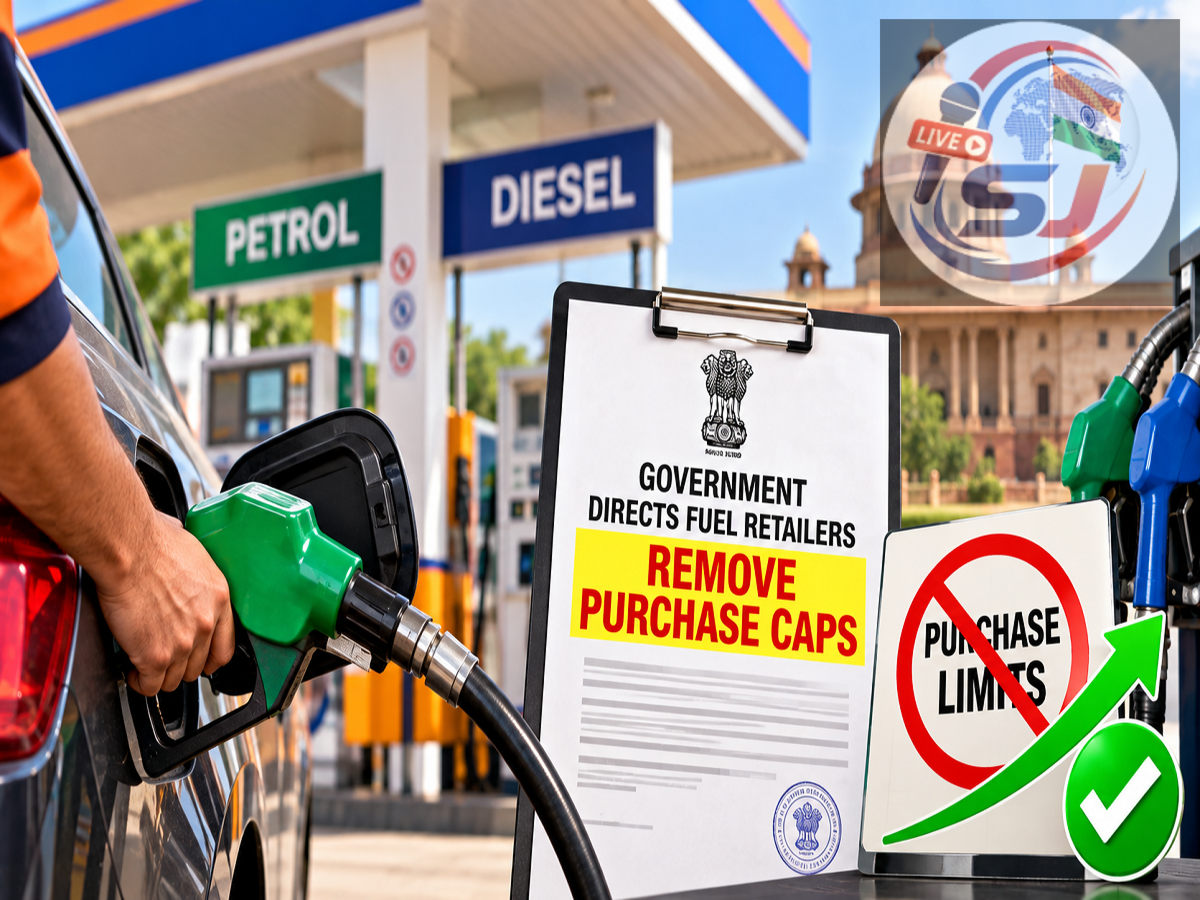
The central government is moving to address restrictions reportedly imposed on petrol and diesel purchases at some privately operated fuel outlets in India. Petroleum Secretary Neeraj Mittal has said fuel retailers should not impose such sales limits and that the government will engage with the companies concerned to have the restrictions removed, according to the report.
The issue emerged after some private fuel retailers reportedly began restricting the quantity of petrol or diesel that individual customers could purchase at their outlets.
The restrictions have been linked to financial pressure on private retailers at a time when global energy markets are facing uncertainty and companies are reportedly experiencing losses from selling fuel at prevailing domestic retail prices.
The development is important for motorists and commercial vehicle operators because purchase caps can create difficulties for customers requiring larger quantities of fuel.
Why Were Petrol and Diesel Purchase Limits Introduced?
According to the report, private fuel retailers, including outlets associated with Reliance Industries' fuel retail operations and Nayara Energy, had introduced restrictions on fuel sales at some locations.
The reported reason was the financial pressure created by the gap between prevailing retail prices and market-linked fuel costs.
Global energy markets have faced considerable volatility amid geopolitical tensions in West Asia, putting pressure on crude oil and other energy prices.
When the cost of procuring or producing fuel rises sharply but retail prices do not increase proportionately, fuel retailers can face pressure on their margins.
What Did Petroleum Secretary Neeraj Mittal Say?
Petroleum Secretary Neeraj Mittal said that companies should not be permitted to impose such restrictions on fuel sales, according to the report.
The government intends to discuss the matter with the companies concerned and ask them to remove the sales limits.
This does not mean that every petrol pump across India currently has a fuel-purchase restriction. The issue concerns limits reportedly introduced by certain private retailers or at specific outlets.
Customers should therefore avoid assuming that a single nationwide purchase cap currently applies to petrol and diesel.
What Are the Reported Diesel Purchase Limits?
The restrictions appear to differ depending on the private retailer and location.
According to reports cited in the article, customers at some Jio-bp outlets have faced a maximum diesel purchase limit of around 50 litres per customer per day.
At some Nayara Energy outlets, the reported limit ranges from approximately 70 litres to 200 litres, depending on the location.
These figures are reported outlet-level limits and should not be interpreted as a government-mandated nationwide cap.
The Petroleum Secretary's comments indicate that the government wants such restrictions removed rather than formalised as a general fuel-purchase rule.
Why Do Purchase Caps Matter?
A limit of 50 litres may not have a major effect on someone filling a typical passenger car, but the situation can be different for commercial users.
Trucks, buses, agricultural vehicles and other diesel-intensive operations can require significantly larger quantities.
Transport operators and businesses may therefore face inconvenience if they are unable to purchase the required amount of diesel at a particular outlet.
Removing the restrictions would help restore normal retail availability at affected fuel stations.
West Asia Crisis Puts Pressure on Energy Companies
The wider issue is linked to volatility in international energy markets.
The report says petroleum companies are facing pressure while selling petrol, diesel and LPG amid the ongoing crisis in West Asia.
Petroleum Minister Hardeep Singh Puri has indicated that concerns arising from the geopolitical situation have not disappeared completely.
At the same time, he said Indian consumers have been largely protected from the full impact of the sharp increase in international energy costs, according to the report.
India imports a large proportion of its crude oil requirements, which means major changes in global oil prices can have significant implications for the country's energy costs.
Government Highlights Need for a Broader Energy Mix
The Petroleum Secretary also used the current situation to underline a wider energy-security issue.
According to the report, Neeraj Mittal said one of the lessons from the crisis is that India should not become overly dependent on a single fuel source for its energy requirements.
He highlighted the importance of increasing the contribution of natural gas to India's energy mix.
A more diversified energy system can potentially reduce exposure to disruptions affecting any single commodity, although developing such a mix requires infrastructure, investment and long-term policy measures.
Will Petrol and Diesel Prices Change Because of This?
The reported move to remove purchase restrictions does not itself mean that petrol and diesel retail prices will automatically increase or decrease.
Fuel availability and fuel pricing are related but separate issues.
Retail petrol and diesel prices are influenced by international crude costs, exchange rates, taxes, refining and transportation costs, and pricing decisions by oil marketing companies.
Therefore, motorists should not interpret the removal of a quantity restriction as an announcement of a new petrol or diesel price.
Are Fuel Purchase Limits Being Removed Immediately?
The Petroleum Secretary's comments indicate that the government intends to engage with private retailers and ask them to remove the restrictions.
However, customers should distinguish this policy position from actual implementation at every affected outlet.
If an individual petrol pump currently has a quantity restriction, customers may need to check with that outlet to determine whether the cap has already been withdrawn.
Implementation could depend on communication between the authorities, fuel companies and individual retail networks.
What Petrol and Diesel Customers Should Know
The key point is that the reported petrol and diesel purchase restrictions are not described as a new nationwide government rule.
Instead, certain private fuel retailers reportedly introduced limits amid financial pressure caused by challenging market conditions.
The government has now indicated that companies should not impose such restrictions and will be asked to remove them.
Reports have cited a diesel limit of around 50 litres per customer per day at some Jio-bp outlets, while some Nayara Energy locations reportedly imposed limits ranging from 70 to 200 litres.
Motorists and commercial operators encountering a fuel-purchase restriction should check the latest position directly at the concerned outlet, particularly as companies respond to the government's instructions.