
Petrol-Diesel Price Update: Windfall Tax Reduced, Know If Fuel Will Get Cheaper
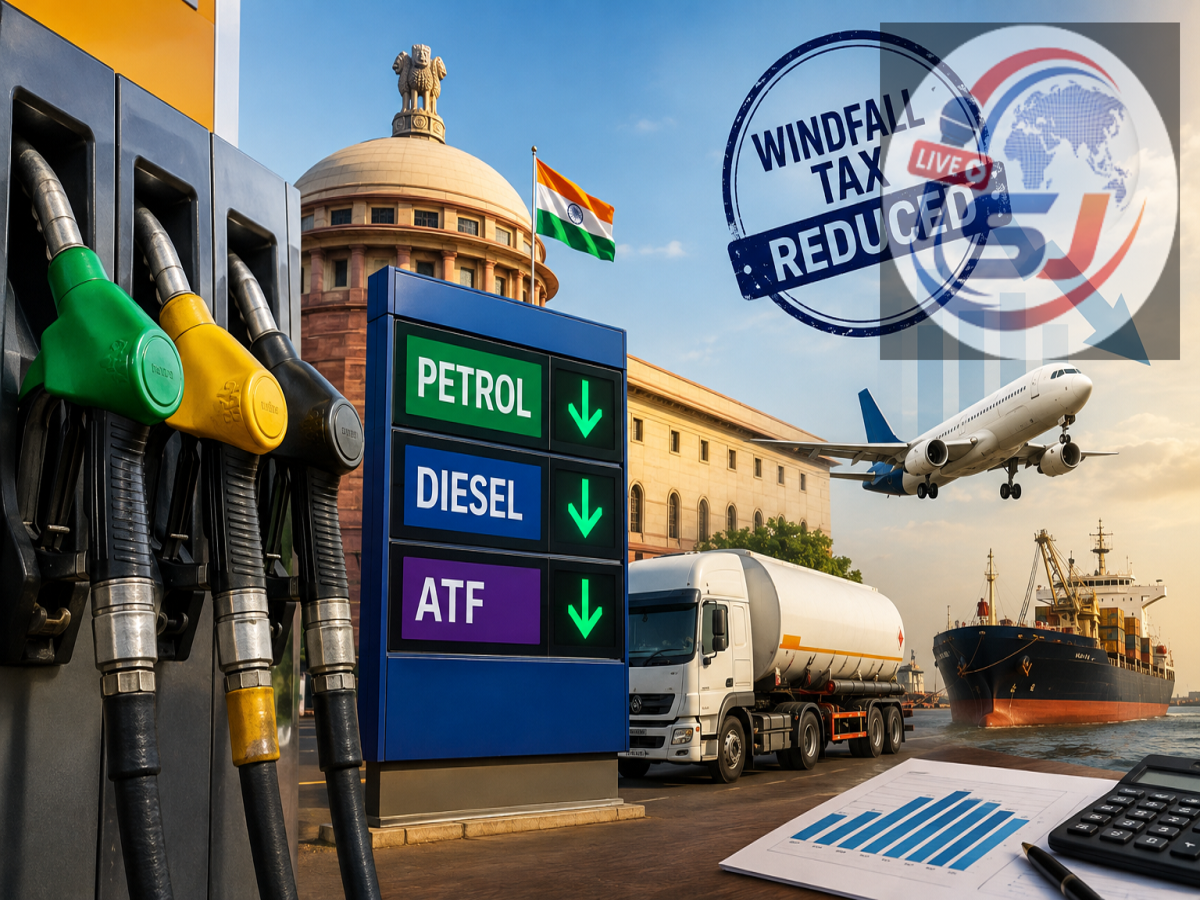
Petrol-Diesel Windfall Tax Update: The central government has announced a reduction in windfall tax on exports of petrol, diesel and aviation turbine fuel (ATF), revising the levy amid elevated international crude oil prices. The decision was announced around midnight as India entered Independence Day on August 15, 2026.
Under the revised rates, the export duty on diesel has been reduced by ₹1.50 per litre, while the levy applicable to petrol has been brought down to zero. The tax on exports of aviation turbine fuel has also been lowered.
The decision is important for oil producers and refiners, but motorists should not expect an automatic reduction in petrol or diesel prices at fuel stations. The levy being revised applies to the relevant petroleum sector and exports rather than directly determining the retail rates paid by consumers.
Petrol Export Levy Brought Down to Zero
The biggest change announced by the government concerns petrol.
The applicable duty on petrol has been reduced by ₹3.50 per litre, bringing the rate down from ₹3.50 to zero.
This effectively removes the levy on petrol exports under the latest revision.
Diesel has received a smaller reduction. The duty applicable to diesel exports has been cut from ₹25.50 per litre to ₹24 per litre, a decrease of ₹1.50.
The changes are expected to provide some relief to refiners exporting petroleum products to overseas markets.
ATF Export Tax Reduced by ₹2.50 Per Litre
The government has also lowered the levy on aviation turbine fuel, commonly known as ATF or jet fuel.
The applicable rate has been reduced from ₹22 per litre to ₹19.50 per litre, resulting in a cut of ₹2.50 per litre.
The latest revisions can be summarised as follows:
| Fuel | Earlier Levy | Revised Levy | Reduction |
|---|---|---|---|
| Petrol | ₹3.50/litre | Nil | ₹3.50/litre |
| Diesel | ₹25.50/litre | ₹24/litre | ₹1.50/litre |
| ATF | ₹22/litre | ₹19.50/litre | ₹2.50/litre |
The changes relate to the government's windfall-tax framework and should not be confused with a reduction in the retail price of these fuels.
What Is a Windfall Tax?
A windfall tax is generally imposed when companies in certain sectors earn unusually high profits because of extraordinary market conditions rather than a sudden improvement in their underlying business operations.
Oil and energy companies can experience such gains when international crude oil or petroleum-product prices rise sharply.
India initially introduced its windfall-tax mechanism in July 2022, when elevated global energy prices generated substantial margins for some domestic oil producers and refiners.
The government subsequently revised the levies several times in response to movements in global crude oil prices and refining margins.
According to the information accompanying the latest revision, the levy had been brought back earlier in 2026 following disruptions in crude oil supplies amid geopolitical tensions involving Iran and the United States.
Why Has the Government Reduced the Levy Now?
The latest decision comes at a time when international energy markets remain volatile.
Geopolitical tensions and concerns about crude oil supplies have kept global prices elevated, with benchmark Brent crude reported around $87 per barrel.
Changes in crude prices can significantly affect the profitability of companies involved in oil production and refining. Refining margins—the difference between the cost of crude oil and the value of products produced from it—are another factor considered while reviewing such levies.
The government periodically reassesses the applicable rates so that the tax burden reflects prevailing international oil prices and industry margins.
Will Petrol and Diesel Become Cheaper for Consumers?
For most motorists, this is the most important question. The answer is that the windfall-tax reduction does not automatically mean cheaper petrol or diesel at filling stations.
The latest change concerns levies linked to the petroleum industry and fuel exports. It is not a direct reduction in the retail price of petrol or diesel sold to consumers.
Retail fuel prices in India are influenced by several different components, including the underlying fuel price, central and state taxes, dealer commissions and other applicable costs.
Therefore, a ₹3.50 reduction in the petrol-related windfall levy should not be interpreted as a ₹3.50 cut in the price motorists pay per litre at a petrol pump.
Similarly, the ₹1.50 reduction announced for diesel does not mean diesel will automatically become ₹1.50 cheaper for consumers.
Which Companies Could Benefit?
The immediate financial impact is more relevant for oil producers and refiners whose operations fall under the windfall-tax framework.
Large energy companies involved in crude production and exports of refined petroleum products can be affected by changes in these levies.
When the government lowers an export levy, eligible refiners may retain a larger portion of their export earnings, depending on prevailing international prices and refining margins.
The actual impact on individual companies, however, depends on their production levels, export exposure, refining economics and other business factors.
Why International Crude Prices Matter for India
India depends heavily on imported crude oil to meet its energy requirements. Consequently, major changes in global oil prices can affect the country's import bill, inflation outlook and broader economy.
International crude prices can move because of geopolitical conflicts, production decisions by oil-exporting countries, global economic growth, sanctions, supply disruptions and changes in demand.
The rupee-dollar exchange rate is another important factor because international oil transactions are largely conducted in US dollars.
A weaker rupee can make crude oil imports more expensive in domestic currency terms, while a stronger rupee can provide some relief.
Government Continues to Review Global Oil Market
The government reviews the applicable petroleum levies periodically, taking into account international crude oil prices and refining margins. This means the rates announced on August 15 are not necessarily permanent and could be revised again if global market conditions change substantially.
For consumers, however, the key distinction remains clear: a cut in windfall tax or export duty should not be treated as a direct cut in petrol and diesel pump prices.
The latest decision primarily changes the tax burden on relevant petroleum-sector operations. Motorists should continue to check the daily retail fuel rate applicable in their city rather than expecting an immediate reduction based solely on the windfall-tax announcement.