
Petrol Diesel Price Today, November 24: Fuel Rates Remain Steady Despite Crude Oil Volatility, Check City-Wise Prices
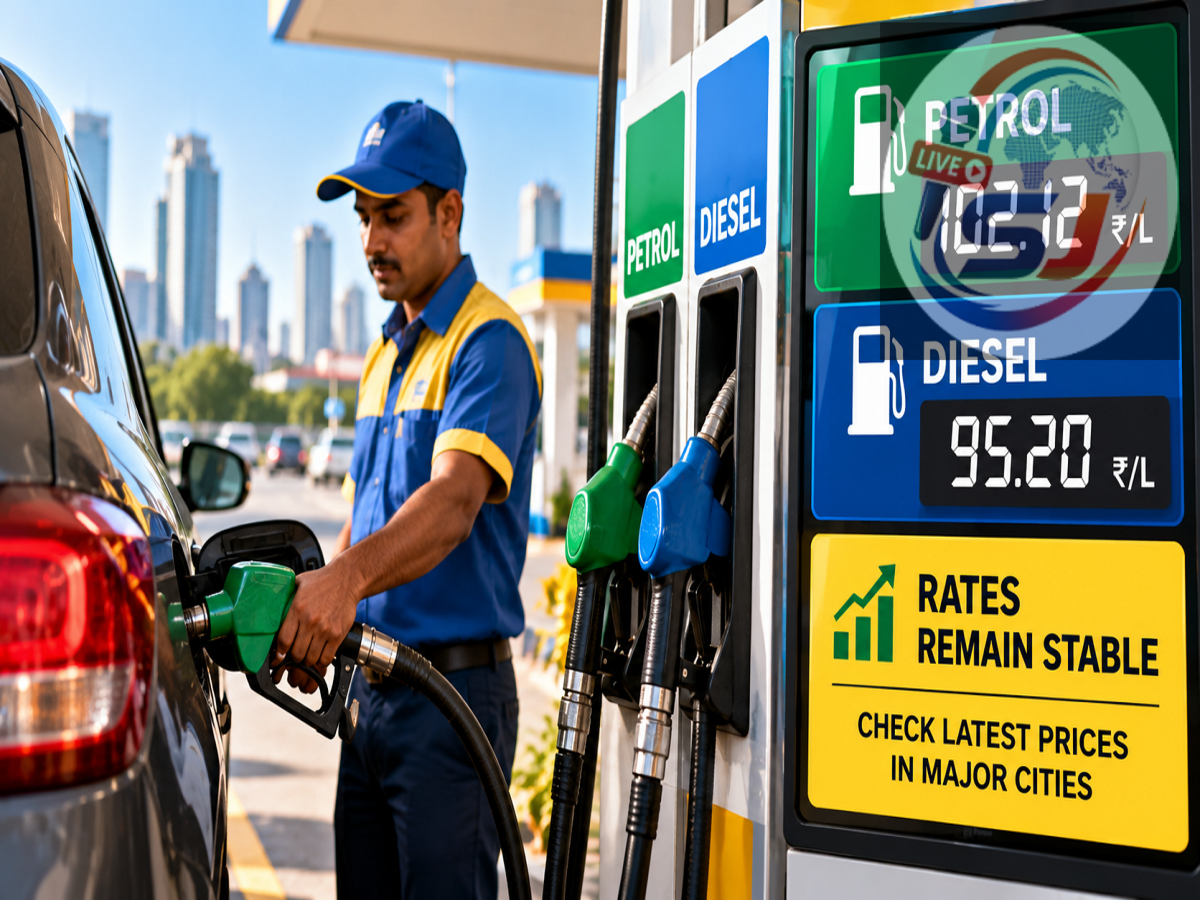
Petrol Diesel Price Today, November 24, 2026: Despite continued uncertainty in the international crude oil market, petrol and diesel prices have remained largely unchanged across major Indian cities. Rising geopolitical tensions involving the United States and Iran have raised concerns over global energy supplies, but domestic consumers have so far remained relatively protected from major fuel price increases.
Union Petroleum and Natural Gas Minister Hardeep Singh Puri attributed the stability in domestic fuel prices to government measures, including reductions in central excise duty and effective management of petroleum supplies.
Motorists in Delhi, Mumbai, Chennai, Kolkata, Bengaluru and Hyderabad continue to pay different rates for petrol and diesel due to variations in state-level taxation and other local charges.
Petrol and Diesel Prices Today Across Major Indian Cities
According to the latest rates reported on Tuesday, November 24, petrol is available at ₹102.12 per litre in New Delhi, while diesel is priced at ₹95.20 per litre.
Hyderabad has the highest petrol and diesel prices among the six major cities listed below, while Delhi continues to offer comparatively lower fuel rates.
| City |
Petrol Price (Per Litre) |
Diesel Price (Per Litre) |
|---|---|---|
| New Delhi |
₹102.12 |
₹95.20 |
| Mumbai |
₹111.21 |
₹97.83 |
| Chennai |
₹107.76 |
₹99.55 |
| Kolkata |
₹113.51 |
₹99.82 |
| Bengaluru |
₹110.44 |
₹99.56 |
| Hyderabad |
₹116.15 |
₹104.23 |
Fuel prices may vary slightly between petrol pumps depending on transportation expenses, dealer commissions and other applicable charges.
Government Measures Help Maintain Domestic Fuel Price Stability
Petroleum Minister Hardeep Singh Puri recently highlighted the government's efforts to minimise the impact of international energy market disruptions on Indian households.
During a visit to a petrol station in Indore, Madhya Pradesh, the minister explained that the central government had reduced excise duty on petroleum products on three occasions.
According to his remarks, these reductions were implemented in:
-
November 2021
-
May 2022
-
March 10, 2026
Puri claimed that these policy interventions helped restrict domestic fuel price increases to approximately 7%, compared with increases of 50% to 70% globally.
The minister credited the policies of Prime Minister Narendra Modi's government with reducing the impact of international fuel price shocks on Indian consumers.
Stable fuel prices are particularly important for households, transport operators, farmers and businesses because higher transportation costs can contribute to an increase in the prices of essential commodities.
Oil Marketing Companies Absorb International Price Pressure
The petroleum minister also acknowledged the contribution of India's major public-sector oil marketing companies in managing rising international crude oil costs.
These companies include Indian Oil Corporation Limited (IOCL), Bharat Petroleum Corporation Limited (BPCL) and Hindustan Petroleum Corporation Limited (HPCL).
According to Puri, these companies absorbed substantial financial pressure when international crude oil prices reportedly increased from around $60–65 to nearly $120 per barrel.
Their efforts, along with government taxation measures, helped limit the immediate impact of rising international oil prices on domestic consumers.
Brent Crude Trades Near $89 Per Barrel
International crude oil prices have stabilised following a decline of more than 3% during the previous trading session.
According to Bloomberg, the latest developments surrounding diplomatic efforts to resolve tensions between the United States and Iran have influenced global energy market sentiment.
The reported international crude oil benchmarks were:
| Crude Oil Benchmark |
Approximate Price |
|---|---|
| Brent Crude |
$89 per barrel |
| West Texas Intermediate (WTI) |
$80 per barrel |
Diplomatic discussions involving Qatar have raised hopes of easing geopolitical tensions in the Middle East. However, concerns surrounding oil transportation routes and potential supply disruptions continue to influence market movements.
Could Petrol and Diesel Prices Become Cheaper?
The future direction of domestic fuel prices will depend on several international and domestic developments.
The International Energy Agency reportedly expects the global oil market to move towards a supply surplus during the current quarter. Meanwhile, Goldman Sachs has indicated the possibility of excess crude oil supplies next year.
An increase in global oil availability could ease pressure on international crude prices. However, lower crude oil prices do not automatically result in cheaper petrol and diesel in India.
Domestic retail fuel prices are influenced by international crude oil rates, the rupee-dollar exchange rate, central excise duty, state-level VAT, refining expenses and dealer commissions.
Any significant change in these factors could influence future fuel prices.
How to Check Petrol and Diesel Prices in Your City
Consumers can check the latest petrol and diesel prices through the official websites and mobile applications of Indian Oil, Bharat Petroleum and Hindustan Petroleum.
Fuel prices under India's daily pricing mechanism are generally updated at 6 AM, although rates may remain unchanged for extended periods.
Motorists can also confirm the latest prices directly at their nearest petrol station before refuelling.
For now, the relative stability in domestic petrol and diesel prices offers some relief to consumers. However, international crude oil movements, geopolitical developments and government policy decisions will remain important factors in determining future fuel costs.