
Petrol Diesel Price Today, November 21: Crude Oil Near $92, Check Latest Fuel Rates in Major Indian Cities
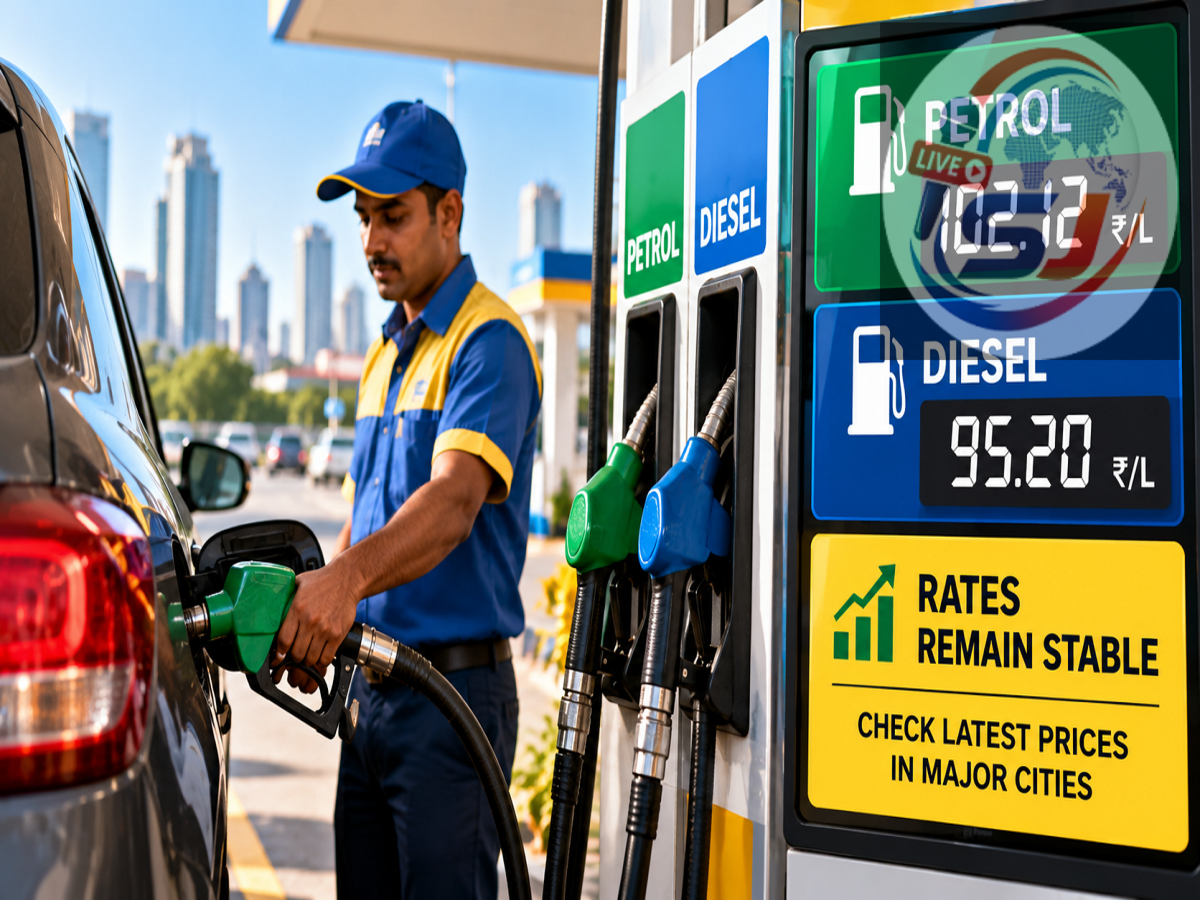
Petrol and Diesel Prices Today, November 21, 2026: Rising international crude oil prices have once again raised concerns among Indian consumers, particularly as geopolitical tensions continue to affect global energy markets. Despite the sharp increase in crude oil costs, retail petrol and diesel prices have remained relatively stable across several major Indian cities.
According to the latest fuel price information cited by Moneycontrol, petrol prices on November 21 range from ₹102.12 per litre in New Delhi to ₹116.15 per litre in Hyderabad among the six major cities covered in the report. Diesel prices range from ₹95.20 per litre in Delhi to ₹104.23 per litre in Hyderabad.
Meanwhile, India's crude oil imports increased significantly in October 2026, reflecting strong domestic energy requirements and continued demand from the country's transportation and industrial sectors.
Petrol and Diesel Prices Today: Latest Rates on November 21, 2026
Consumers planning to refuel their vehicles can check the reported petrol and diesel prices across six major Indian cities.
| City |
Petrol Price (Per Litre) |
Diesel Price (Per Litre) |
|---|---|---|
| New Delhi |
₹102.12 |
₹95.20 |
| Mumbai |
₹111.21 |
₹97.83 |
| Chennai |
₹107.76 |
₹99.55 |
| Kolkata |
₹113.51 |
₹99.82 |
| Bengaluru |
₹110.44 |
₹99.56 |
| Hyderabad |
₹116.15 |
₹104.23 |
Source: Moneycontrol, November 21, 2026. These are reported rates and have not been independently verified against oil marketing companies' live price updates.
Among the listed cities, New Delhi has the lowest petrol and diesel prices, while Hyderabad records the highest rates for both fuels.
Fuel prices differ between states and cities because of local taxes, transportation costs, dealer commissions, and other pricing factors.
International Crude Oil Prices Rise Amid Geopolitical Tensions
Global crude oil markets have experienced considerable volatility amid reported disruptions linked to the conflict involving the United States and Iran.
The original report states that the Strait of Hormuz, one of the world's most strategically important oil transportation routes, was closed because of the conflict. This claim has not been independently verified for this rewrite.
Any significant disruption to shipping through the Strait of Hormuz can create uncertainty in international oil markets because substantial quantities of crude oil and petroleum products pass through this route.
According to the report, international crude oil prices have climbed to approximately $92 per barrel, compared with around $67–68 per barrel before the crisis.
Such a substantial increase can create additional financial pressure on countries that depend heavily on imported crude oil.
India is particularly sensitive to international oil price movements because imported crude accounts for a large share of its petroleum requirements.
Government Measures Help Limit Domestic Fuel Price Volatility
Union Petroleum and Natural Gas Minister Hardeep Singh Puri has attributed the relative stability of domestic petrol and diesel prices to government measures aimed at reducing the impact of international energy market fluctuations.
According to the report, the central government reduced excise duty on petrol and diesel by ₹10 per litre.
The minister also highlighted efforts to maintain domestic fuel availability and manage supplies effectively.
He stated that some countries had experienced increases of approximately 50–60% in petrol and diesel prices during the global energy crisis.
In comparison, India had managed to keep retail fuel prices relatively stable, helping protect consumers from the full impact of rising international crude oil costs.
However, the stability of domestic fuel prices does not eliminate the broader economic challenges associated with expensive crude oil imports.
India's Crude Oil Imports Increase 4.7% in October
India's demand for imported crude oil remained strong in October 2026.
According to figures attributed to the Petroleum Planning and Analysis Cell (PPAC), crude oil imports reached approximately 23.31 million metric tonnes during the month.
This represented an increase of around 4.7% compared with September 2026.
On an annual basis, crude oil imports increased by nearly 11%, compared with approximately 21 million tonnes recorded in October 2025.
The increase highlights India's continuing dependence on imported energy resources to support transportation, manufacturing, electricity-related activities, and other sectors of the economy.
Higher import volumes can also increase the country's overall energy import bill, particularly when international crude oil prices remain elevated.
Petroleum Product Imports Decline While Exports Increase
Although crude oil imports increased, India recorded a decline in imports of refined petroleum products during October.
According to the figures cited in the report, petroleum product imports declined by approximately 2.8% compared with September.
On a year-on-year basis, imports of petroleum products were reportedly around 41% lower.
At the same time, exports of petroleum products increased by approximately 4.7%, reaching 5.36 million tonnes.
These developments indicate changing patterns in India's petroleum trade.
India operates several major oil refineries that process imported crude oil into petrol, diesel, aviation turbine fuel, and other petroleum products.
A portion of these refined products is supplied to the domestic market, while the remainder may be exported to international buyers.
Reliance Industries Increases Russian Crude Oil Purchases
Another important development in India's energy sector concerns crude oil imports from Russia.
According to industry and trade figures cited in the report, Reliance Industries Limited increased its Russian crude oil imports during October 2026.
The company's purchases reportedly rose by 9.6% compared with September, reaching approximately 393,500 barrels per day.
Russian crude oil has remained an important component of India's energy sourcing strategy in recent years.
Indian refiners purchase crude oil from multiple international suppliers, depending on commercial considerations, availability, shipping costs, and applicable regulations.
Diversifying crude oil suppliers can help refiners manage procurement requirements during periods of international market uncertainty.
India's Fuel Consumption Reaches Highest Level Since March
Domestic petroleum consumption also recorded a strong increase during October 2026.
According to the report, India's total fuel consumption rose by approximately 10% compared with September, reaching 20.49 million metric tonnes.
This was reportedly the highest monthly consumption level since March 2026.
Higher fuel consumption can reflect increased transportation activity, industrial operations, agricultural requirements, and other economic activities.
Petrol demand is closely associated with personal mobility and passenger vehicles, while diesel is widely used in commercial transportation, agriculture, construction, and industrial operations.
As economic activity expands, demand for petroleum products may also increase.
Will Petrol and Diesel Prices Increase in the Coming Days?
The possibility of another increase in domestic fuel prices remains a major concern for consumers.
International crude oil prices are an important factor in determining petrol and diesel costs, but they are not the only consideration.
Retail fuel prices in India are also influenced by currency exchange rates, central and state taxes, refining costs, distribution expenses, and pricing decisions made by oil marketing companies.
If international crude oil prices remain elevated for an extended period, the cost of importing petroleum could increase further.
However, an increase in global crude prices does not automatically translate into an immediate increase in retail petrol and diesel prices.
Consumers should therefore avoid assuming that domestic fuel rates will rise solely because international oil prices have increased.
How to Check Petrol and Diesel Prices in Your City
Consumers can verify the latest fuel prices through the official websites and mobile applications of major oil marketing companies.
These include Indian Oil Corporation, Bharat Petroleum Corporation Limited, and Hindustan Petroleum Corporation Limited.
Fuel prices are generally updated through the companies' established retail pricing systems.
Since petrol and diesel rates may vary between cities and even different locations within the same region, checking the applicable local rate before refuelling can help consumers manage their transportation expenses.
Conclusion
Petrol and diesel prices in major Indian cities have remained relatively stable despite the sharp increase in international crude oil prices reported on November 21, 2026.
With crude oil trading near $92 per barrel in the cited report, global energy market developments continue to attract attention.
Meanwhile, India's crude oil imports rose to 23.31 million metric tonnes in October, while domestic fuel consumption reached 20.49 million metric tonnes.
For Indian consumers, the future direction of petrol and diesel prices will depend on international crude oil movements, government policies, currency fluctuations, and decisions taken by oil marketing companies.
Disclaimer: Fuel prices mentioned in this article are based on the supplied report and may differ from current retail rates. Consumers should confirm the latest prices through official oil marketing company channels before making purchasing decisions.