
Petrol Diesel Price Hike in November 2026? Fuel Rates May Rise, Inflation and Loan EMIs Could Be Affected
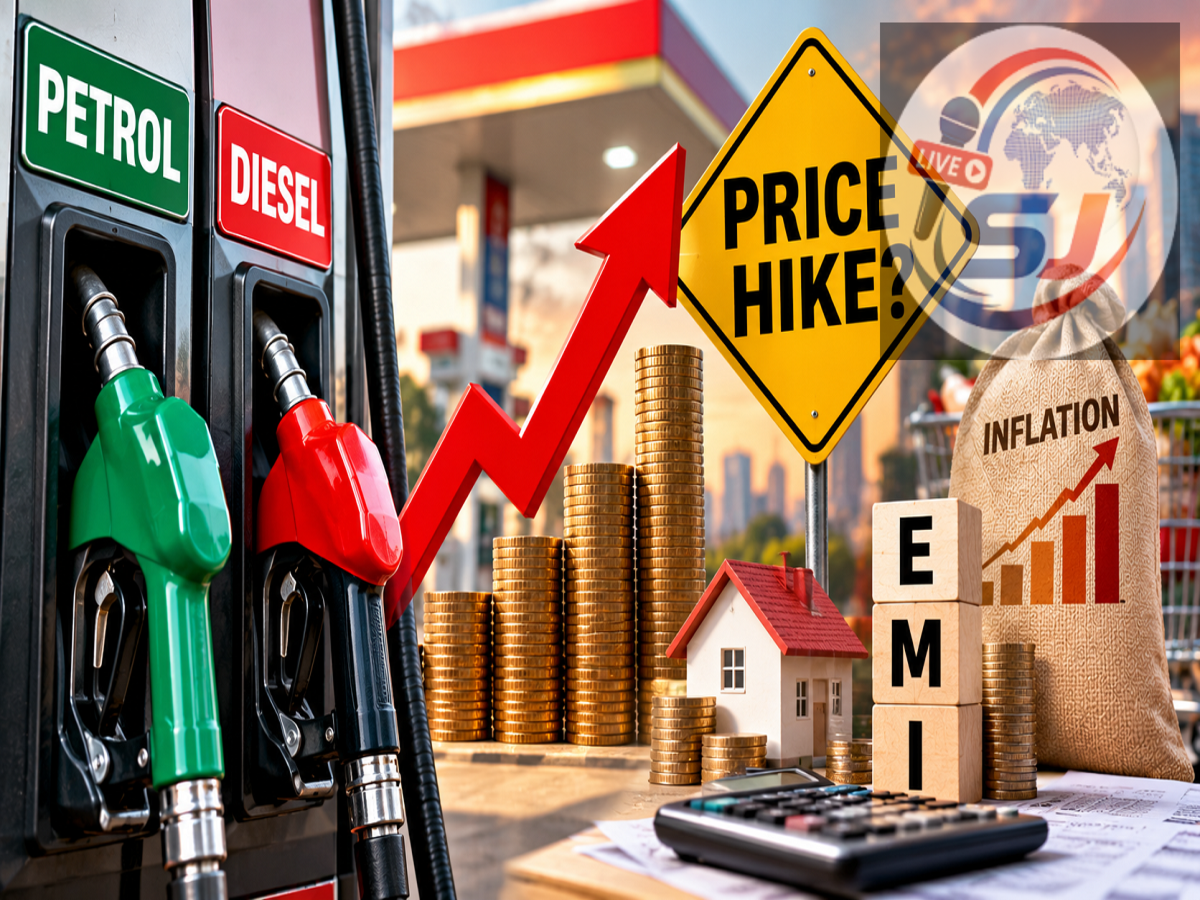
Petrol Diesel Price Hike November 2026: Petrol and diesel prices in India could increase in November, according to a new economic forecast. The possibility of higher fuel prices has raised concerns among consumers, as any increase could affect transportation expenses, household budgets and the cost of essential goods.
A report by Bloomberg, citing Oxford Economics economist Alexandra Hermann Prasad, suggests that a modest increase in petrol and diesel prices may be considered next month. The potential revision could be approximately half the size of the cumulative 7.5% increase reported in May 2026.
However, the government has not officially announced any petrol or diesel price increase for November 2026. The figures are based on an economic forecast rather than a confirmed policy decision.
The report also highlights possible inflationary pressures and the likelihood of further interest-rate increases if consumer prices continue rising.
Petrol and Diesel Prices May Increase in November 2026
According to Oxford Economics, November could be a possible window for revising domestic petrol and diesel prices.
The forecast comes amid uncertainty in global energy markets, particularly following geopolitical tensions involving the United States and Iran.
These developments have placed pressure on international oil markets and increased concerns about fuel supply and pricing.
The economist cited in the Bloomberg report expects that any potential November increase could be smaller than the cumulative adjustment seen in May.
The report also discusses the timing of a possible revision ahead of assembly elections expected in early 2027.
However, the suggestion that November could be a suitable time for a price adjustment is an assessment by the economist, not an officially stated government plan.
The actual retail prices will depend on decisions by oil marketing companies, applicable taxes and other pricing factors.
How Much Could Petrol and Diesel Prices Rise?
The Oxford Economics forecast suggests that a potential November increase could be approximately half the cumulative 7.5% rise reported in May 2026.
A simple comparison would put that figure at around 3.75%.
However, this should not be treated as a confirmed or uniform price increase across India.
The forecast does not establish the exact rupee-per-litre adjustment that consumers might face.
For illustration, if petrol costs ₹100 per litre and its price increases by 3.75%, the revised price would be ₹103.75 per litre.
Similarly, a litre of diesel priced at ₹90 would increase to approximately ₹93.38 under the same hypothetical percentage adjustment.
These examples only explain the possible impact of a percentage increase.
They are not official petrol or diesel rates for any Indian city.
Why Could Fuel Prices Increase?
Petrol and diesel prices are influenced by several domestic and international factors.
India imports a substantial portion of the crude oil it consumes, making the domestic fuel market sensitive to changes in international energy prices.
Geopolitical tensions can disrupt supply expectations, increase transportation costs and create volatility in crude oil markets.
The exchange rate between the Indian rupee and the US dollar is another important factor.
Because international crude oil transactions are generally priced in dollars, a weaker rupee can increase the cost of importing oil.
Domestic fuel taxes, refining expenses, distribution costs and oil marketing company pricing decisions also affect retail prices.
Consequently, a rise in international crude oil prices does not necessarily translate into an identical percentage increase in petrol and diesel prices.
Petrol Diesel Price Hike: How Will It Affect Household Budgets?
Higher fuel prices can directly increase the amount families spend on daily transportation.
People who regularly commute by motorcycle, scooter or car may notice an increase in their monthly fuel bills.
For example, consider a household that consumes 50 litres of petrol every month.
If the price increases by ₹4 per litre, the family's monthly petrol expenditure would rise by ₹200.
For households using 100 litres per month, the same increase would add ₹400 to their monthly expenses.
The actual impact would depend on fuel consumption, local retail prices and the final amount of any revision.
Families relying heavily on private vehicles could face a greater increase in transportation costs.
Why Diesel Prices Matter for Everyday Goods
Diesel is widely used in commercial transportation, agriculture and logistics.
Trucks carrying food grains, vegetables, fruits, construction materials and other essential products depend heavily on diesel.
When diesel becomes more expensive, transport operators may face higher operating costs.
Some of these additional expenses can eventually be passed on to wholesalers, retailers and consumers.
As a result, higher diesel prices may indirectly affect the cost of groceries, manufactured products and other everyday items.
However, the extent of the impact depends on factors such as transportation distance, competition, supply conditions and the ability of businesses to absorb higher costs.
Not every product will necessarily become more expensive immediately after a fuel price revision.
Oxford Economics Predicts Higher Inflation
The report also presents a relatively elevated inflation outlook for India.
According to Oxford Economics, retail inflation could reach 6.2% during the October–December 2026 quarter.
The organisation expects inflation to increase further to 6.5% during the January–March 2027 quarter.
These projections are above the upper limit of the Reserve Bank of India's inflation tolerance band of 2% to 6%.
Higher fuel prices could contribute to inflation by increasing transportation and production costs.
However, fuel prices are only one factor affecting consumer inflation.
Food prices, supply conditions, currency movements and other economic developments can also influence the final inflation rate.
Oxford Economics vs RBI: Inflation Forecast Comparison
Oxford Economics has presented a more elevated inflation outlook than the Reserve Bank of India.
| Period | Oxford Economics Forecast | RBI Forecast |
|---|---|---|
| October–December 2026 | 6.2% | 6.0% |
| January–March 2027 | 6.5% | 5.7% |
| Financial Year 2026–27 | 5.4% | 5.2% |
These are forecasts rather than actual inflation outcomes.
The difference between the projections reflects varying assumptions about fuel prices and other economic conditions.
Oxford Economics expects inflationary pressure to remain relatively high, while the RBI's reported projections indicate some moderation in the January–March quarter.
Actual inflation will depend on how economic conditions develop over the coming months.
What Happens if Petrol and Diesel Prices Do Not Increase?
The Oxford Economics report also examines a scenario in which fuel prices remain unchanged in November.
According to the economist, if the expected price increase does not take place, inflation projections for upcoming quarters could be approximately 0.10 to 0.30 percentage points lower.
For example, an inflation forecast of 6.5% could be revised to between 6.2% and 6.4%, depending on the assumptions used.
However, avoiding a fuel price increase would not automatically eliminate inflationary pressure.
Other factors, including food prices and imported goods, could continue influencing the cost of living.
The report suggests that inflation could remain relatively elevated even without an additional fuel price adjustment.
Will RBI Increase the Repo Rate Again?
The possibility of higher inflation has also raised questions about future interest-rate decisions.
Oxford Economics expects that the Reserve Bank of India could increase the repo rate by 25 basis points in December 2026 and another 25 basis points in February 2027 if inflationary pressure persists.
A 25-basis-point increase is equivalent to 0.25 percentage points.
The forecast follows a reported 25-basis-point repo rate increase in October.
However, these additional increases are predictions by Oxford Economics, not decisions already announced by the RBI.
The central bank will assess inflation, economic growth, financial conditions and other relevant factors before making future policy decisions.
How Could a Repo Rate Increase Affect Home Loan EMIs?
The repo rate is the interest rate at which the Reserve Bank of India lends money to eligible commercial banks under its monetary policy framework.
Changes in the repo rate can influence borrowing costs across the banking system.
If the RBI raises the repo rate, banks may increase interest rates on certain floating-rate loans, depending on their lending benchmarks and reset schedules.
This could affect home loans, car loans and some other forms of borrowing.
For example, borrowers with repo-linked home loans may face higher monthly instalments or longer repayment periods if their lenders pass on the rate increase.
However, the impact is not immediate or identical for every borrower.
Fixed-rate loans and loans linked to other benchmarks may respond differently.
Borrowers should check their loan agreements and applicable interest-rate reset conditions.
Could Higher Fuel Prices Affect Transport and Delivery Charges?
A petrol or diesel price increase could also affect businesses involved in passenger transportation and goods delivery.
Taxi operators, transport companies and logistics providers may experience higher fuel expenses.
Businesses that rely on frequent deliveries could face additional operating costs.
Depending on market conditions, some companies may revise their service charges or product prices.
However, any increase would depend on the size of the fuel price adjustment and the pricing decisions of individual businesses.
There is no official announcement confirming a nationwide increase in transport fares or delivery charges for November.
What Should Consumers Do Before November?
Consumers should avoid making financial decisions based solely on an unconfirmed fuel price forecast.
Petrol and diesel prices may change depending on developments in international oil markets and domestic pricing decisions.
Households can review their transportation budgets and monitor official retail fuel rates.
Vehicle owners may also reduce unnecessary fuel consumption through regular maintenance, appropriate tyre pressure and efficient driving habits.
Borrowers concerned about possible interest-rate increases should review whether their loans are linked to the repo rate and understand how future rate adjustments could affect repayments.
These practical steps can help families manage expenses without assuming that a price increase is inevitable.
Petrol Diesel Price November 2026: What Is Confirmed?
As of October 16, 2026, the possibility of a November petrol and diesel price increase remains an economic forecast.
Oxford Economics expects that a modest revision could occur, potentially amounting to roughly half the cumulative increase reported in May.
The organisation has also projected higher inflation than the RBI and suggested that further repo rate increases could become necessary if price pressures persist.
However, none of these projections represents an official government announcement or a confirmed RBI decision.
The key takeaway is that petrol and diesel prices may rise in November, but no increase has been formally announced. Consumers should wait for confirmed pricing updates from oil marketing companies before treating the forecast as an actual change.
Disclaimer: This article is based on the October 15, 2026 report citing Oxford Economics and Bloomberg. All projections regarding fuel prices, inflation and future RBI policy decisions are estimates and may change. Actual fuel prices and interest-rate decisions will depend on official announcements.
Tighten the article for faster readingSeparate confirmed facts from forecasts