
Petrol and Diesel Prices Under Pressure as Global Fuel Benchmark Hits 50-Month High
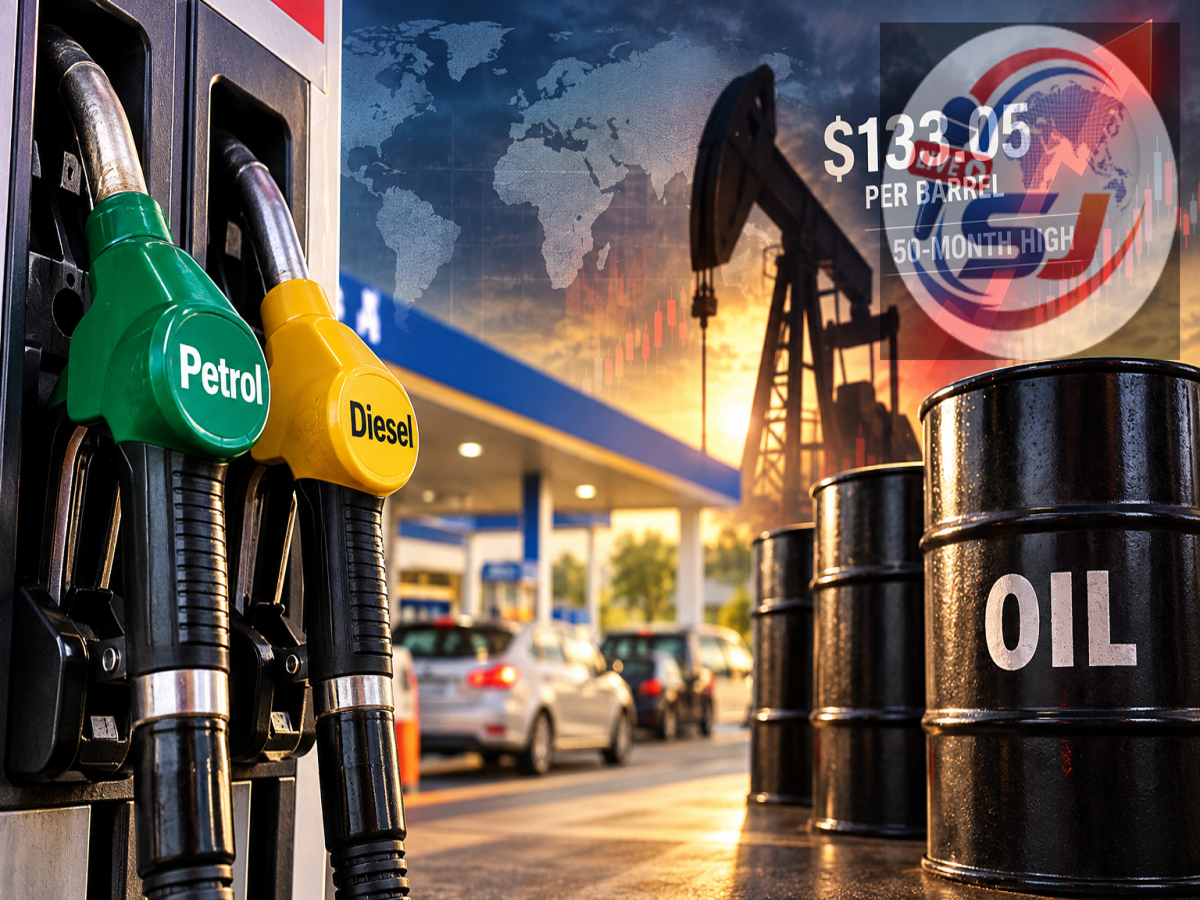
Petrol and diesel prices in India could come under pressure if elevated international fuel prices persist. The international benchmark price relevant to petrol in India has reportedly climbed to $133.05 per barrel this month, its highest level in around 50 months, raising concerns about the impact of expensive global energy supplies on domestic fuel retailers.
However, consumers should note that a rise in petrol or diesel prices has not been confirmed. Retail rates have remained unchanged for now, and any future revision would depend on global crude and product prices, exchange rates, taxes, marketing margins and decisions taken by oil marketing companies.
The latest surge comes amid geopolitical tensions and concerns over energy supplies from the Middle East. With India heavily dependent on imported crude oil, prolonged increases in international prices can have wider implications for fuel costs, inflation and transportation expenses.
International Petrol Benchmark Climbs to $133.05
According to the reported data, the international petrol benchmark relevant to the Indian market has reached $133.05 per barrel in September.
Between September 1 and September 18, the average daily petrol benchmark was reportedly around 20% higher than August's average of $110.87 per barrel.
The latest figure is also above the $129.63 level recorded in May. During that period, state-owned oil marketing companies had reportedly revised petrol and diesel prices four times in a single month.
The current increase does not automatically mean that retail petrol prices at filling stations will rise immediately. However, sustained high international prices can increase pressure on companies selling fuel in the domestic market.
Why Are International Oil Prices Rising?
Several global developments have contributed to volatility in energy markets.
Crude oil prices have again moved above the $100-per-barrel mark in the international market, according to the report. Escalating tensions in the Middle East are among the factors being watched closely by traders and governments.
Supply-related concerns, including disruptions linked to Saudi Arabian pipeline infrastructure and the movement of energy supplies through the Strait of Hormuz, have also added uncertainty.
The Strait of Hormuz is particularly important to global energy markets because a substantial volume of oil and petroleum products moves through the strategic waterway.
Any prolonged disruption affecting major supply routes can put upward pressure on international energy prices.
Why Rising Global Oil Prices Matter for India
India imports more than 85% of the crude oil it requires, making the country particularly sensitive to major movements in international energy prices.
When crude oil and refined petroleum products become more expensive globally, the cost of sourcing fuel for the Indian market can also rise.
The eventual impact on consumers, however, is not always immediate or proportional. Retail petrol and diesel prices are influenced by several components, including international prices, the rupee-dollar exchange rate, central and state taxes, transportation expenses and the pricing decisions of oil marketing companies.
Oil Marketing Companies Face Margin Pressure
The sharp rise in international benchmark prices is reportedly putting pressure on the margins of state-owned oil marketing companies.
Industry experts cited in the report estimate that fuel retailers are currently facing an under-recovery of around ₹5 per litre on petrol and approximately ₹20 per litre on diesel.
These figures are estimates and can change as international prices, currency movements and other pricing variables fluctuate.
Diesel has experienced particularly strong international price pressure.
The average daily benchmark price for diesel has reportedly climbed to around $167.08 per barrel, representing a four-month high.
Even at this level, however, the diesel benchmark remains below the $187.92-per-barrel peak recorded in April 2026.
Will Petrol and Diesel Become More Expensive?
There is no confirmed nationwide fuel price increase based solely on the rise in international benchmarks.
Petrol and diesel retail prices have remained stable despite the recent increase in global prices. Nevertheless, experts believe continued geopolitical tensions and elevated international fuel costs could increase the possibility of domestic price revisions in the coming days.
Much will depend on how long the current global price surge lasts and how oil marketing companies manage their margins.
Consumers should therefore treat reports of an upcoming petrol or diesel price hike as a possibility rather than a confirmed development until oil companies officially announce revised retail rates.
Expensive Crude Oil Could Also Push Inflation Higher
Higher oil prices can have consequences far beyond petrol pumps.
A Reserve Bank of India (RBI) study cited in the report suggests that every $10-per-barrel increase in crude oil prices could potentially add around 49 basis points to India's headline inflation, depending on the broader economic conditions and the extent to which higher costs are passed through.
Fuel plays an important role in transportation, manufacturing and distribution. If transportation expenses rise, businesses can face higher costs for moving products from farms and factories to markets.
This can eventually affect the prices of vegetables, fruits, groceries and other everyday products.
Higher fuel costs can also increase expenses for logistics operators, airlines, commercial transport businesses and industries that depend heavily on petroleum products.
What Consumers Should Watch Next
For Indian consumers, the most important factors to monitor are international crude and refined fuel prices, developments in the Middle East and any official price revisions announced by oil marketing companies.
The petrol benchmark reaching $133.05 per barrel and the diesel benchmark rising to $167.08 indicate substantial pressure in international markets. But these movements should not be confused with an already-announced increase in petrol and diesel prices at Indian fuel stations.
If international energy prices remain elevated for an extended period, pressure on domestic fuel retailers could intensify. Until an official revision is announced, however, consumers should rely on the prevailing petrol and diesel rates applicable in their respective cities.