
Personal Loan vs Gold Loan: Which Is Cheaper for a ₹5 Lakh Loan? Check EMI and Interest Cost
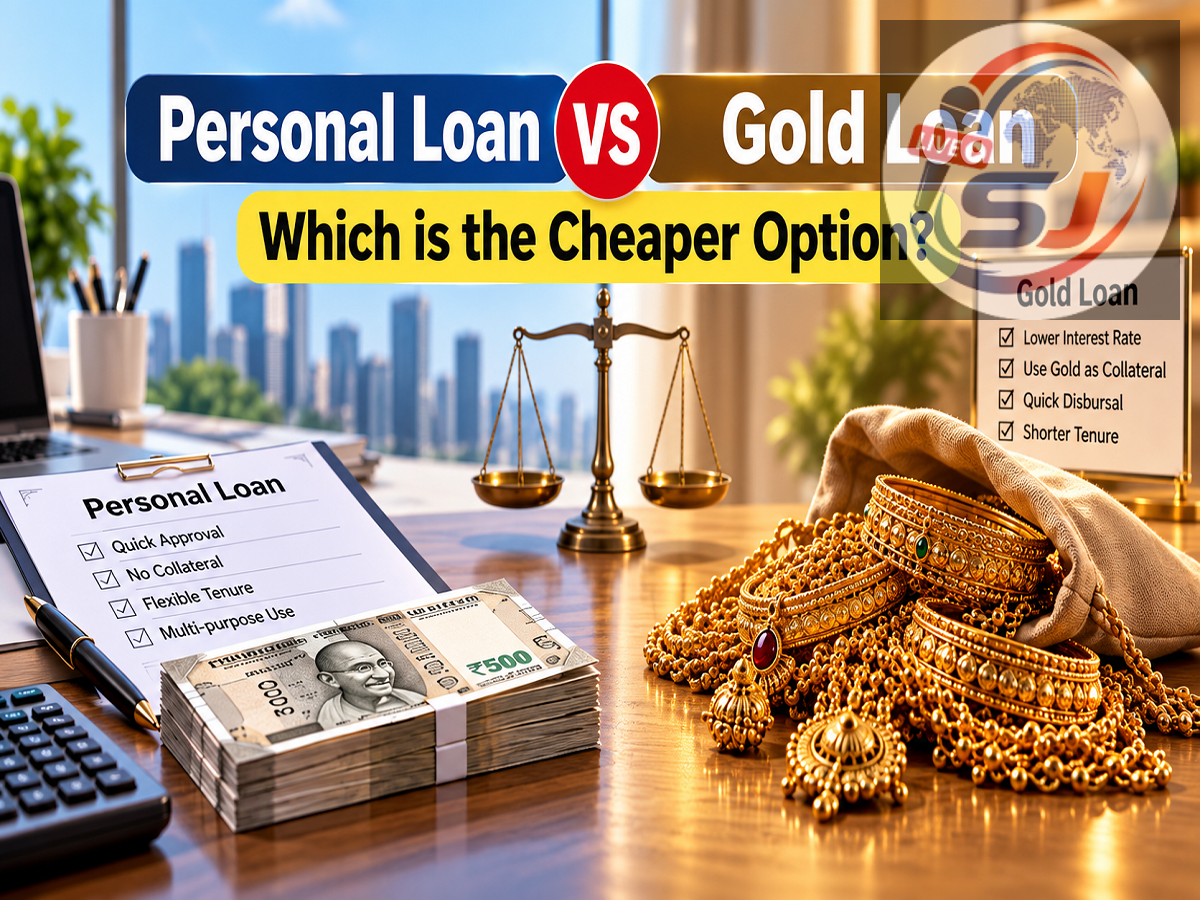
An unexpected medical expense, home repair or other financial emergency may create an immediate need for money. A personal loan and a gold loan are two commonly considered borrowing options, but they work differently and carry different costs and risks.
A personal loan does not require borrowers to pledge an asset. A gold loan, however, is issued against eligible gold jewellery deposited with the lender. Because the lender holds collateral, gold-loan interest rates may be lower than personal-loan rates in some cases.
For this comparison, the loan amount is ₹5 lakh and the repayment period is three years. The illustrative interest rate is 12% for the personal loan and 9.95% for the EMI-based gold loan. At these rates, choosing the gold loan could reduce the total interest expense by approximately ₹17,471.
₹5 Lakh Loan: EMI and Interest Comparison
| Particular | Personal Loan | Gold Loan |
|---|---|---|
| Loan amount | ₹5,00,000 | ₹5,00,000 |
| Illustrative annual interest rate | 12% | 9.95% |
| Repayment period | 3 years | 3 years |
| Estimated monthly EMI | ₹16,607 | ₹16,122 |
| Total repayment over 36 months | ₹5,97,858 | ₹5,80,387 |
| Total estimated interest | ₹97,858 | ₹80,387 |
| Interest saving with gold loan | — | Around ₹17,471 |
The EMI difference is only about ₹485 per month. However, over 36 months, the lower rate creates a more noticeable reduction in the overall interest burden.
These figures assume a standard reducing-balance EMI calculation. Processing fees, gold-valuation charges, documentation costs, insurance, taxes and other applicable expenses have not been included.
Personal Loan EMI on ₹5 Lakh
If a borrower takes a personal loan of ₹5 lakh for three years at 12% annual interest, the estimated EMI would be approximately ₹16,607.
Over 36 monthly instalments, the borrower would repay around ₹5,97,858. Of this amount, approximately ₹97,858 would be the interest cost.
The 12% rate is only an example. Personal-loan pricing varies according to the bank’s lending policy and the applicant’s financial profile. A borrower with a strong credit score, stable employment, regular income and a manageable level of existing debt may qualify for a more competitive rate.
By contrast, applicants with a weak repayment history, multiple ongoing loans or an unstable income may receive a higher rate or face rejection. Pre-approved customers may also receive different terms.
Gold Loan EMI on ₹5 Lakh
At an illustrative annual rate of 9.95%, a ₹5 lakh gold loan repaid through EMIs over three years would require a monthly payment of approximately ₹16,122.
The estimated total repayment would be ₹5,80,387, including an interest cost of around ₹80,387.
This means the gold loan would cost approximately ₹17,471 less in interest than the personal loan used in this example.
SBI’s published product listings have displayed a 9.95% rate for certain gold-loan offerings, but customers should confirm the applicable rate, repayment structure and conditions before applying through the bank’s official website.
Why Can a Gold Loan Be Cheaper?
A personal loan is unsecured, which means the lender does not hold gold, property or another asset against the loan. The lender therefore relies heavily on the borrower’s credit history, income and repayment capacity.
A gold loan is secured by pledged jewellery. If the borrower fails to repay the outstanding amount, the lender can initiate recovery proceedings against the pledged gold after following the applicable process. This security reduces the lender’s risk, which can result in a lower interest rate.
The borrower’s credit profile may still be considered, but the value and purity of the pledged gold play a central role in determining the eligible loan amount.
Lower Interest Comes with a Serious Risk
The gold loan appears cheaper in this calculation, but that advantage is linked to the jewellery pledged as security.
If the borrower repeatedly misses repayments and the account goes into default, the lender may eventually auction the pledged gold after providing the required notices and following applicable rules. This can be particularly significant when the jewellery has emotional or family value.
Borrowers should therefore avoid pledging gold unless they have a reliable repayment plan. A lower interest rate does not automatically make a gold loan the better option for every person.
How Much Gold Is Needed for a ₹5 Lakh Loan?
A lender will not ordinarily provide a loan equal to the full market value of the pledged jewellery. The eligible amount is determined after examining factors such as:
- Purity of the gold
- Net gold content in the jewellery
- Applicable market valuation
- Loan-to-value limit
- Stones and other non-gold components
- Lender-specific product rules
Decorative stones, making charges and sentimental value are generally not counted in the same way as the underlying gold content. As a result, a borrower may need jewellery valued substantially above ₹5 lakh to obtain a ₹5 lakh loan.
Do Not Ignore Additional Charges
The interest rate alone does not reveal the complete cost of borrowing. Before selecting either loan, compare the annual percentage rate or total cost after including:
- Processing fee
- GST on applicable charges
- Gold appraisal or valuation fee
- Documentation charges
- Late-payment penalty
- Prepayment or foreclosure charges
- Penal interest
- Auction-related charges in case of default
A loan with a lower advertised rate may not remain the cheapest after all charges are included.
Which Loan Should You Choose?
A personal loan may be more appropriate for borrowers who do not want to pledge family jewellery and have a strong credit profile that qualifies them for a competitive rate. It also removes the risk of losing a pledged asset, although failure to repay can still damage the borrower’s credit score and trigger recovery action.
A gold loan may be suitable when funds are required quickly, sufficient eligible jewellery is available and the borrower has a clear repayment plan. Its lower rate can reduce the total interest cost, but the pledged gold remains at risk until the loan is fully repaid.
Based solely on this example, the gold loan is cheaper. It lowers the EMI by approximately ₹485 and saves around ₹17,471 in interest over three years. The final decision, however, should consider the sanctioned rate, additional charges, repayment flexibility and the personal importance of the jewellery being pledged.
Disclaimer: This article provides a general financial illustration and does not constitute lending or financial advice. Actual rates, EMIs, fees and eligibility depend on the lender and borrower’s profile. Review the sanction letter and consult a qualified adviser before taking a loan.