
Personal Loan Repayment: 5 Smart Ways to Cut Interest and Close Your Loan Faster
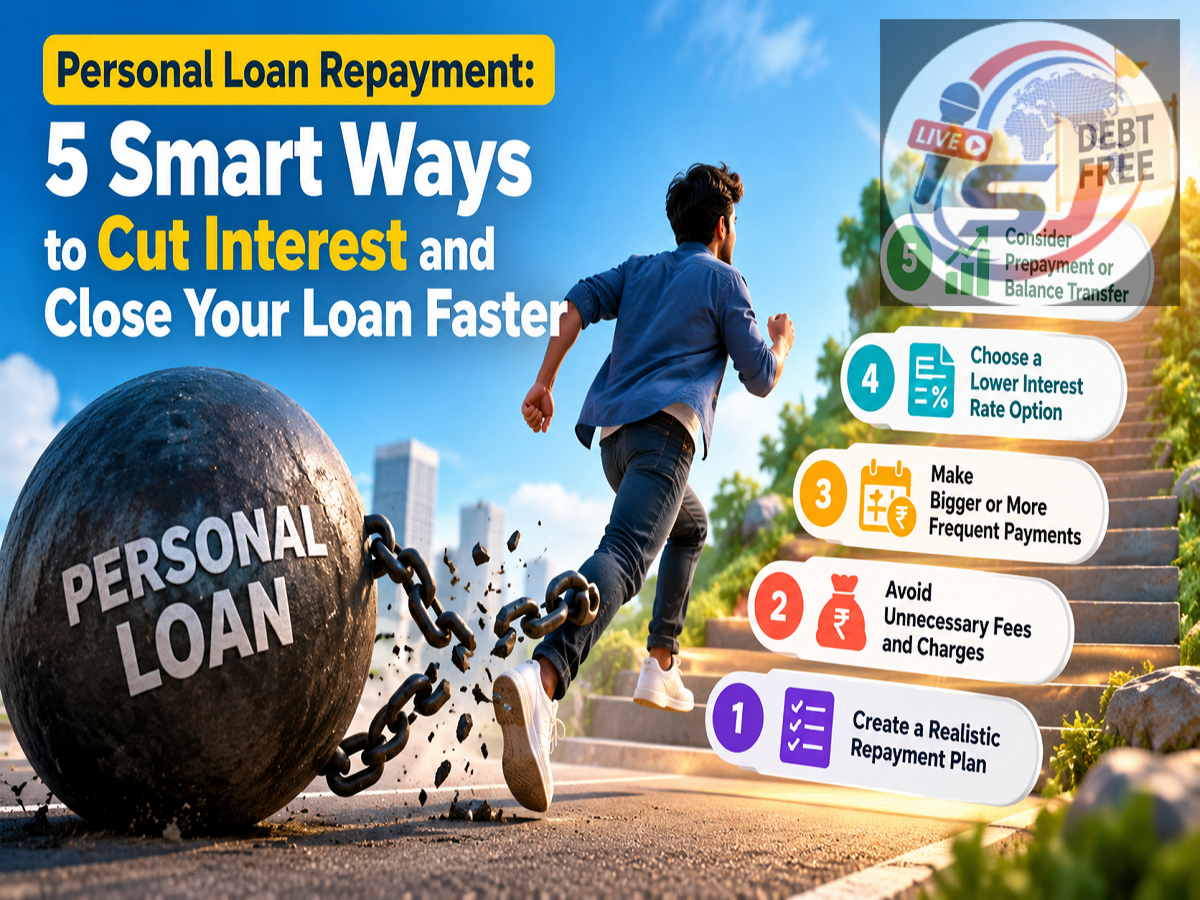
Personal Loan Repayment Tips: A personal loan can provide quick access to money when you need it, but the convenience comes with an interest cost. While borrowers generally focus on whether the monthly EMI fits their budget, the total interest paid over several years can be substantial.
The good news is that borrowers do not necessarily have to wait until the scheduled final EMI to become debt-free. Strategic part-payments, using bonuses wisely and choosing a shorter repayment period after prepayment can potentially reduce both the loan tenure and overall interest outgo.
Consider a personal loan of ₹5 lakh at an annual interest rate of 12% for five years. The monthly EMI would be around ₹11,122. If the loan runs for all 60 months as scheduled, the borrower would repay approximately ₹6.67 lakh, including roughly ₹1.67 lakh in interest.
Here are five approaches that may help bring down that interest burden.
1. Make Part-Payments to Reduce the Outstanding Principal
One of the most effective ways to accelerate loan repayment is to make a part-payment whenever your finances permit.
A part-payment is an additional lump-sum payment made over and above regular EMIs. Since interest is calculated on the outstanding loan amount, reducing the principal earlier can lower the interest payable during the remaining tenure.
For example, suppose you have paid 12 EMIs on the ₹5 lakh loan described above. At that stage, the outstanding principal could be approximately ₹4.22 lakh.
If you make a ₹1 lakh part-payment, the outstanding amount could fall to roughly ₹3.22 lakh.
That lower principal means less money remains on which future interest can be charged.
2. Keep Your EMI Unchanged and Reduce the Tenure
After making a part-payment, borrowers should check how their lender will restructure the remaining repayment schedule.
Depending on the lender's terms, the borrower may have the option of reducing the EMI or shortening the tenure. If your objective is to clear the debt faster and reduce interest, maintaining the existing EMI while reducing the remaining tenure can be more effective.
Using the same example, if the EMI remains close to ₹11,122 after the ₹1 lakh part-payment, the remaining balance could potentially be cleared in around 35 additional months.
This would mean that instead of continuing for the original 60 months, the entire loan could be completed in roughly 47 months.
Under the assumptions used in this illustration, total interest could decline to around ₹1.22 lakh, producing an estimated interest saving of approximately ₹45,000.
Actual savings will depend on the lender's interest calculation, payment date, charges and revised repayment schedule.
3. Use Part of Your Bonus or Incentive to Repay Debt
An annual bonus, performance incentive or other lump-sum income can also provide an opportunity to reduce debt.
Instead of spending the entire amount, borrowers could consider directing a portion toward their outstanding personal loan.
For instance, if you receive a ₹50,000 bonus and your lender permits part-prepayment, putting that amount toward the principal could immediately reduce your outstanding balance.
Making additional payments earlier in the loan tenure can have a larger impact because there are more future months during which interest would otherwise have accumulated.
4. Make One Additional Payment Every Year
Not everyone can arrange ₹50,000 or ₹1 lakh for a large part-payment. Smaller but regular additional repayments can still help.
One approach is to save enough during the year to make an extra payment roughly equal to one EMI.
If your regular monthly installment is ₹11,122, contributing an additional amount around this level once a year can help the principal decline faster than it would through scheduled EMIs alone.
Repeating this strategy over several years may shorten the repayment period and lower the total interest cost, subject to the lender's prepayment conditions.
5. Check Prepayment and Foreclosure Charges First
Paying off a personal loan early is not automatically the cheapest option in every situation.
Some lenders impose part-prepayment or foreclosure charges, particularly when the loan is closed before a specified period. Borrowers should therefore calculate the net benefit before transferring a large amount.
Suppose early repayment could save you ₹40,000 in future interest, but your lender charges a significant foreclosure fee. In that situation, you should compare the expected interest saving with all applicable charges before deciding whether early closure makes financial sense.
Also consider your emergency savings. Using virtually all available cash to close a loan may reduce interest expenses but could leave you without enough money to handle an unexpected medical bill, job disruption, home repair or another emergency.
How Could a ₹1 Lakh Part-Payment Save Around ₹45,000?
Consider the example again:
A borrower takes a ₹5 lakh personal loan for five years at an annual interest rate of 12%. The EMI is approximately ₹11,122, and if the loan continues for the full tenure, total interest is estimated at around ₹1.67 lakh.
After paying EMIs for 12 months, the outstanding principal is assumed to be roughly ₹4.22 lakh.
The borrower then makes a ₹1 lakh part-payment, reducing the balance to approximately ₹3.22 lakh.
If the EMI remains around ₹11,122 rather than being reduced, the remaining loan could potentially be repaid in about 35 months. This would bring the overall repayment period down to roughly 47 months instead of 60 months.
Based on these assumptions, the borrower could pay approximately ₹1.22 lakh in total interest, representing an estimated saving of around ₹45,000 compared with following the original repayment schedule.
Should You Prepay Your Personal Loan?
Early repayment can be useful when you have surplus cash, adequate emergency savings and the interest saved is greater than any prepayment-related charges.
Before making the payment, ask your lender for an updated outstanding balance, part-payment conditions, applicable fees and a revised amortisation schedule. This will help you understand exactly how much tenure and interest could be reduced.
Most importantly, avoid using your entire emergency fund simply to close a loan early. The aim should be to reduce expensive debt while maintaining enough financial flexibility for unexpected expenses.
Disclaimer: This article is for general information and educational purposes only. EMI, outstanding balance, tenure and interest-saving figures are illustrative and may vary depending on the lender, loan terms, payment dates, fees and calculation method. Borrowers should verify applicable conditions with their lender or consult a qualified financial professional before making repayment decisions.