
Paytm Wallet Comeback: RBI Grants Conditional Approval, Company Must Complete Key Requirements in Six Months
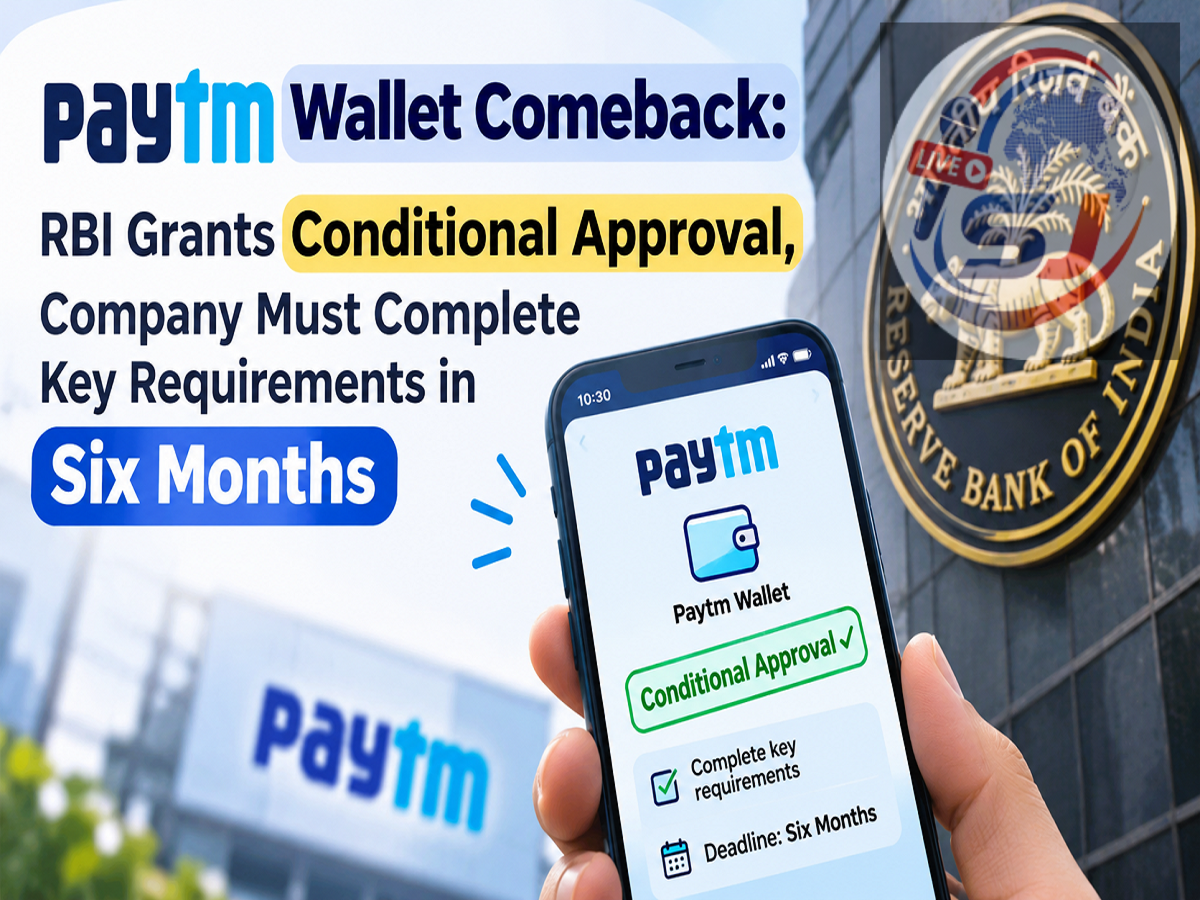
Paytm Wallet Update, November 14, 2026: Digital payments company Paytm has received an important regulatory boost after the Reserve Bank of India (RBI) granted in-principle approval for its subsidiary to operate as a Prepaid Payment Instrument (PPI) issuer. The development could pave the way for the return of Paytm's digital wallet services. However, the company must fulfil several regulatory conditions before it can begin offering new wallet facilities to customers.
According to the reported approval conditions, the company must submit a system audit report within six months. It will also need to comply with RBI requirements relating to customer data storage, ownership structure and other applicable regulatory standards.
RBI Approval Opens the Door for Paytm Wallet Services
The latest decision by the Reserve Bank of India represents a significant development for One97 Communications, the parent company of Paytm.
The in-principle approval allows the company's subsidiary to proceed with the necessary regulatory preparations for offering prepaid payment services.
However, this permission should not be confused with final authorisation to launch wallet operations.
The company must first demonstrate that its technology infrastructure, operational procedures and compliance systems meet the central bank's prescribed standards.
Only after completing the required formalities and receiving the necessary regulatory clearance can the company move forward with the proposed services.
Paytm Must Submit System Audit Report Within Six Months
One of the most important conditions attached to the RBI's approval concerns the company's technology and security infrastructure.
The subsidiary is required to submit a system audit report within six months.
A system audit generally examines whether a financial technology platform has adequate safeguards to protect customer information, process transactions securely and maintain operational reliability.
The assessment may cover cybersecurity arrangements, transaction processing systems, data protection measures, internal controls and other relevant technology-related requirements.
The purpose is to ensure that digital payment platforms maintain appropriate security and operational standards.
Failure to meet the prescribed conditions within the stipulated period could put the approval at risk, subject to the RBI's regulatory decision.
Data Storage and Shareholding Rules Must Also Be Followed
Apart from the system audit, Paytm's subsidiary will need to comply with applicable rules governing payment data and shareholding arrangements.
Data protection and storage requirements are particularly important for companies operating in India's digital payments industry.
RBI regulations require payment system operators to follow prescribed standards for handling and storing payment-related information.
These safeguards are designed to strengthen oversight and protect the integrity of digital financial transactions.
The company must also ensure that its ownership and shareholding arrangements remain consistent with the applicable regulatory framework.
Compliance with these conditions will be an important part of the process before the proposed wallet services can receive final clearance.
What Is a Prepaid Payment Instrument?
A Prepaid Payment Instrument, commonly known as a PPI, is a payment facility that allows users to make eligible transactions using funds stored in advance.
Digital wallets are among the most familiar examples of prepaid payment instruments.
Depending on the type of PPI and applicable regulatory requirements, customers may use these facilities to pay merchants, purchase goods and services or conduct other permitted transactions.
However, prepaid wallets are different from ordinary bank accounts.
Their functionality depends on the category of authorisation, customer verification requirements and rules established by the RBI.
Companies wishing to issue such instruments must obtain the necessary regulatory permission and maintain compliance with the applicable operating standards.
When Will Paytm Wallet Services Become Available?
Although the RBI's decision is an encouraging development for Paytm, customers should not expect new wallet services to become available immediately.
The approval is conditional, and the company must complete the required regulatory procedures before beginning operations under the proposed authorisation.
The six-month period mentioned in the approval relates to the submission of the system audit report. It should not automatically be interpreted as a confirmed launch timeline.
The actual availability of the services will depend on the company's compliance progress and the regulator's subsequent decisions.
Until an official launch announcement is made, customers should rely on Paytm's authorised communication channels for updates regarding wallet availability and eligibility.
Why Is This Development Important for Paytm?
Paytm is one of India's prominent digital payments platforms, offering services across merchant payments, UPI transactions and other financial technology segments.
A potential return to the prepaid wallet business could provide the company with an opportunity to expand its digital payment offerings.
Wallet services can offer customers an additional method of making eligible payments without initiating a separate bank-account transaction for every purchase.
For merchants, such facilities may provide another payment acceptance option, depending on the features introduced.
Nevertheless, the commercial impact of the approval will depend on several factors, including final regulatory authorisation, customer adoption, product features and market competition.
The latest development therefore represents a regulatory milestone rather than an immediate restoration of all wallet-related facilities.
What Should Existing Paytm Users Know?
Customers who currently use Paytm for UPI payments, bill payments and other available services should understand that the reported PPI approval concerns the proposed prepaid wallet operations.
It does not automatically indicate changes to every service offered through the Paytm application.
Users should also avoid responding to suspicious messages claiming that a new wallet must be activated through unfamiliar links or by sharing sensitive banking information.
Official updates about wallet availability, activation procedures and customer eligibility should be checked directly through Paytm's verified platforms.
What Happens Next?
The next important stage will involve completing the required audit and ensuring compliance with RBI regulations.
The company will need to demonstrate that its proposed payment infrastructure satisfies the regulator's operational and security expectations.
If the relevant requirements are fulfilled and final authorisation is obtained, Paytm could move closer to introducing its prepaid wallet services.
For now, the central bank's in-principle approval marks an important step in the regulatory process, but the company still has several obligations to complete before the proposed wallet operations can begin.
Editorial Note: This article is independently rewritten from the supplied news summary. The approval conditions are attributed to the original report and have not been independently verified against the RBI's official communication.