
One Nation One Ration Card 2026: Get Free Ration From Any State Using One Card, Check Rules and Benefits
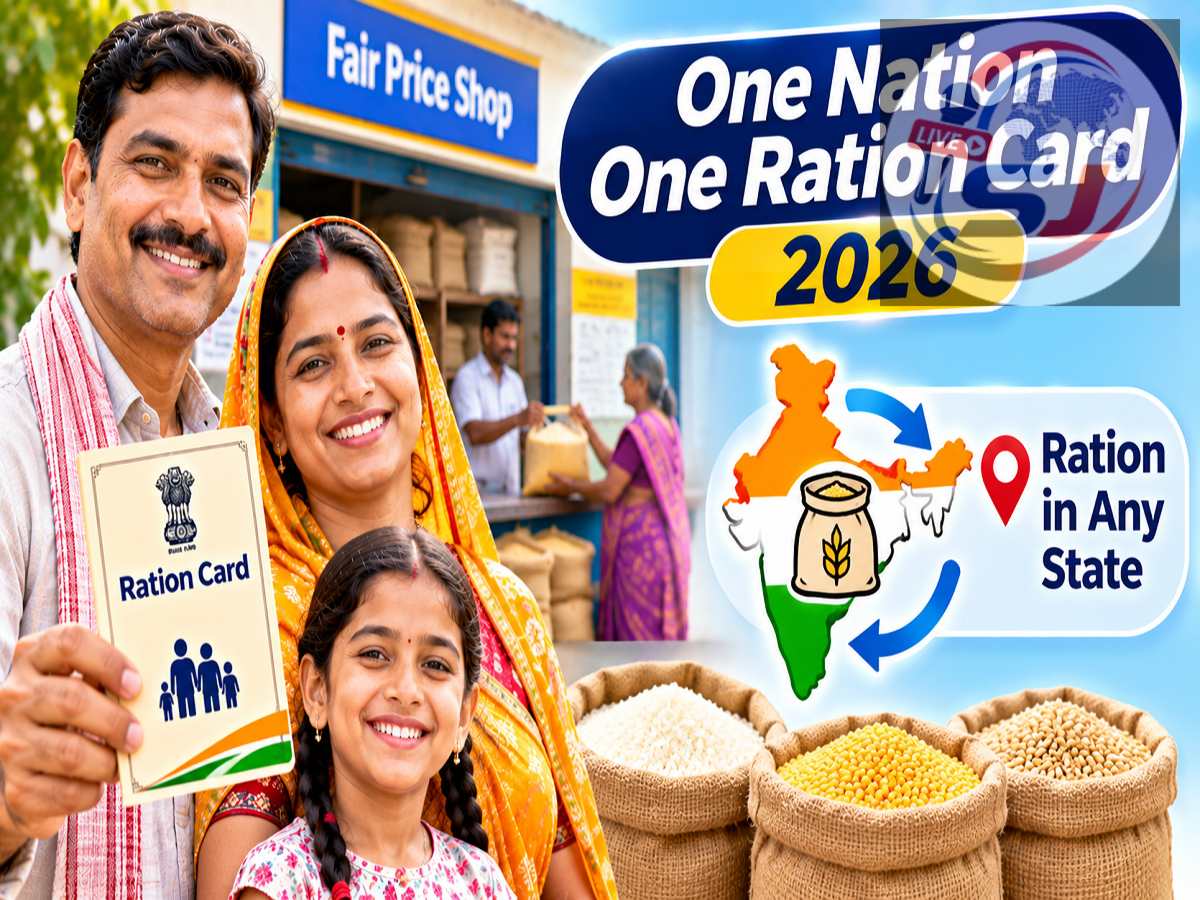
One Nation One Ration Card 2026: Ration card holders across India can access their eligible food grain entitlements even when they are living or working outside their home state. Under the government's One Nation One Ration Card (ONORC) initiative, eligible beneficiaries can collect their ration from an authorized fair price shop in another state without applying for a new ration card.
The facility is particularly useful for migrant workers, daily wage earners and families who frequently move between states for employment or other reasons.
A public awareness message shared under the #OneNationOneRationCard and #UPPDS campaigns highlights the convenience of using a single ration card across the country.
However, beneficiaries should understand that portability applies to eligible Public Distribution System (PDS) entitlements and depends on successful authentication and applicable scheme rules.
What Is One Nation One Ration Card?
One Nation One Ration Card is a nationwide ration portability initiative implemented under the Public Distribution System.
The facility allows eligible beneficiaries covered under the National Food Security Act (NFSA) to access their food grain entitlements from participating fair price shops across India.
Previously, ration card holders often depended on the fair price shop linked to their registered address.
This could create difficulties for migrant workers who moved to another city or state.
Under ONORC, beneficiaries can use their existing ration card details to obtain eligible food grains from another participating ration shop.
The initiative aims to make food security benefits more accessible to people who move for work, education or family-related reasons.
One Nation One Ration Card 2026: Key Details
| Particulars | Details |
|---|---|
| Scheme | One Nation One Ration Card |
| Short name | ONORC |
| Department | Department of Food and Public Distribution |
| Government | Government of India |
| Main benefit | Nationwide portability of eligible ration entitlements |
| Eligible beneficiaries | NFSA ration card beneficiaries |
| Coverage | All states and Union Territories under the nationwide portability framework |
| Distribution channel | Participating fair price shops |
| Authentication | As prescribed under the PDS system |
| New ration card required? | Generally no, for portability of an existing eligible card |
| Official website | https://dfpd.gov.in |
| Ration card service portal | https://nfsa.gov.in |
The quantity and type of food grains available depend on the beneficiary's entitlement category and applicable government rules.
Who Can Benefit From ONORC?
The scheme is particularly beneficial for people who live away from their registered home addresses.
These may include migrant workers, construction workers, factory employees, seasonal agricultural workers and other eligible ration card beneficiaries.
For example, a worker whose eligible ration card is registered in Uttar Pradesh may be able to collect food grains from a participating fair price shop in Rajasthan.
Similarly, a beneficiary registered in Bihar may access eligible food grain entitlements while working in Delhi or Maharashtra.
The beneficiary does not ordinarily need to obtain a separate ration card simply to use the nationwide portability facility.
However, the ration card must be eligible under the applicable system, and the beneficiary must complete the prescribed verification process.
How to Get Ration From Another State
Beneficiaries who want to collect their ration outside their home state can follow these general steps.
Step 1: Locate a participating fair price shop in the state or city where you are currently staying.
Step 2: Inform the ration dealer that you want to use the One Nation One Ration Card portability facility.
Step 3: Provide your ration card details or other information required under the official procedure.
Step 4: Complete the prescribed authentication through the electronic Point of Sale (e-POS) system.
Step 5: Ask the dealer to check your available food grain entitlement.
Step 6: Collect the quantity of food grains available under your eligible entitlement.
Step 7: Obtain or retain the transaction acknowledgement where available.
The exact process may vary according to the beneficiary's authentication status and the facilities available at the fair price shop.
Is Aadhaar Required for One Nation One Ration Card?
ONORC portability commonly uses Aadhaar-based authentication through e-POS devices at participating fair price shops.
This helps the distribution system verify the beneficiary and record the transaction.
Beneficiaries should ensure that their ration card information and applicable authentication requirements are properly maintained.
If biometric authentication fails, the beneficiary should seek assistance from the fair price shop dealer or the relevant food supply authority.
Authentication difficulties should be handled according to the applicable government instructions and available alternative procedures.
Beneficiaries should not assume that a technical failure automatically makes them ineligible for their food grain entitlement.
Can Migrant Workers Receive Free Ration?
Eligible beneficiaries covered under the National Food Security Act can receive their prescribed food grain entitlement through the applicable distribution arrangements.
Under the Pradhan Mantri Garib Kalyan Anna Yojana (PMGKAY), eligible NFSA beneficiaries receive food grains free of cost according to the government's prevailing rules.
ONORC enables portability of these eligible entitlements.
However, it does not create a new universal ration entitlement for every migrant worker.
A person must qualify under the relevant food security programme and have an eligible beneficiary record.
How Much Ration Can a Beneficiary Receive?
The quantity of food grains depends on the ration card category and the applicable NFSA entitlement.
The general NFSA framework includes the following categories:
| Beneficiary Category | General NFSA Food Grain Entitlement |
|---|---|
| Priority Household (PHH) | 5 kg per person per month |
| Antyodaya Anna Yojana (AAY) | 35 kg per eligible household per month |
These are the standard entitlement quantities under the relevant NFSA categories.
Actual distribution depends on the beneficiary's records, applicable scheme provisions and any entitlement already collected during the month.
ONORC does not provide an additional ration allocation simply because the beneficiary collects food grains in another state.
Can Family Members Collect Ration in Different States?
One of the important features of the portability framework is that it can support households whose members live in different locations.
For example, a worker may be living in another state while other family members remain in their home village.
Depending on the applicable entitlement and transaction rules, the worker may collect an eligible portion through portability while family members access the remaining entitlement at their registered location.
The total quantity distributed cannot exceed the household's applicable entitlement.
Beneficiaries should confirm the permitted arrangements with the relevant fair price shop or food supply department.
Is a New Ration Card Required After Moving to Another State?
An eligible NFSA beneficiary generally does not need a new ration card merely to access food grains through ONORC portability.
The existing ration card record can be used through the nationwide portability system.
This is particularly convenient for workers who temporarily move between states.
However, permanent changes to household details, eligibility status or registered residence may involve separate procedures under the relevant state government's rules.
Portability should not be confused with the process of updating or transferring household records.
How to Check Ration Card Details Online
Beneficiaries can consult the National Food Security Portal for information about ration cards and related services.
Official website: https://nfsa.gov.in
Users can access the relevant state food department resources through the official portal.
They should select their state and follow the available instructions for checking ration card information.
Individual beneficiary records and portability-related services may be provided through different official systems.
If the required information is unavailable online, beneficiaries can contact their local food supply office.
What Is the Mera Ration 2.0 App?
The government's Mera Ration 2.0 application is associated with digital services for ration card beneficiaries.
It is intended to help users access supported ration card-related information and services.
Depending on the current app features, beneficiaries may be able to review entitlement information and other relevant PDS details.
Users should download the genuine application through an authorized source.
They should avoid installing APK files received from unknown WhatsApp messages or unofficial websites.
The availability of individual features may change according to government updates.
Benefits of One Nation One Ration Card
Nationwide portability: Eligible beneficiaries can access food grains outside their home state.
Support for migrant workers: Workers who move for employment can use their existing eligible ration card.
Reduced dependence on one location: Beneficiaries do not have to rely exclusively on the fair price shop near their registered address.
Family convenience: The portability system can support eligible households whose members live in different places.
Digital transaction records: e-POS-based distribution helps record food grain transactions within the PDS system.
Improved accessibility: Eligible beneficiaries can access their prescribed entitlement through participating shops across the country.
These benefits are subject to the applicable scheme rules and successful completion of required procedures.
What If a Ration Dealer Refuses to Provide Food Grains?
Beneficiaries should first ask the fair price shop dealer to explain the reason for refusal.
Possible issues may include authentication problems, incorrect beneficiary information, unavailable entitlement or technical difficulties.
If the issue remains unresolved, the beneficiary can contact the relevant state food and civil supplies department.
They may also use the official grievance mechanism provided under the Public Distribution System.
Beneficiaries should retain any relevant transaction details or acknowledgement.
They should not pay unauthorized charges to obtain food grains that are officially provided free under the applicable scheme.
Important Points for Ration Card Holders
Before collecting food grains through ONORC, beneficiaries should ensure that their ration card details are correct.
They should complete any applicable e-KYC or authentication requirements.
They should also check their remaining monthly entitlement.
If some family members have already collected part of the ration, the available balance may be lower.
Beneficiaries should verify the quantity provided and report any discrepancy through official channels.
Conclusion
The One Nation One Ration Card initiative allows eligible NFSA ration card beneficiaries to access their food grain entitlements from participating fair price shops across India.
The facility is especially useful for migrant workers and families living away from their registered home states.
Eligible beneficiaries can use their existing ration card details and complete the prescribed authentication process to collect available food grains.
However, the scheme does not provide extra ration beyond the approved entitlement, and beneficiaries must satisfy the applicable eligibility and verification requirements.
For more information, visit the National Food Security Portal at https://nfsa.gov.in or the Department of Food and Public Distribution website at https://dfpd.gov.in.
Source Credit: Uttar Pradesh Public Distribution System (UPPDS) awareness communication under #OneNationOneRationCard. Additional official references: Department of Food and Public Distribution, Government of India (https://dfpd.gov.in), and National Food Security Portal (https://nfsa.gov.in). Entitlements, portability procedures and authentication requirements are subject to prevailing government guidelines.