
One Nation One Ration Card 2026: Get Free Ration From Any State, Know Eligibility and Benefits
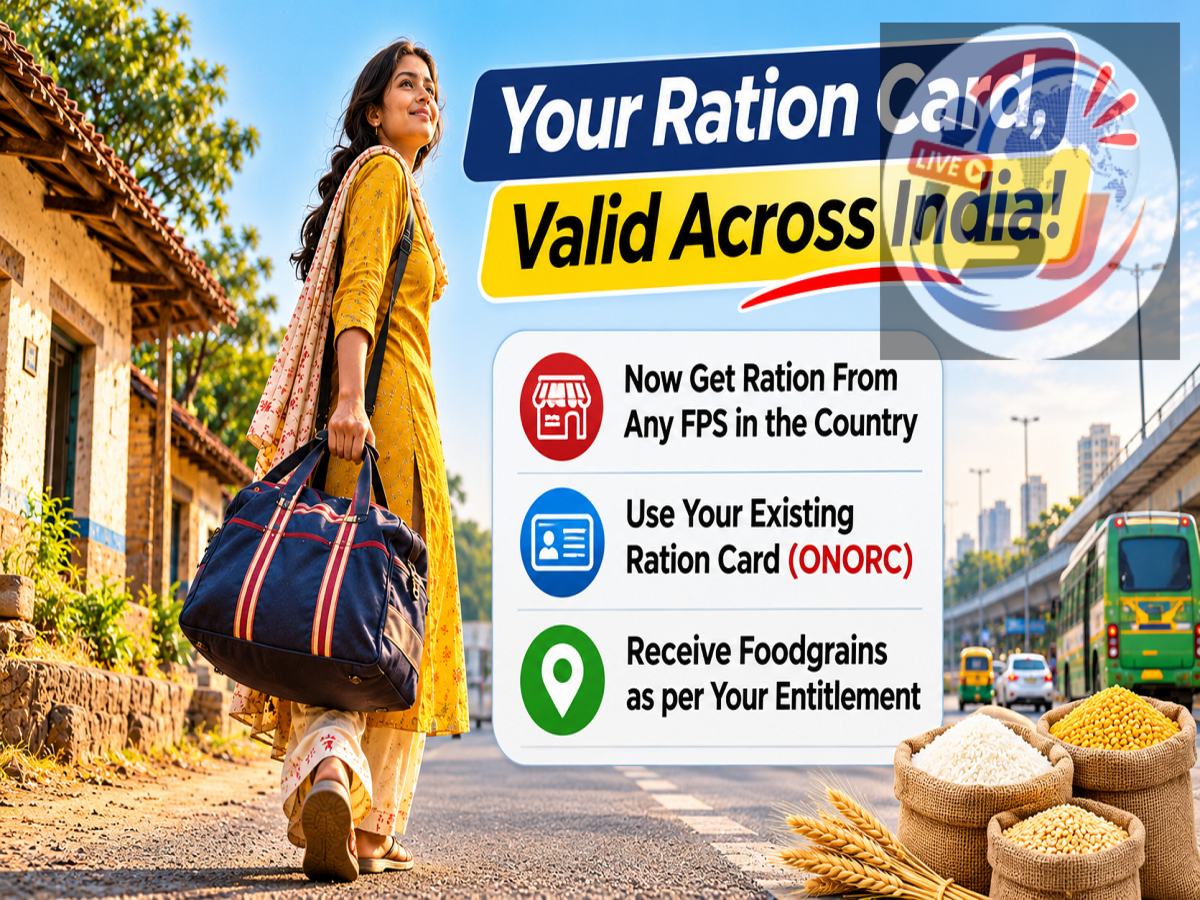
One Nation One Ration Card Scheme 2026: Ration card holders who travel or relocate to another state for employment, education or other reasons can continue receiving their eligible foodgrain benefits through the government's One Nation One Ration Card (ONORC) scheme.
The Department of Food and Public Distribution has highlighted that eligible beneficiaries can collect their entitled ration from participating Fair Price Shops (FPS) across India, regardless of their home state.
The initiative is particularly useful for migrant workers, daily wage earners and families who frequently move between states.
Under this system, eligible beneficiaries do not necessarily need to obtain a new ration card simply because they have temporarily relocated.
What Is the One Nation One Ration Card Scheme?
One Nation One Ration Card is a nationwide ration portability initiative introduced to make foodgrain distribution more accessible under the National Food Security Act (NFSA).
The scheme allows eligible beneficiaries to use their existing ration card to obtain entitled foodgrains from participating ration shops outside their home district or state.
For example, a beneficiary whose ration card was issued in Uttar Pradesh may be able to collect eligible foodgrains from a participating Fair Price Shop in Rajasthan, Delhi, Maharashtra or another state.
The facility is intended to reduce difficulties faced by people who move away from their registered residential addresses.
Who Can Benefit From the ONORC Scheme?
The scheme is particularly relevant to people covered under eligible NFSA ration card categories.
These include migrant labourers, construction workers, factory employees, seasonal workers and other eligible households that relocate for employment or family reasons.
Eligible beneficiaries may also use portability within their home state, subject to the applicable distribution arrangements.
The scheme does not automatically make every ration card holder eligible for free foodgrains. Entitlement depends on the household's applicable food security category and government rules.
How to Collect Ration From Another State
Eligible beneficiaries can generally use the following process:
Step 1: Visit a participating Fair Price Shop at your current location.
Step 2: Provide your ration card details or other information requested by the ration dealer.
Step 3: Complete the prescribed Aadhaar-based biometric authentication or another authorised verification method, where applicable.
Step 4: Ask the dealer to check your available foodgrain entitlement under the portability system.
Step 5: Collect the quantity of foodgrains issued against your eligible entitlement.
Step 6: Obtain a transaction receipt or confirmation wherever available.
Beneficiaries should ensure that the ration dealer records the transaction correctly and distributes the quantity they are entitled to receive.
Is a New Ration Card Required After Moving to Another State?
Generally, eligible ONORC beneficiaries do not need to obtain a separate ration card merely to access their portable NFSA foodgrain entitlement in another state.
Their existing ration card can be used through the interoperable distribution system, subject to authentication and eligibility.
However, changing permanent residence or household details may involve separate administrative requirements.
Beneficiaries should distinguish between temporarily accessing ration through portability and permanently updating their ration card records.
How Much Free Ration Can Beneficiaries Receive?
Foodgrain entitlements depend on the category under which a household is covered.
| Beneficiary Category |
General NFSA Entitlement |
|---|---|
| Priority Household (PHH) |
5 kg of foodgrains per eligible person per month |
| Antyodaya Anna Yojana (AAY) |
35 kg of foodgrains per eligible household per month |
Eligible NFSA beneficiaries receive foodgrains free of cost under the applicable central government arrangement.
However, state-specific additional benefits or commodities may have separate rules and may not be portable across states.
The actual quantity available through a portability transaction also depends on the beneficiary's entitlement and any quantity already collected during that distribution period.
Can Family Members Collect Ration in Different States?
One important advantage of ONORC is that it can support households whose members live in different locations.
For example, if one family member works in another state while the remaining family members stay in their home village, the system can facilitate eligible distribution according to the applicable portability rules.
This can help migrant families avoid losing access to their entitled foodgrains because of temporary relocation.
However, the same entitlement cannot be claimed twice. Quantities already distributed are accounted for through the ration distribution system.
What If the Ration Dealer Refuses to Provide Foodgrains?
If an eligible beneficiary faces difficulties obtaining ration through portability, they should first ask the dealer to explain the reason.
Problems may arise because of authentication failures, incorrect ration card details, technical issues or entitlement-related discrepancies.
Beneficiaries can contact the relevant state food and civil supplies department or use the grievance channels provided by the authorities.
They can also check information through official food distribution services and the Mera Ration application, where supported.
The national ONORC helpline 14445 has been publicised for ration portability assistance. Beneficiaries should confirm the currently operational helpline and grievance arrangements through official government sources.
Why Is One Nation One Ration Card Important for Migrant Workers?
Migrant workers often move between states in search of employment.
Earlier, collecting subsidised foodgrains outside the registered ration card location could be difficult.
ONORC addresses this challenge by allowing eligible beneficiaries to access their existing NFSA entitlement through participating ration shops in other locations.
This can reduce dependence on returning to the home district for ration collection and support food security for mobile households.
Important Things Ration Card Holders Should Remember
Before visiting a ration shop in another state, beneficiaries should check whether their ration card is active and eligible under the applicable portability system.
They should keep the necessary ration card information available and complete any required authentication.
If the ration shop reports a technical issue, beneficiaries should ask about alternative authorised procedures rather than sharing OTPs or personal information with unknown individuals.
They should also verify the quantity issued and report any irregularities through official complaint channels.
Conclusion
The One Nation One Ration Card scheme provides an important facility for eligible ration card beneficiaries who live or work away from their home states.
Through nationwide ration portability, beneficiaries can access their entitled NFSA foodgrains at participating Fair Price Shops without obtaining a new ration card for every temporary relocation.
The Department of Food and Public Distribution has reiterated that eligible beneficiaries can collect ration from any state according to their entitlement.
For migrant workers and families living in different locations, the initiative helps make foodgrain benefits more accessible and portable.
Source Credit: Department of Food & Public Distribution — Official X Post; Department of Food and Public Distribution, Government of India. Article independently rewritten and expanded from the official government communication.