
One Nation One Ration Card 2026: Get Free Ration From Any State Using Your Existing Ration Card
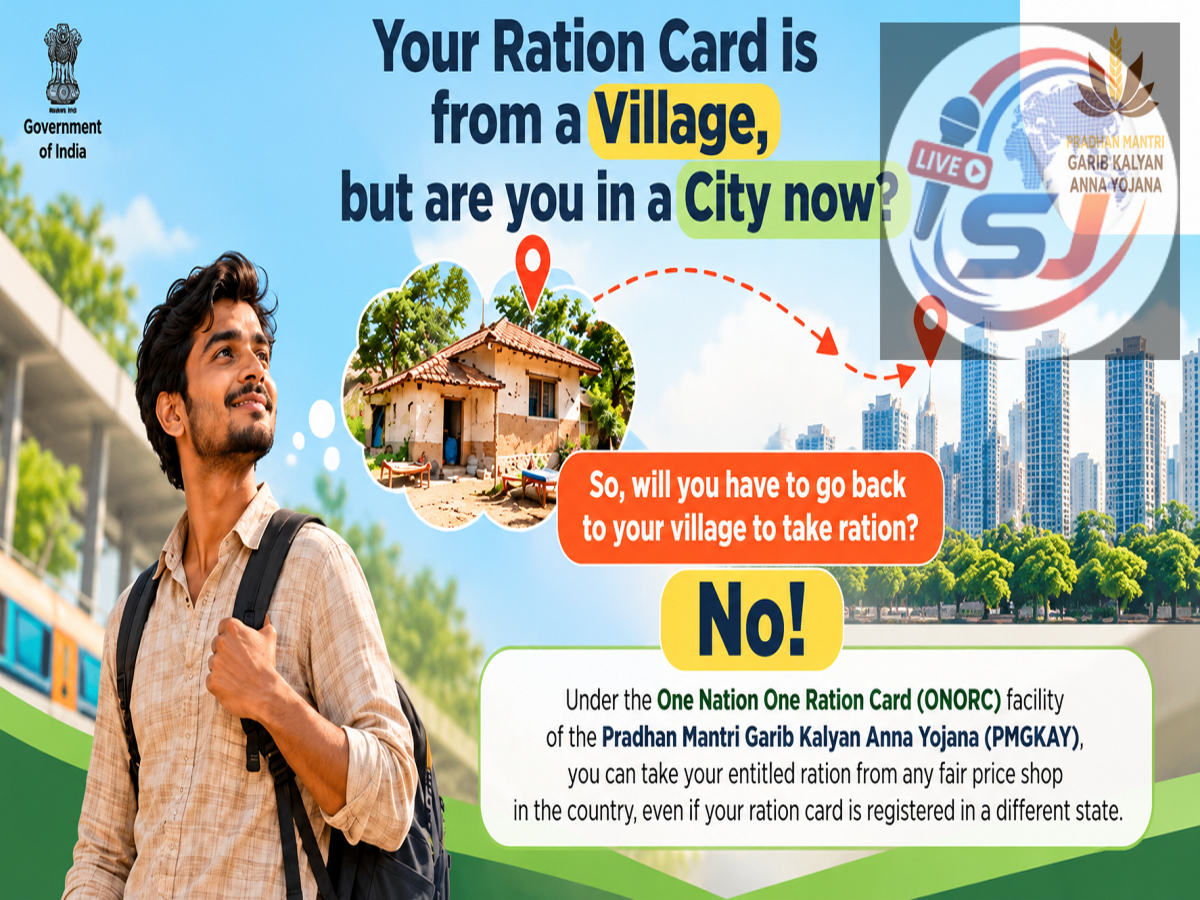
One Nation One Ration Card Scheme 2026: Ration cardholders in India can access their eligible foodgrain benefits even when they move away from their home state. Under the government's One Nation One Ration Card (ONORC) initiative, beneficiaries covered by the Antyodaya Anna Yojana (AAY) and Priority Household (PHH) categories can collect their entitled ration from participating Fair Price Shops across the country using their existing ration cards.
The initiative is particularly useful for migrant workers, daily wage earners, construction labourers and families who frequently relocate for employment or other reasons.
Instead of being restricted to a ration shop in their home district or state, eligible beneficiaries can access their foodgrain entitlements from another location through the portability system.
The main objective of ONORC is to ensure that eligible people do not lose access to subsidised or free foodgrains simply because they are living away from their registered address.
What Is the One Nation One Ration Card Scheme?
One Nation One Ration Card is a nationwide ration portability initiative introduced by the Government of India under the National Food Security Act (NFSA).
The system allows eligible ration cardholders to obtain their foodgrain entitlements from participating Fair Price Shops outside their home location.
Previously, beneficiaries generally depended on the ration shop linked to their registered ration card.
This arrangement could create difficulties for people who moved to other states for work, education or family responsibilities.
ONORC addresses this problem by allowing beneficiaries to access their existing entitlements through an integrated digital distribution network.
Importantly, eligible beneficiaries do not need to obtain a separate ration card simply because they have moved to another state.
Who Can Get Ration Under ONORC?
The portability facility is available to eligible beneficiaries covered under the National Food Security Act.
Two major categories are included:
Antyodaya Anna Yojana (AAY): This category covers identified households facing severe economic hardship. Eligible AAY households are entitled to 35 kg of foodgrains per household per month under NFSA.
Priority Household (PHH): Beneficiaries covered under the PHH category are entitled to 5 kg of foodgrains per person per month.
These entitlements are determined by the beneficiary's eligibility category and the applicable government rules.
The central government currently provides eligible NFSA foodgrains free of cost under the Pradhan Mantri Garib Kalyan Anna Yojana framework.
However, the amount available to an individual household depends on its approved entitlement and the quantity already collected during the relevant month.
Can You Collect Free Ration From Another State?
Yes. Eligible AAY and PHH beneficiaries can use the ONORC portability facility to collect their entitled ration while living outside their home state.
For example, a worker whose ration card is registered in Bihar may be able to collect foodgrains from a participating ration shop in Delhi, Rajasthan, Maharashtra or another state.
Similarly, a family registered in Uttar Pradesh but temporarily living in Gujarat can use the portability facility, subject to successful beneficiary authentication and entitlement verification.
This arrangement helps migrant families maintain access to foodgrain assistance without repeatedly changing their ration card registration.
How to Get Ration From Any Fair Price Shop
Beneficiaries can generally follow these steps to access their ration through ONORC:
-
Visit a participating Fair Price Shop at your current location.
-
Provide your existing ration card details or the required beneficiary information.
-
Complete the prescribed Aadhaar-based or other permitted authentication process.
-
Ask the dealer to check your available monthly foodgrain entitlement.
-
Collect the eligible quantity after successful verification and transaction processing.
-
Obtain a transaction receipt wherever available and verify the quantity issued.
The electronic Point of Sale (ePoS) system helps verify beneficiary information and record the foodgrain distribution.
Beneficiaries should ensure that their ration card details are accurate and that any required authentication formalities have been completed.
Is a New Ration Card Required After Moving to Another State?
No separate ration card is ordinarily required solely to use the ONORC portability facility.
An eligible beneficiary can continue using the existing NFSA ration card issued by their home state.
This is one of the most important advantages of the programme because migrant workers may frequently change their place of residence.
However, portability does not automatically provide eligibility to someone who is not already covered under the applicable NFSA beneficiary categories.
People seeking a new ration card or changes to their household details must follow the relevant state government's procedures.
How Much Free Ration Can AAY and PHH Families Receive?
The quantity of foodgrains depends on the category under which a household is registered.
| Beneficiary Category |
Monthly Foodgrain Entitlement |
|---|---|
| Antyodaya Anna Yojana (AAY) |
35 kg per eligible household |
| Priority Household (PHH) |
5 kg per eligible person |
For example, a PHH family with four eligible members is entitled to 20 kg of foodgrains per month.
An eligible AAY household receives a household-based entitlement of 35 kg per month, regardless of the number of members, under the standard NFSA provision.
These are monthly entitlements, not additional quantities granted for using ONORC. Foodgrains already collected during the month are accounted for when determining the remaining available entitlement.
How Can Beneficiaries Check Ration Card Details?
Ration cardholders can use official government services to check their beneficiary information and foodgrain entitlements.
The Mera Ration 2.0 application is designed to help users access ration-related information and services.
Depending on the available features and state-level integration, beneficiaries may be able to check ration card details, entitlement information and nearby Fair Price Shops.
They can also visit the official Department of Food and Public Distribution website or their respective state food department portal.
For assistance, beneficiaries can approach the local food supply office or use the applicable government grievance mechanism.
Why Is ONORC Important for Migrant Workers?
Millions of people travel between Indian states for employment and other livelihood opportunities.
Workers employed in construction, factories, transport, agriculture and domestic services may spend extended periods away from their registered homes.
Without ration portability, accessing foodgrain benefits could become difficult when beneficiaries move.
ONORC helps address this challenge by connecting eligible households to the Public Distribution System beyond state boundaries.
The facility can be particularly valuable for workers whose employment location changes frequently.
It also allows eligible family members to access available entitlements according to the portability arrangements and applicable distribution rules.
Final Update
The One Nation One Ration Card initiative allows eligible AAY and PHH beneficiaries to collect their entitled foodgrains from participating ration shops across India without obtaining a new ration card.
AAY households are entitled to 35 kg of foodgrains per month, while PHH beneficiaries receive 5 kg per eligible person per month under NFSA.
The most important message is that an eligible beneficiary's access to ration benefits should not depend on remaining in their home state.
With ONORC, eligible ration cardholders can continue accessing their foodgrain entitlements wherever they move within India, subject to verification and the applicable distribution rules.