One Nation One Ration Card 2026: Get Free Ration Anywhere in India Without Returning to Your Home State
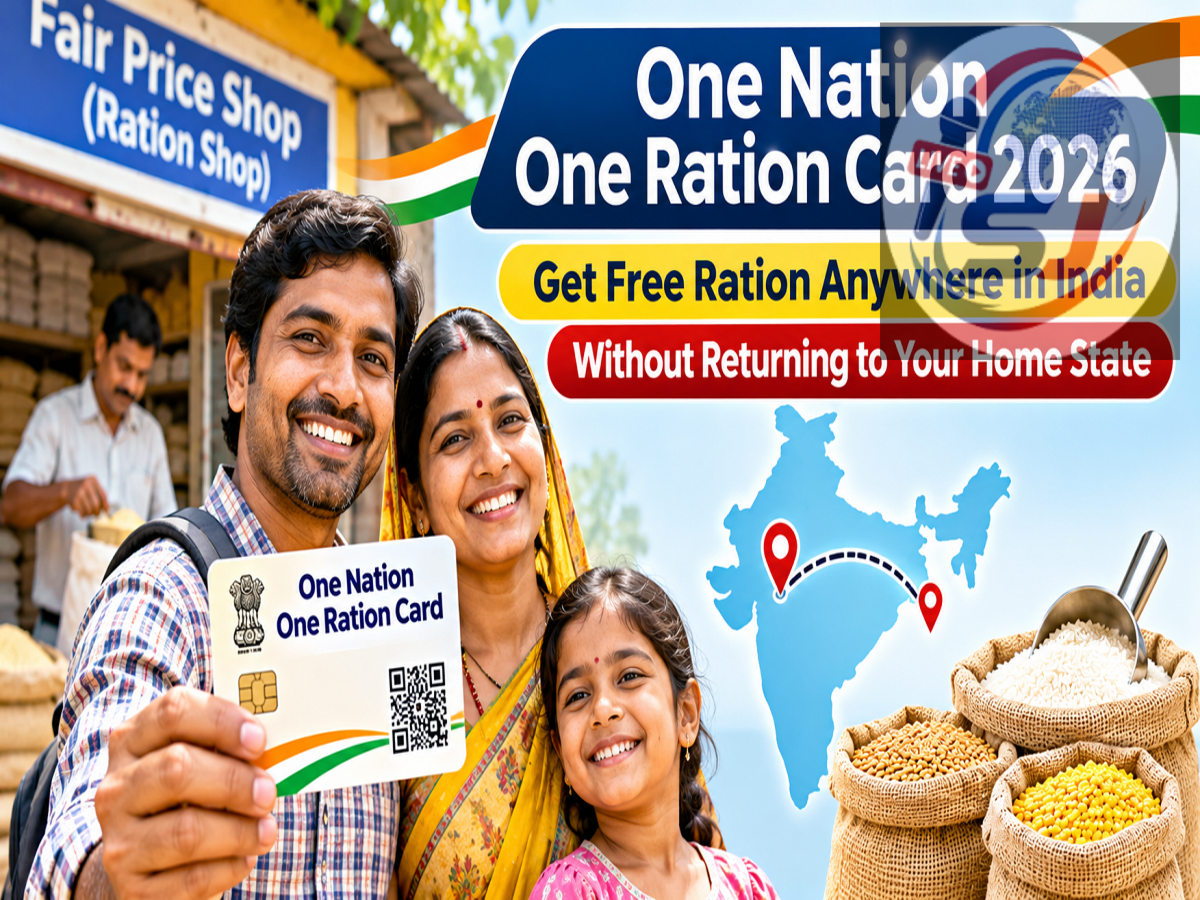
One Nation One Ration Card Scheme 2026: Ration cardholders living away from their home states can access their entitled foodgrains from eligible fair price shops across India. The Department of Food and Public Distribution (DFPD) has reminded beneficiaries that the One Nation One Ration Card (ONORC) facility allows families to collect their monthly ration even when members live in different cities or states.
Millions of Indians move from one state to another for employment, education, business, and other personal reasons. For families dependent on government foodgrain assistance, collecting monthly ration supplies from their registered home location can be difficult.
The One Nation One Ration Card (ONORC) system addresses this challenge by allowing eligible beneficiaries to access their foodgrain entitlements through the Public Distribution System (PDS) while living away from their registered location.
In a public awareness message shared on November 23, 2026, the Department of Food and Public Distribution explained that beneficiaries no longer need to travel to their home states simply to collect their entitled foodgrains.
The department also highlighted an important feature: eligible members of the same family can obtain their respective ration shares from different locations, subject to applicable rules and authentication requirements.
What Is the One Nation One Ration Card Scheme?
One Nation One Ration Card is a nationwide ration portability facility designed to make foodgrain distribution more accessible to beneficiaries covered under the National Food Security Act (NFSA).
The initiative enables eligible ration cardholders to collect their entitled foodgrains from participating fair price shops across India, regardless of where their ration card was originally issued.
The system operates through technology-enabled Public Distribution System infrastructure, including electronic Point of Sale (ePoS) devices and beneficiary authentication mechanisms.
Its primary objective is to ensure that people who migrate for work or other reasons do not lose access to their foodgrain entitlements simply because they are away from their home state.
For example, a worker whose ration card was issued in Bihar may be able to collect their entitled foodgrains from a participating ration shop in Delhi, Rajasthan, Maharashtra, or another state.
The beneficiary does not ordinarily need to obtain a new ration card solely to use the portability facility.
Family Members Can Collect Their Ration From Different States
One of the most useful features of the ONORC system is its support for families whose members live in different locations.
Under the portability arrangement, eligible household members may collect their respective shares of foodgrains from separate fair price shops.
Consider a family of five registered under the Priority Household (PHH) category.
If three members continue living in their home village while two members work in another state, the household can potentially divide its monthly foodgrain entitlement between the two locations.
The members living in the village may collect their eligible portion locally, while the migrant members can obtain their share from a participating fair price shop near their workplace.
This arrangement helps families access their foodgrain entitlements without requiring everyone to visit the same ration shop.
However, the total quantity collected by all family members cannot exceed the household's monthly entitlement.
How Much Free Ration Can Beneficiaries Receive?
The quantity of foodgrains available under the National Food Security Act depends on the beneficiary's ration card category.
Two major categories are covered: Antyodaya Anna Yojana (AAY) and Priority Households (PHH).
| Ration Card Category | Monthly Foodgrain Entitlement |
|---|---|
| Antyodaya Anna Yojana (AAY) | 35 kg per eligible household |
| Priority Household (PHH) | 5 kg per eligible person |
| PHH family with 2 eligible members | 10 kg |
| PHH family with 3 eligible members | 15 kg |
| PHH family with 4 eligible members | 20 kg |
| PHH family with 5 eligible members | 25 kg |
| PHH family with 6 eligible members | 30 kg |
Under the central government's free-foodgrain arrangement, eligible NFSA beneficiaries receive their prescribed foodgrain entitlements without paying for them.
The government approved the continuation of free foodgrain distribution under the Pradhan Mantri Garib Kalyan Anna Yojana (PMGKAY) for five years beginning January 1, 2024.
For AAY households, the entitlement is fixed at 35 kg per family per month. For PHH beneficiaries, the entitlement is calculated according to the number of eligible household members.
Under ONORC, portability changes where beneficiaries can collect their foodgrains; it does not increase their overall monthly entitlement.
How to Collect Free Ration in Another State
Beneficiaries wishing to use the One Nation One Ration Card facility can follow these general steps:
-
Find a participating ration shop: Locate an ePoS-enabled fair price shop near your current residence or workplace.
-
Provide ration card details: Share your ration card number or other information requested by the dealer.
-
Complete authentication: Follow the applicable Aadhaar-based or other permitted beneficiary authentication procedure.
-
Verify your entitlement: Confirm the quantity of foodgrains available for collection.
-
Collect your foodgrains: Receive the eligible quantity after the transaction is successfully processed.
-
Check transaction details: Review the distribution record or receipt, where available, to ensure the correct quantity has been issued.
Beneficiaries should remember that authentication procedures and operational arrangements may vary according to the applicable government guidelines.
Is a New Ration Card Required After Moving to Another State?
Eligible beneficiaries generally do not need to apply for a separate ration card merely because they have temporarily moved to another state.
The ONORC facility is designed to enable access to existing NFSA entitlements through the nationwide portability system.
For example, a person holding an eligible ration card issued in Uttar Pradesh may use the same ration card details to access foodgrains from a participating fair price shop in Gujarat.
This facility is particularly relevant for seasonal workers, construction labourers, factory employees, and other individuals who frequently change their place of residence.
However, beneficiaries must remain eligible under the NFSA, and their records must be available for verification through the applicable distribution system.
How to Check Ration Card Details Online
Beneficiaries can access official ration card information through the National Food Security Portal and their respective state food department websites.
Steps to check ration card information:
-
Visit the official website at https://nfsa.gov.in/.
-
Open the ration card information section.
-
Select the relevant state or Union Territory.
-
Follow the link to the official state food department portal.
-
Enter the required ration card or beneficiary information.
-
Verify the available details, including household members and ration card category.
The exact procedure may differ across state portals.
Beneficiaries can also seek information through the official Mera Ration application and government-supported assistance channels, where available.
Why ONORC Is Important for Migrant Workers
Migrant workers often face difficulties accessing government services when they move away from their registered home addresses.
Before nationwide ration portability became available, obtaining foodgrains from a ration shop outside the registered distribution area could be challenging.
ONORC provides a mechanism to address this issue by making eligible foodgrain entitlements portable.
The facility can be especially helpful for workers who move between states for seasonal employment or live separately from their families.
It also supports households in which some members remain in their native villages while others work in urban areas.
By allowing foodgrain collection at different locations, the system can reduce the need for unnecessary travel and improve access to essential food supplies.
What If a Ration Shop Refuses to Provide Foodgrains?
Beneficiaries who face difficulties using ration portability should first verify whether their ration card is eligible and whether the selected fair price shop supports the required transaction.
If the issue continues, they may contact the concerned state food and civil supplies department or use the official grievance redressal mechanism.
It is advisable to retain relevant transaction information and report discrepancies involving foodgrain quantities or unsuccessful distribution attempts.
Beneficiaries should rely on official government portals and authorised ration distribution channels rather than sharing personal information with unverified websites or individuals.
Conclusion
The One Nation One Ration Card facility makes it easier for eligible families to access government foodgrain assistance while living away from their registered home locations.
The Department of Food and Public Distribution has reiterated that beneficiaries can collect their entitled ration from participating fair price shops across the country without returning to their home states.
Another important benefit is the ability of eligible family members to collect their respective shares from different locations, within the household's overall entitlement.
For migrant workers and families living in multiple states, understanding this facility can help ensure continued access to essential foodgrain support.
Source Credit: Department of Food and Public Distribution (DFPD), Government of India, official X account @fooddeptgoi, public awareness communication dated November 23, 2026, regarding One Nation One Ration Card (ONORC). Additional reference: National Food Security Portal — https://nfsa.gov.in/.