October 1 Rule Changes: 5 Updates on LPG, SBI ATM, Aadhaar, FD and Appliance Prices to Watch
October 1 Rule Changes 2026: The beginning of October is set to bring several financial and household-related developments that consumers may want to track. From LPG-related requirements and banking rules to Aadhaar services, fixed deposits and possible changes in appliance prices, the impact could be felt across everyday household budgets.
Some of these changes involve rules taking effect from October 1, 2026, while others concern prices or rates that can be revised around the beginning of a new month or quarter. Consumers should therefore distinguish between confirmed regulatory changes and developments that depend on individual banks, companies or official price announcements.
Here are five important areas to watch as October begins.
1. LPG Consumers Should Check Aadhaar and e-KYC Requirements
LPG customers are among those who may need to pay attention to verification requirements from October.
The supplied information highlights Aadhaar-based biometric authentication/e-KYC for eligible LPG consumers, particularly in connection with subsidy-related benefits.
Consumers who are required to complete verification but have not yet done so may face problems receiving applicable subsidy benefits or may have to purchase cylinders at the non-subsidised or market-linked price, depending on the rules applicable to their connection.
However, failure to complete verification should not automatically be interpreted as cancellation of the LPG connection.
Customers should check their status with their authorised LPG distributor or oil marketing company and complete any pending verification through official channels.
They should also remain alert to fraud. Never share an OTP, bank PIN, UPI PIN or card details with someone claiming that these are required to complete LPG e-KYC.
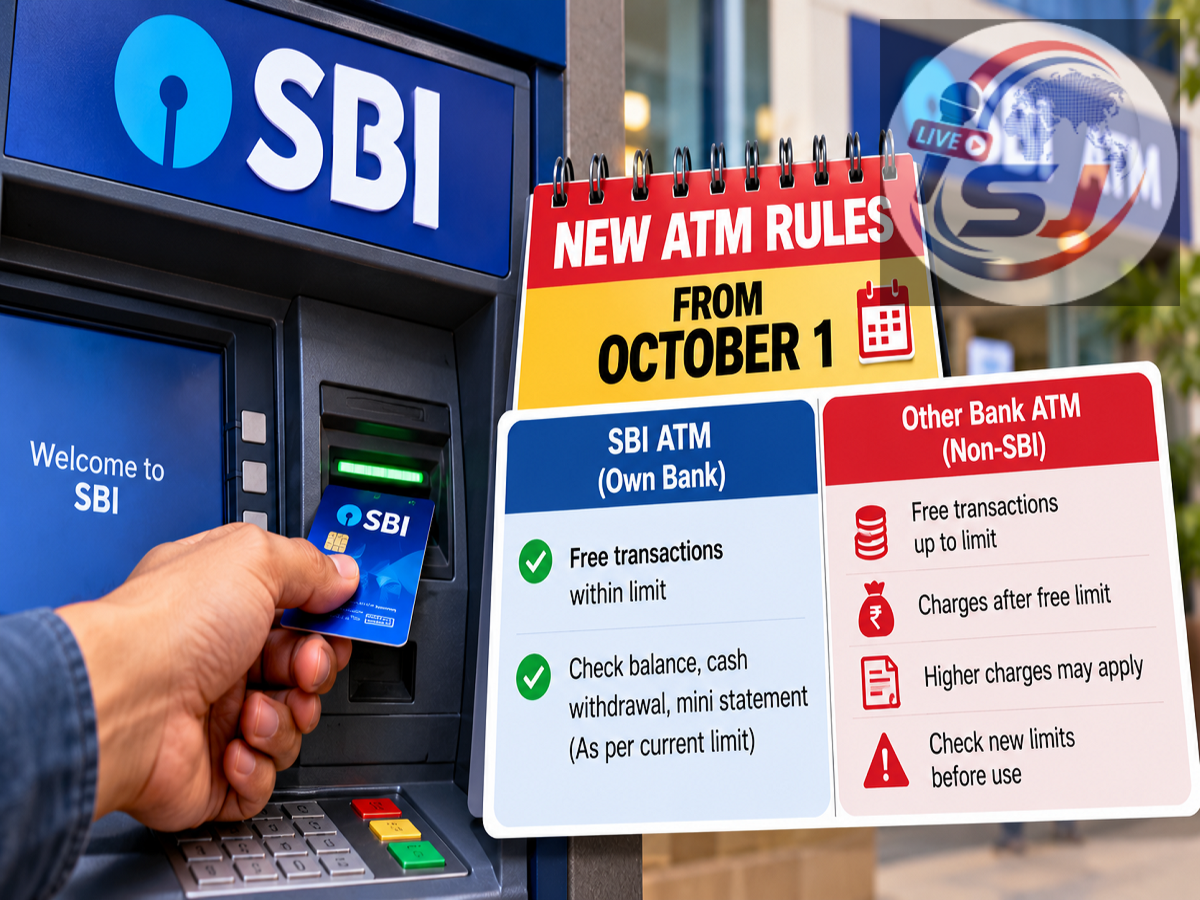
2. SBI ATM Rules Change From October 1
State Bank of India customers should also check their ATM transaction entitlement from October 1.
According to the information provided, eligible SBI Salary Package account holders who previously received up to 10 free transactions per month at other banks' ATMs or Automated Deposit-cum-Withdrawal Machines (ADWMs) will see this allowance reduced to five free transactions per month.
The applicable limit can cover financial as well as specified non-financial transactions.
Customers exceeding their free allowance may face charges according to the bank's applicable schedule.
The important point is that the change should not be interpreted as every SBI customer getting only five free ATM transactions. ATM benefits vary according to account category and the type of ATM being used.
Basic Savings Bank Deposit accounts, for example, are governed by a different transaction structure.
SBI customers should therefore identify their account type and check the applicable free transaction limit before using other banks' ATMs repeatedly.
3. Aadhaar-Related Services and Verification Rules Need Attention
October is also bringing attention to Aadhaar-linked services and authentication requirements.
Consumers increasingly use Aadhaar for KYC and verification across banking, government benefits and other regulated services. Any new requirement taking effect from October should therefore be checked carefully against the particular service involved.
Aadhaar itself does not mean that every citizen has to complete a new universal e-KYC exercise on October 1.
Instead, customers should check whether a particular bank, LPG provider, government scheme or financial institution has asked them to complete an Aadhaar-related verification process.
This distinction is important because messages claiming that an Aadhaar number will be "blocked" unless the recipient immediately clicks a link are commonly used in scams.
Customers should use authorised Aadhaar and service-provider channels for any required update or authentication.
4. FD Investors Should Check Interest Rates Before Booking a Deposit
October marks the beginning of a new quarter, making it a useful time for fixed-deposit investors to review prevailing rates.
Banks can revise deposit interest rates depending on liquidity conditions, funding requirements and broader interest-rate developments.
Therefore, someone planning to open a new FD should not assume that a rate advertised earlier will necessarily remain available throughout October.
Existing fixed deposits are generally governed by the interest rate and terms applicable when the deposit was booked, unless the product itself provides otherwise.
The bigger consideration is for customers opening or renewing deposits.
Before investing, compare the tenure, regular-customer rate, senior-citizen rate, premature-withdrawal conditions and applicable penalty.
Customers should also avoid choosing an FD solely because another institution advertises a marginally higher rate. Deposit safety, institution type and applicable deposit-insurance protection should also be considered.
5. TV, AC and Other Appliance Prices Could Change
Consumers planning to purchase televisions, air conditioners or other household appliances during the festive shopping season should also keep an eye on retail prices.
The source indicates that prices of some appliances could be revised around October because of factors affecting manufacturers and sellers.
A possible price increase, however, is different from a government-mandated nationwide price hike.
Actual prices can vary by manufacturer, model, dealer, location, festive discount and available inventory.
This means consumers should compare the final invoice price rather than relying only on reports of a percentage increase or an advertised maximum retail price.
Festive offers, bank discounts and clearance sales can also mean that the effective price paid by a customer moves differently from the manufacturer's headline price revision.
What Could Affect Your Household Budget From October 1?
The five developments do not affect everyone in the same way.
| Area | What Consumers Should Check |
|---|---|
| LPG | Pending Aadhaar/e-KYC or biometric verification requirements |
| SBI ATM | Free transaction limit applicable to the specific account |
| Aadhaar | Only service-specific verification requirements communicated officially |
| Fixed Deposits | Latest interest rate before opening or renewing an FD |
| TV/AC & appliances | Actual dealer price and any manufacturer revision |
For an LPG customer, completing required verification could be the immediate priority. An SBI Salary Package customer who frequently uses other banks' ATMs may instead need to monitor the reduced free-transaction allowance.
Someone planning a new fixed deposit should check the latest rate on the day of investment, while a household planning a large appliance purchase should compare current prices and festive discounts.
Do Not Treat Every October 1 Claim as a Nationwide New Rule
Consumers should be careful with messages describing dozens of unrelated changes as compulsory "new government rules from October 1."
Some developments are genuine regulatory or banking changes, while others are periodic price revisions, company decisions or upcoming reviews.
The effective date also matters. A rule announced in September does not necessarily become applicable to every consumer on October 1.
Checking the institution involved, the effective date and the category of customers covered can prevent unnecessary confusion.
What Should Consumers Do Now?
As October begins, customers should review services that directly affect them rather than reacting to every viral message about rule changes.
SBI customers can check their ATM transaction entitlement, LPG consumers can confirm whether any authentication remains pending, and FD investors can compare the latest deposit rates before locking in their money.
Similarly, anyone planning to buy a TV, AC or another expensive appliance should compare actual retail prices after October begins.
The most important principle is simple: not every October 1 development applies to every household in exactly the same way. Checking the official terms applicable to your bank account, LPG connection or financial product can help you avoid unnecessary charges and last-minute problems.