
New Rules From October 1: LPG, Fuel Tax, FD and ATM Changes You Should Know
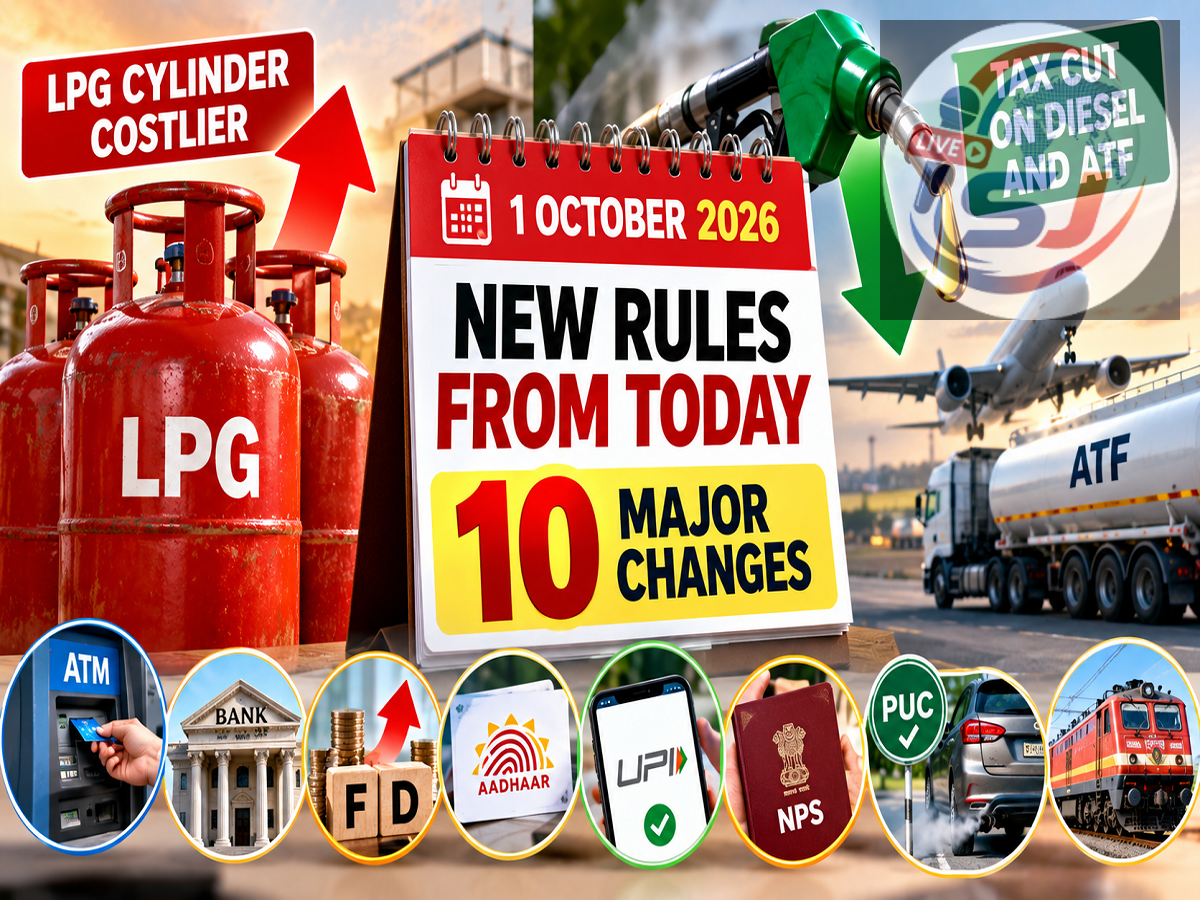
October 2026 has begun with several financial and consumer-related changes that could affect households, businesses, bank customers and investors. From higher commercial LPG cylinder prices to revised export taxes on diesel and Aviation Turbine Fuel (ATF), a number of rules and rates have changed from October 1, 2026.
Banking customers also need to pay attention to changes involving fixed deposits and ATM transactions, while some of the other October updates relate to financial services and everyday expenses.
However, not every change applies to every consumer. For instance, the latest LPG increase applies to 19-kg commercial cylinders, while domestic 14.2-kg LPG prices remain unchanged. Similarly, the reduction in the levy on diesel and ATF applies to exports and does not directly reduce petrol or diesel prices at fuel stations.
Here are the major changes consumers should understand from October 1.
1. Commercial LPG Cylinders Become Costlier
One of the most immediate changes from October 1 is an increase in the price of 19-kg commercial LPG cylinders.
In Delhi, the price has increased by ₹62.50, rising from ₹2,747.50 to ₹2,810 per cylinder.
Mumbai's commercial cylinder is now around ₹2,764, while Chennai's rate has increased to ₹2,983.
Patna has seen a ₹71.50 increase, taking the new commercial LPG price to ₹3,100.50.
The increase could raise operating expenses for restaurants, hotels, caterers, sweet shops and other businesses that rely heavily on commercial cooking gas.
2. Domestic LPG Prices Remain Unchanged
Household consumers have been spared from the October 1 LPG increase.
The price of a standard 14.2-kg domestic LPG cylinder has not been increased under the latest revision.
According to the supplied rates, a domestic cylinder continues to cost ₹942 in Delhi, ₹941.50 in Mumbai and ₹957.50 in Chennai.
Consumers should therefore avoid confusing the commercial LPG hike with domestic cooking-gas prices.
3. Diesel Export Tax Reduced by ₹4 Per Litre
The government has reduced the combined levy applicable to diesel exports.
From October 1, the combined Special Additional Excise Duty (SAED) and Road and Infrastructure Cess on exported diesel has been reduced from ₹20 per litre to ₹16 per litre.
This represents a reduction of ₹4 per litre.
However, this is an export-tax change. It does not mean diesel at domestic fuel stations has become ₹4 cheaper.
4. ATF Export Levy Cut by ₹4.50 Per Litre
The levy applicable to exports of Aviation Turbine Fuel (ATF) has also been reduced.
It has been lowered from ₹15 per litre to ₹10.50 per litre, a reduction of ₹4.50.
Meanwhile, the cited levy on petrol exports remains unchanged at ₹0.50 per litre.
Again, these changes relate to exports rather than a direct reduction in domestic retail fuel prices.
5. Petrol and Diesel Pump Prices Remain Unchanged
Despite the export-tax changes, motorists have not received a corresponding reduction in petrol or diesel prices.
According to the supplied October 1 rates, petrol in Delhi remains at ₹102.12 per litre, while diesel continues to cost ₹95.20 per litre.
The key distinction for consumers is that a lower export levy and a lower retail fuel price are two different things.
Domestic pump prices would need to be revised separately.
6. New Rule for Large Fixed Deposits
A change related to bulk fixed deposits has also come into effect from October 1.
The important threshold is ₹3 crore.
Under the revised framework described in the supplied information, banks will have to provide greater transparency about the interest rates offered on qualifying large deposits and publish the relevant rates on their websites.
This change is mainly aimed at large depositors and should not be interpreted as an automatic interest-rate revision for every retail FD customer.
Customers with regular fixed deposits below the applicable bulk-deposit threshold do not need to assume that their existing FD interest rate has changed simply because the new rule has taken effect.
7. SBI Customers Should Check Revised ATM Rules
October also brings attention to revised ATM-related rules for State Bank of India customers.
Customers should check the number of free ATM transactions available under their account category and understand the charges that may apply once the permitted free limit is exhausted.
ATM rules can vary depending on factors such as the type of account, the ATM network being used and the applicable transaction limits.
SBI customers who frequently withdraw cash should therefore check the latest applicable schedule of charges rather than assuming that all withdrawals remain free.
8. Bank Customers Should Review New October Conditions
The beginning of a new month often brings revised banking conditions, charges and operational rules.
Customers should check communications received from their bank regarding ATM withdrawals, fixed deposits, service charges and account-related requirements.
It is particularly important to rely on the official bank website or mobile application rather than messages circulating on social media, as financial-rule updates are frequently presented without important conditions.
9. Businesses Face Higher Operating Costs From LPG Hike
Although household LPG prices are unchanged, the commercial cylinder increase could still indirectly affect consumers.
Restaurants and other food businesses that use multiple 19-kg cylinders every month will have to absorb a higher fuel bill.
For example, a Delhi business consuming 20 commercial cylinders in a month would face an additional LPG expense of:
₹62.50 × 20 = ₹1,250 per month
Whether businesses pass this cost on to customers through higher prices will depend on their overall operating expenses and pricing decisions.
10. Consumers Should Check Which October Changes Actually Apply to Them
The most important lesson from the October 1 rule changes is that headline announcements often come with conditions.
The LPG hike does not apply to the standard 14.2-kg household cylinder.
The ₹4 reduction in the diesel levy does not mean diesel has become ₹4 cheaper at petrol pumps.
The fixed-deposit change does not automatically alter the interest rate on every customer's FD.
Similarly, ATM-related charges and free-transaction limits can depend on the customer's bank, account type and transaction pattern.
Consumers should therefore check the exact terms before assuming that a new rule directly affects them.
October 1 Changes at a Glance
| Change | What It Means |
|---|---|
| Commercial LPG | 19-kg cylinder prices increased |
| Domestic LPG | 14.2-kg cylinder prices unchanged |
| Diesel export levy | Cut from ₹20 to ₹16/litre |
| ATF export levy | Cut from ₹15 to ₹10.50/litre |
| Petrol export levy | Remains ₹0.50/litre |
| Petrol/Diesel retail prices | No corresponding October 1 cut |
| Bulk FD | ₹3 crore threshold relevant to new disclosure framework |
| SBI ATM rules | Customers should check revised transaction conditions |
| Businesses | Higher commercial LPG costs may raise expenses |
| Consumers | Verify whether each rule applies to your account or transaction |
What Should You Do After the October 1 Changes?
Households should check the actual domestic LPG price in their city rather than assuming that all cylinders have become more expensive.
Motorists should similarly check current petrol and diesel rates instead of expecting an immediate benefit from the reduction in export taxes.
FD investors planning to deposit ₹3 crore or more should examine the bank's published bulk-deposit rate and applicable conditions.
SBI customers who use ATMs regularly should review the latest withdrawal limits and charges applicable to their particular account.
October has begun with several important changes, but their impact varies considerably depending on whether you are a household consumer, business owner, motorist, bank customer or large depositor.
Understanding these distinctions can help consumers avoid confusion and make better financial decisions during the new month.
Disclaimer: Rules, rates and banking charges may differ according to the institution, location, account type and applicable regulatory conditions. Readers should verify the latest information with the relevant bank, oil marketing company or official authority before making a financial decision.