
Mustard Oil Price at ₹220 a Litre: How Much Profit Does a Grocery Store Make on Each Bottle? Check Calculations
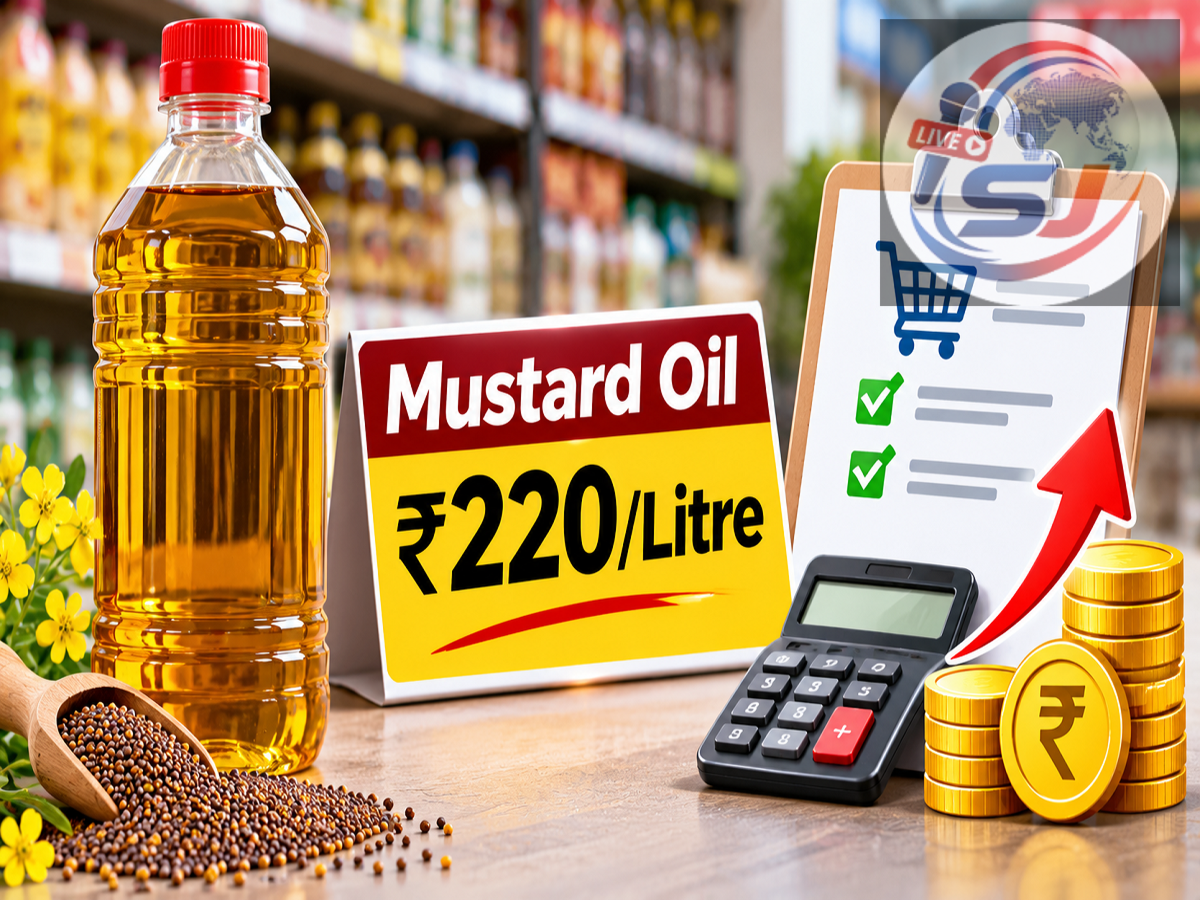
Mustard Oil Retail Profit Margin: Mustard oil is an essential kitchen ingredient for millions of Indian households. From preparing vegetables and traditional dishes to making pickles, it is widely used in everyday cooking. Whenever edible oil prices increase, household budgets come under pressure, and consumers often wonder whether local grocery retailers benefit from rising prices.
If a one-litre bottle of mustard oil is being sold for ₹220, does the neighbourhood kirana shopkeeper earn a substantial profit on every sale? The answer depends on several factors, including wholesale prices, brand-specific margins, distributor discounts, transportation expenses and market competition.
A higher retail price does not necessarily translate into higher earnings for grocery store owners. In many cases, retailers operate with relatively small margins on essential household products.
How Much Does a Shopkeeper Earn on Mustard Oil Worth ₹220?
The earnings of a grocery retailer primarily depend on the difference between the actual selling price and the effective purchase cost.
For instance, if a shopkeeper purchases a one-litre mustard oil bottle from a distributor for ₹210 and sells it for ₹220, the gross profit amounts to ₹10.
However, if the distributor increases the purchase price to ₹215, the retailer's gross earnings fall to just ₹5 per litre, assuming the selling price remains unchanged.
Mustard Oil Retail Profit Calculation
| Wholesale Purchase Price |
Retail Selling Price |
Gross Profit Per Litre |
Gross Profit Margin |
|---|---|---|---|
| ₹205 |
₹220 |
₹15 |
6.82% |
| ₹208 |
₹220 |
₹12 |
5.45% |
| ₹210 |
₹220 |
₹10 |
4.55% |
| ₹212 |
₹220 |
₹8 |
3.64% |
| ₹215 |
₹220 |
₹5 |
2.27% |
| ₹218 |
₹220 |
₹2 |
0.91% |
These calculations are illustrative and assume purchase and selling prices are compared on a consistent tax basis. Actual retailer margins may differ across brands, distributors and markets.
The table demonstrates that even a small increase in wholesale prices can significantly reduce a shopkeeper's earnings.
How Much Can a Kirana Store Earn by Selling 100 Litres?
The total gross earnings of a grocery store depend on both the profit per litre and the quantity sold.
For example, if a retailer earns ₹10 on every litre of mustard oil, selling 100 litres would generate a gross profit of ₹1,000.
However, if the margin falls to ₹5 per litre, the same sales volume would generate only ₹500 in gross profit.
| Quantity Sold |
Profit at ₹5 Per Litre |
Profit at ₹8 Per Litre |
Profit at ₹10 Per Litre |
|---|---|---|---|
| 10 litres |
₹50 |
₹80 |
₹100 |
| 50 litres |
₹250 |
₹400 |
₹500 |
| 100 litres |
₹500 |
₹800 |
₹1,000 |
| 200 litres |
₹1,000 |
₹1,600 |
₹2,000 |
| 500 litres |
₹2,500 |
₹4,000 |
₹5,000 |
| 1,000 litres |
₹5,000 |
₹8,000 |
₹10,000 |
These figures represent gross trading profits before deducting business operating expenses.
Why Gross Profit Is Different From Actual Shopkeeper Earnings
Consumers sometimes assume that the entire difference between the wholesale and retail price becomes the shopkeeper's personal income. However, grocery retailers must also cover several operational expenses.
Some of the major expenses include:
-
Monthly shop rent.
-
Electricity and maintenance bills.
-
Employee salaries.
-
Transportation and delivery expenses.
-
Product storage costs.
-
Damaged or unsold inventory.
-
Discounts offered to customers.
-
Business financing and administrative expenses.
After accounting for these expenses, the retailer's actual net profit may be considerably lower than the gross margin earned on individual products.
For example, if a shopkeeper earns a gross profit of ₹10 per litre and allocates ₹3 towards operating expenses, the estimated net earnings would be ₹7 per litre. This is only an illustrative scenario, as actual expenses vary between businesses.
Does an Increase in Mustard Oil Prices Benefit Retailers?
Rising mustard oil prices do not automatically increase grocery store profits.
When manufacturers or distributors raise wholesale prices, retailers may also need to increase their selling prices. However, the increase in retail prices may not always be sufficient to maintain their previous profit margins.
Consider the following example:
| Particulars |
Before Price Increase |
After Price Increase |
|---|---|---|
| Wholesale purchase price |
₹190 |
₹212 |
| Retail selling price |
₹200 |
₹220 |
| Gross profit per litre |
₹10 |
₹8 |
| Gross profit margin |
5.00% |
3.64% |
In this example, customers are paying ₹20 more for every litre of mustard oil, but the retailer's gross earnings have declined by ₹2.
This represents a 20% reduction in gross profit per litre despite an increase in the product's selling price.
What Determines the Profit Margin on Mustard Oil?
Retailer earnings on packaged edible oils are influenced by several commercial and market-related factors.
Brand and distributor pricing: Different mustard oil manufacturers offer different trade margins and wholesale rates to retailers.
Bulk purchase discounts: Grocery store owners purchasing larger quantities may receive better wholesale prices or additional distributor incentives.
Local market competition: Competition from supermarkets, online grocery platforms and neighbouring kirana stores can force retailers to offer discounts.
Transportation costs: Higher logistics and delivery expenses can reduce the effective profit margin.
Promotional schemes: Manufacturers may occasionally provide additional incentives, quantity-based discounts or promotional offers that improve retailer earnings.
Inventory purchase timing: Retailers who purchased stock before a wholesale price increase may temporarily have different margins from those purchasing fresh inventory.
Why Are Mustard Oil Prices Different Across Shops?
Consumers may notice that the same mustard oil brand is available at different prices across neighbourhood grocery stores, supermarkets and online platforms.
These differences can arise from bulk procurement arrangements, promotional campaigns, distributor pricing and individual retailers' business strategies.
The Maximum Retail Price (MRP) printed on a packaged product represents the maximum permitted retail selling price, inclusive of applicable taxes. Retailers can generally sell the product below its printed MRP.
However, a discount offered to consumers can also reduce the retailer's gross margin unless it is supported by the manufacturer or distributor.
What Happens to Grocery Stores When Edible Oil Prices Rise?
An increase in edible oil prices can create challenges for small grocery retailers as well as consumers.
Higher wholesale prices mean shopkeepers may need more working capital to maintain the same inventory levels. Meanwhile, customers facing increased household expenses may reduce their purchases, switch brands or look for cheaper alternatives.
Consequently, retailers could experience lower sales volumes alongside reduced profit margins.
If mustard oil is selling for ₹220 per litre, a shopkeeper purchasing it for ₹210 would earn ₹10 in gross profit, while someone purchasing it for ₹218 would earn only ₹2. The actual earnings ultimately depend on procurement costs, sales volumes and operating expenses.
Disclaimer: The mustard oil price of ₹220 per litre and wholesale purchase prices used in this article are illustrative scenarios based on the supplied report, not independently verified market quotations. Actual retailer margins and net profits may vary depending on the brand, location, distributor agreements and business expenses.