
MSME Scheme 2026: Government Support Helps Traditional Artisans Grow Their Business and Income
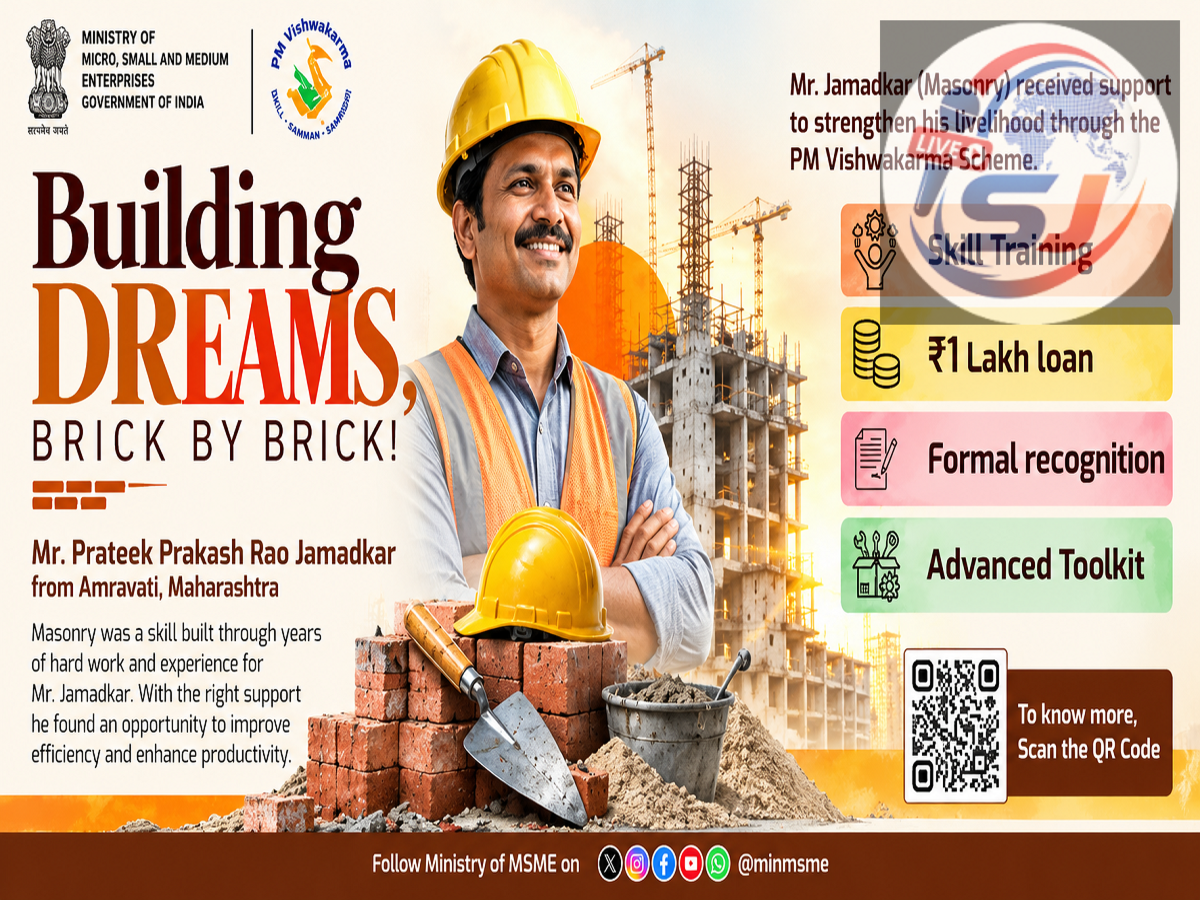
MSME Scheme 2026: Traditional artisans, craftspeople and small entrepreneurs play an important role in India's economy. From carpenters and blacksmiths to potters, tailors and other skilled workers, millions of people depend on traditional occupations for their livelihoods. Government initiatives focused on skill development, financial assistance and entrepreneurship aim to help these workers improve their earning opportunities and strengthen their businesses.
Under the broader vision of Udyami Bharat, Viksit Bharat, the Ministry of Micro, Small and Medium Enterprises (MSME) is highlighting the importance of supporting traditional skills and encouraging self-employment.
The initiative focuses on creating better opportunities for skilled workers by connecting traditional knowledge with modern training, technology and business development support.
Government Focuses on Strengthening Traditional Skills
India has a rich tradition of craftsmanship, with skilled workers producing goods and providing essential services across rural and urban areas.
Many artisans learn their trades through family businesses or years of practical experience.
However, traditional workers may face difficulties such as limited access to finance, outdated equipment, insufficient marketing opportunities and competition from larger businesses.
Government programmes aim to address some of these challenges by improving access to training, institutional support and financial services.
The objective is to help traditional occupations remain economically sustainable while enabling workers to adapt to changing market requirements.
PM Vishwakarma Scheme Supports Traditional Artisans
One major government initiative for traditional workers is the PM Vishwakarma Scheme, launched in September 2023.
The scheme is designed to provide support to eligible artisans and craftspeople working with their hands and tools in specified traditional trades.
It covers 18 recognised trades, including carpentry, blacksmithing, pottery, tailoring, masonry, barbering and other occupations.
The programme provides eligible beneficiaries with access to skill training, toolkit assistance, credit support and marketing-related services.
However, benefits are available only to applicants who meet the scheme's eligibility conditions and complete the prescribed verification process.
What Benefits Are Available Under PM Vishwakarma?
Eligible beneficiaries may receive several forms of assistance under the programme.
| Benefit | Scheme Provision |
|---|---|
| Recognition | PM Vishwakarma Certificate and ID Card |
| Basic skill training | Generally 5–7 days |
| Advanced skill training | 15 days or more |
| Training stipend | ₹500 per day during eligible training |
| Toolkit incentive | Up to ₹15,000 |
| First credit tranche | Up to ₹1 lakh |
| Second credit tranche | Up to ₹2 lakh |
| Concessional loan interest | 5% for eligible beneficiaries |
The credit assistance is provided through collateral-free enterprise development loans, subject to the applicable conditions and lender assessment.
The second loan tranche is not automatically available to every applicant. Eligibility depends on meeting the programme's requirements.
How Financial Support Can Help Small Artisans
Access to affordable credit can be important for workers who operate small businesses with limited capital.
For example, a carpenter may need funds to purchase better equipment, while a tailor may require additional sewing machines to expand production.
Similarly, a potter may want to improve production facilities or purchase tools that make daily work more efficient.
Financial assistance can help eligible entrepreneurs invest in their businesses without depending entirely on informal borrowing.
However, loans must be repaid according to the applicable terms, and applicants should assess their repayment capacity before borrowing.
Skill Training Can Improve Employment Opportunities
Training is another important part of programmes supporting traditional occupations.
Workers may already possess valuable practical skills but benefit from learning improved production methods, quality standards and digital business practices.
Training can help artisans understand modern tools, improve efficiency and explore new markets.
It may also introduce participants to digital payments, customer service and basic business management.
These skills can be useful for entrepreneurs who want to sell products beyond their local communities.
For younger workers, structured training may provide additional opportunities to develop inherited family skills into sustainable businesses.
Digital Technology Creates New Opportunities for Traditional Businesses
Digital platforms have changed how small businesses reach customers.
Artisans who previously depended mainly on local buyers may now explore opportunities through online marketplaces, social media and digital payment systems.
A small handicraft producer, for example, may be able to display products online and connect with customers in other cities.
Similarly, local service providers can use digital communication to manage customer enquiries and promote their work.
However, success depends on product quality, pricing, delivery arrangements, customer demand and digital literacy.
Government-supported awareness and training initiatives can help eligible workers become more comfortable using these tools.
How to Apply for PM Vishwakarma Scheme
Eligible artisans can obtain information about registration through the official PM Vishwakarma portal and authorised Common Service Centres.
The general application process includes:
-
Visit the official PM Vishwakarma website or an authorised CSC.
-
Check whether the applicant's traditional occupation is included in the notified trades.
-
Provide the required identity and occupational details.
-
Complete the prescribed Aadhaar-based verification process.
-
Submit the application through the authorised registration system.
-
Wait for the required verification and approval stages.
-
Access applicable benefits after meeting the relevant conditions.
Applicants should understand that registration alone does not guarantee immediate approval or financial assistance.
The programme includes verification requirements to establish eligibility.
Who Can Benefit From Traditional Skill Development Programmes?
Traditional skill support initiatives can be particularly relevant to self-employed craftspeople, family-based artisans and small service providers.
These workers often contribute to local economies by providing essential products and services.
Improved training and access to markets may help them increase productivity and strengthen their businesses.
Women entrepreneurs and workers in rural areas may also benefit from suitable entrepreneurship and skill development programmes, subject to the conditions of each scheme.
However, different MSME programmes have different eligibility rules, and not all benefits are available to every small business owner.
Where Can Entrepreneurs Get Official Information?
People interested in government assistance for traditional occupations can visit the following official websites:
-
MSME Ministry: https://msme.gov.in/
-
PM Vishwakarma Scheme: https://pmvishwakarma.gov.in/
-
Udyam Registration: https://udyamregistration.gov.in/
The official Udyam Registration portal provides free MSME registration for eligible enterprises.
Applicants should avoid unauthorised websites that demand unnecessary charges or promise guaranteed government loans.
They should also verify the latest scheme guidelines before sharing personal or banking information.
Final Update
Government initiatives under the broader Udyami Bharat, Viksit Bharat vision aim to strengthen traditional occupations and encourage entrepreneurship.
Programmes such as PM Vishwakarma offer eligible artisans access to training, toolkit support, concessional credit and other business development opportunities.
Traditional workers interested in expanding their livelihoods should check the eligibility conditions of relevant MSME schemes and apply only through official channels.
Supporting traditional skills can help preserve India's craftsmanship heritage while creating opportunities for stronger livelihoods, self-employment and small-business growth.
Add a sharper news hookMake the application steps clearer