
Maternal and Newborn Healthcare 2026: ASHA Workers Provide Home Visits, Free Ambulances and Safe Delivery Support
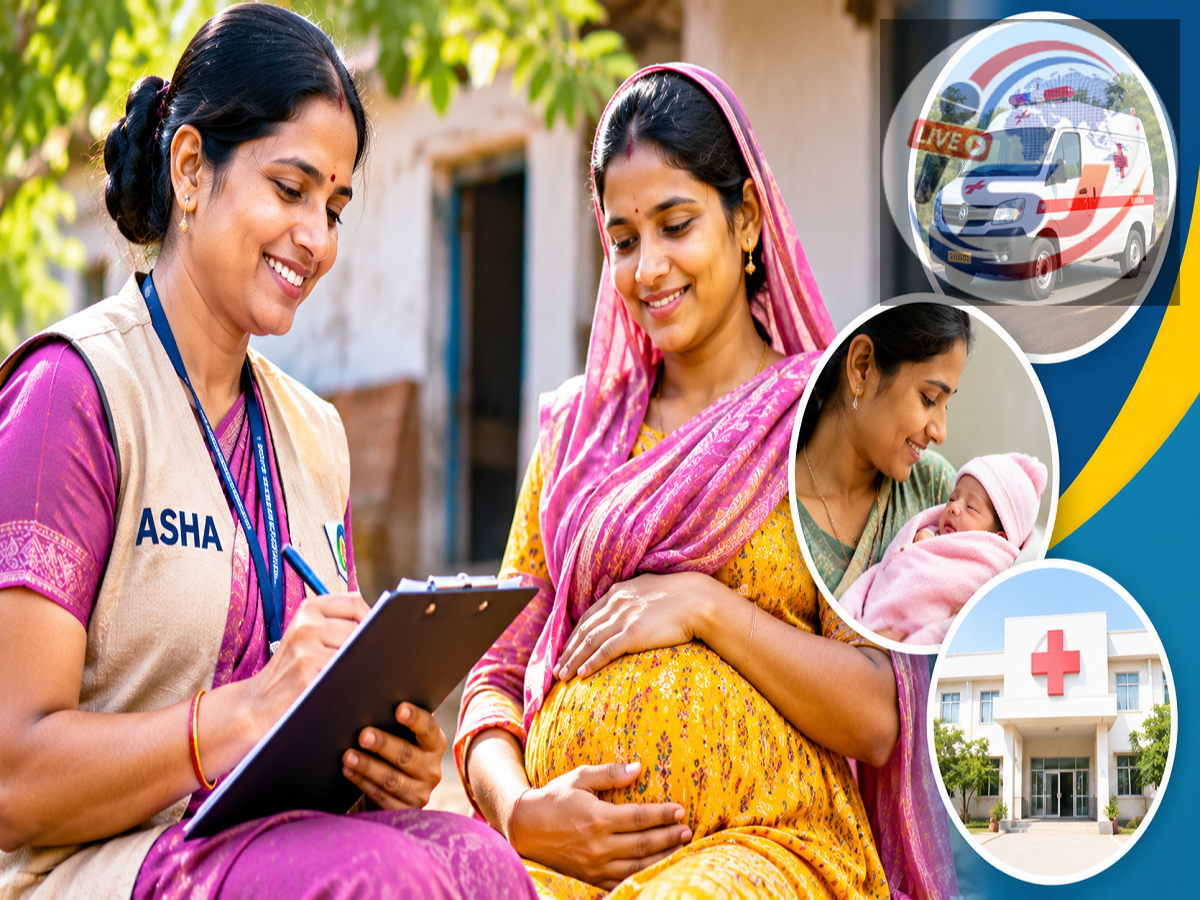
Maternal and Newborn Healthcare 2026: Efforts to improve healthcare services for pregnant women, new mothers and newborn babies are being supported through community-level health monitoring, institutional delivery facilities, emergency ambulance services and specialised newborn care.
According to a public health awareness communication, Accredited Social Health Activists (ASHA workers) are helping families access essential healthcare services by visiting households and monitoring the health of mothers and newborn children.
The initiative highlights the importance of regular health check-ups, timely medical assistance and safe deliveries at healthcare institutions.
Along with home-based monitoring, free ambulance services and specialised newborn care facilities are intended to improve access to medical treatment, particularly for families living in rural and underserved areas.
These services form part of broader maternal and child healthcare efforts aimed at reducing preventable health complications and ensuring timely medical attention.
ASHA Workers Play an Important Role in Maternal and Newborn Healthcare
ASHA workers serve as an important connection between communities and the public healthcare system.
They help families understand available healthcare services and encourage pregnant women and new mothers to seek timely medical attention.
Their responsibilities may include supporting antenatal care, promoting institutional deliveries and conducting prescribed home visits after childbirth.
During these visits, ASHA workers can help identify potential health concerns and guide families towards appropriate medical facilities.
They also provide information about breastfeeding, newborn care, nutrition, immunisation and hygiene.
The objective is to ensure that mothers and infants receive continued support during pregnancy and after delivery.
Maternal and Newborn Healthcare Services: Key Facilities
| Healthcare service |
Main purpose |
|---|---|
| ASHA home visits |
Monitor the health of mothers and newborns |
| Maternal health monitoring |
Help identify possible complications |
| Free ambulance services |
Support access to healthcare facilities |
| Institutional delivery |
Encourage childbirth under trained medical supervision |
| Specialised newborn care |
Provide treatment for newborns requiring additional medical attention |
| Health education |
Promote breastfeeding, nutrition, hygiene and immunisation |
The availability of individual services may depend on local healthcare arrangements, eligibility requirements and the facilities available in a particular district.
1. Door-to-Door Health Monitoring by ASHA Workers
Home visits are an important part of community-based maternal and newborn healthcare.
After childbirth, mothers and newborns may require continued monitoring to identify possible complications.
ASHA workers conduct home visits according to the applicable public health programme schedule.
These visits help families receive guidance about recovery after delivery and the care of newborn babies.
Health workers may ask about feeding patterns, the baby's activity, the mother's recovery and other relevant concerns.
If a potential health problem is identified, the family can be advised to seek medical evaluation.
Home-based monitoring is particularly useful for families who may otherwise face difficulties accessing healthcare facilities regularly.
However, ASHA visits do not replace medical examinations by qualified healthcare professionals.
2. Free Ambulance Services for Pregnant Women and Newborns
Timely transportation to a healthcare facility can be essential during pregnancy, childbirth and newborn emergencies.
Public ambulance services are intended to help eligible patients reach medical facilities when urgent assistance is required.
In many parts of India, government-supported ambulance systems operate through services such as 102 and 108, although availability and service arrangements vary by state.
Pregnant women may need ambulance support when labour begins or when complications arise.
Newborns requiring urgent treatment may also need transportation to facilities equipped to provide specialised care.
Families should confirm the ambulance numbers and eligibility conditions applicable in their state.
For an immediate emergency, India's integrated emergency response number is 112.
3. Institutional Delivery Helps Improve Maternal and Child Safety
Institutional delivery refers to childbirth taking place at a recognised healthcare facility under the supervision of trained medical personnel.
Such facilities can provide medical monitoring during labour and childbirth.
If complications occur, qualified healthcare professionals can assess the situation and provide appropriate treatment or arrange referral to a higher-level facility.
Institutional delivery can also support early newborn assessment and timely identification of health concerns.
Public health programmes encourage pregnant women to complete recommended antenatal check-ups and plan deliveries at suitable healthcare institutions.
The choice of facility should consider the mother's medical needs, risk factors and access to emergency obstetric services.
4. Specialised Newborn Care Facilities for Babies Requiring Medical Attention
Some newborn babies require additional medical monitoring or treatment after birth.
Premature babies, infants with low birth weight and newborns experiencing breathing difficulties or other complications may need specialised care.
India's public healthcare system includes different levels of newborn care facilities, such as Newborn Care Corners, Newborn Stabilisation Units and Special Newborn Care Units.
These facilities have different roles depending on the level of medical support required.
Special Newborn Care Units generally provide hospital-based care for sick newborns who require closer monitoring and treatment.
The availability of specialised services varies between healthcare institutions.
Babies requiring advanced treatment may need referral to appropriately equipped hospitals.
5. Importance of Postnatal Care for Mothers
Medical attention remains important after childbirth.
During the postnatal period, mothers may experience physical and emotional changes while recovering from delivery.
Healthcare professionals monitor recovery and provide advice about nutrition, breastfeeding, hygiene and other aspects of maternal health.
ASHA workers can support this process through home visits and guidance about accessing healthcare services.
Mothers should seek immediate medical assistance if they experience warning signs such as heavy bleeding, seizures, difficulty breathing, severe headaches or fever accompanied by serious illness.
Timely medical evaluation can help identify and manage complications.
Why Newborn Health Monitoring Is Important
The first weeks after birth are a particularly important period for newborn health.
Babies may develop feeding difficulties, infections, jaundice or other conditions that require medical attention.
Regular monitoring can help families recognise changes that should be assessed by healthcare professionals.
Parents and caregivers should seek urgent medical care if a newborn has difficulty breathing, refuses to feed, develops seizures, becomes unusually unresponsive or shows other serious warning signs.
A baby with fever or abnormally low body temperature also requires prompt medical assessment.
Families should not delay medical treatment while waiting for a scheduled home visit.
ASHA Workers Also Promote Breastfeeding and Immunisation
Apart from monitoring health conditions, ASHA workers help educate families about essential newborn care practices.
They encourage early initiation of breastfeeding and support awareness of exclusive breastfeeding for the first six months, in accordance with public health recommendations.
They may also remind families about routine childhood immunisation schedules and the importance of maintaining vaccination records.
Nutrition and hygiene education can help caregivers understand everyday practices that support maternal and child health.
Where additional assistance is required, ASHA workers can guide families towards relevant healthcare professionals and government facilities.
Government Healthcare Programmes Supporting Mothers and Newborns
Several national public health programmes support maternal and newborn healthcare in India.
These include initiatives such as the Janani Suraksha Yojana, Janani Shishu Suraksha Karyakram and home-based newborn care services under the National Health Mission.
The Janani Shishu Suraksha Karyakram provides specified free and cashless entitlements for eligible pregnant women and sick infants at public healthcare institutions, subject to programme guidelines.
These entitlements can include services related to delivery, treatment, medicines, diagnostics and transportation.
However, eligibility, service coverage and local implementation should be confirmed through the relevant government healthcare facility.
What Should Families Do to Access Maternal and Newborn Healthcare Services?
Families can contact their local ASHA worker, Auxiliary Nurse Midwife, primary health centre or government hospital for information about available services.
Pregnant women should register for antenatal care and attend the check-ups recommended by qualified healthcare professionals.
They should also discuss delivery planning, emergency transportation and any pregnancy-related risk factors with their healthcare provider.
After childbirth, families should follow medical advice regarding postnatal care, breastfeeding, newborn assessments and immunisation.
If a mother or baby develops symptoms of serious illness, immediate medical attention is essential.
Maternal and Newborn Healthcare 2026: Key Takeaways
Home visits by ASHA workers, free ambulance facilities, institutional deliveries and specialised newborn care services are important components of maternal and child healthcare.
These services are intended to improve access to medical support and help families identify health concerns at an early stage.
Community health workers also play an important role in spreading awareness about nutrition, breastfeeding, immunisation and safe healthcare practices.
Pregnant women and families with newborn babies should remain in contact with their local healthcare workers and use authorised medical facilities for check-ups, childbirth and emergency treatment.
Continued coordination between community health workers, hospitals and families can help improve the delivery of maternal and newborn healthcare services.
Source Credit: Public health awareness communication provided in the original Hindi statement. Additional background: National Health Mission, Ministry of Health and Family Welfare, Government of India. The original communication did not identify a specific state, issuing department or publication date.