
LPG to PNG Switch Gets Government Push: New Incentive Scheme Could Cut Connection Costs for Households
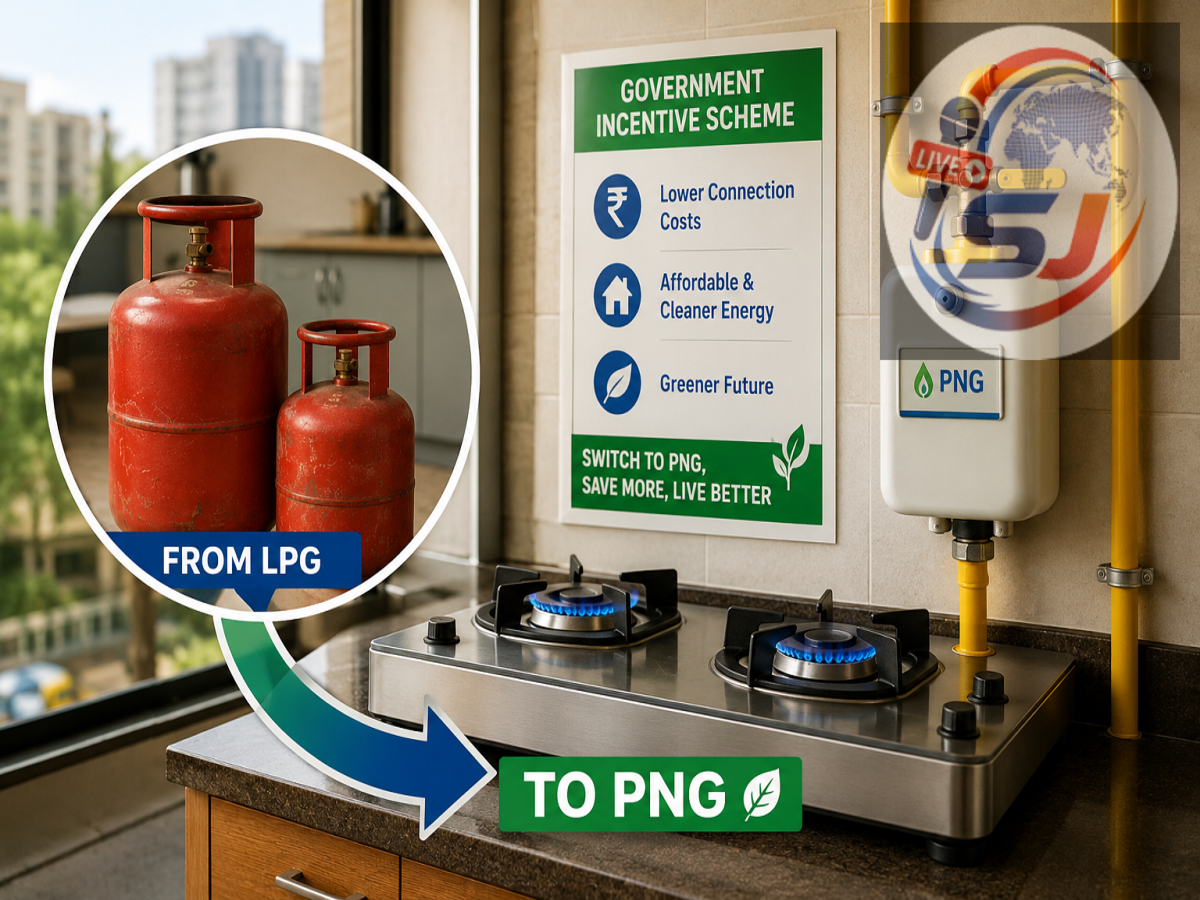
LPG to PNG Scheme 2026: Households looking for an alternative to LPG cylinders could soon find it easier and potentially cheaper to switch to piped natural gas (PNG). The government has approved a new incentive programme aimed at accelerating the expansion of domestic PNG connections and encouraging City Gas Distribution (CGD) companies to activate more household connections.
The initiative, called the Incentive Scheme for Promotion of Domestic PNG Connections, is scheduled to come into effect from September 1, 2026. The broader objective is to expand access to piped cooking gas while reducing dependence on LPG cylinders in areas where city gas infrastructure is available.
India currently has around 1.74 crore domestic PNG connections. Under the new framework, CGD companies will receive incentives not only for adding new customers but also for converting existing non-billed connections into active connections that generate regular bills.
Here's how the scheme is expected to work and what it could mean for consumers.
How Will the New PNG Incentive Scheme Work?
One of the key features of the programme is access to additional lower-cost domestically produced natural gas for eligible domestic connections.
Under the APM/NAPM incentive mechanism, City Gas Distribution companies will be eligible to receive an additional 200 Standard Cubic Metres (SCM) of lower-priced domestic APM gas for every qualifying new domestic PNG connection that becomes operational and starts generating bills, subject to the prescribed conditions and limits.
This could reduce the dependence of CGD companies on relatively expensive imported liquefied natural gas (LNG) for supplying their networks.
The lower the gas procurement cost for distributors, the easier it becomes for them to make investments in household PNG connections financially viable.
PNG Investment Recovery Period Could Drop Sharply
Expanding a PNG network involves significant upfront expenditure. Companies need to lay pipelines, establish distribution infrastructure and connect individual households before they can begin recovering their investment through gas consumption.
According to the scheme's projections, the incentive could significantly improve the economics of domestic PNG connections.
The recovery period for capital expenditure associated with a household PNG connection could potentially fall from around 10 years to nearly three years.
A shorter payback period could encourage CGD operators to expand their networks faster and activate connections in areas where pipelines have already been installed but regular gas supply has yet to begin.
The programme is expected to be implemented in two phases over six months.
What Could Consumers Gain From the Scheme?
The most important impact for households could come from lower upfront connection-related expenses.
As the cost burden on CGD companies declines, distributors are expected to have more flexibility to reduce charges such as the initial installation fee or security deposit collected from consumers.
The scheme could also benefit households where gas pipelines have already been laid but the connection has not yet been activated. Companies will have a financial incentive to convert such connections into functioning, billed PNG connections as quickly as possible.
However, the actual amount charged to consumers may depend on the CGD company, location and applicable terms of the connection.
PNG vs LPG: How Is Piped Gas Different?
The basic difference between LPG and PNG lies in how cooking gas reaches the household.
With LPG, consumers generally book a cylinder when they need a refill. The cylinder is then delivered and replaced after the gas has been consumed.
PNG works differently. Natural gas is supplied continuously to the home through a pipeline network. A meter installed at the premises records consumption, and the customer is billed according to the quantity of gas used.
This means PNG users do not need to repeatedly book cylinders, wait for deliveries or store and replace LPG cylinders.
For households with access to a reliable city gas network, the continuous supply model can make everyday cooking fuel management more convenient.
Will Every LPG Consumer Be Able to Switch to PNG?
The scheme does not automatically mean that every LPG household in India can immediately move to PNG.
A household can obtain piped natural gas only when a CGD network is available or being developed in that locality. Therefore, eligibility and availability will largely depend on whether the consumer's home falls within an operational city gas distribution area.
Consumers interested in switching should check whether a domestic PNG network is available at their address and compare connection charges, security deposits and applicable gas tariffs before making a decision.
Why Is the Government Promoting Domestic PNG?
Expanding PNG connections can reduce dependence on cylinder-based cooking fuel in urban and other areas covered by city gas networks. It also gives consumers another cooking-fuel option without requiring cylinders to be booked, delivered and stored at home.
For CGD companies, the new incentive structure is designed to improve the financial viability of expanding domestic connections. For consumers, the benefits could come in the form of lower initial connection costs, faster activation and easier access to piped cooking gas.
With the scheme set to begin on September 1, 2026, its practical impact will depend on how quickly City Gas Distribution companies expand their networks and pass on lower infrastructure costs to households.
For LPG users living in areas where PNG pipelines are already available, the new initiative could make switching to piped gas a more attractive option than before.