LPG e-KYC Scam Alert: Never Share OTP or Bank Details With Callers Claiming to Update KYC
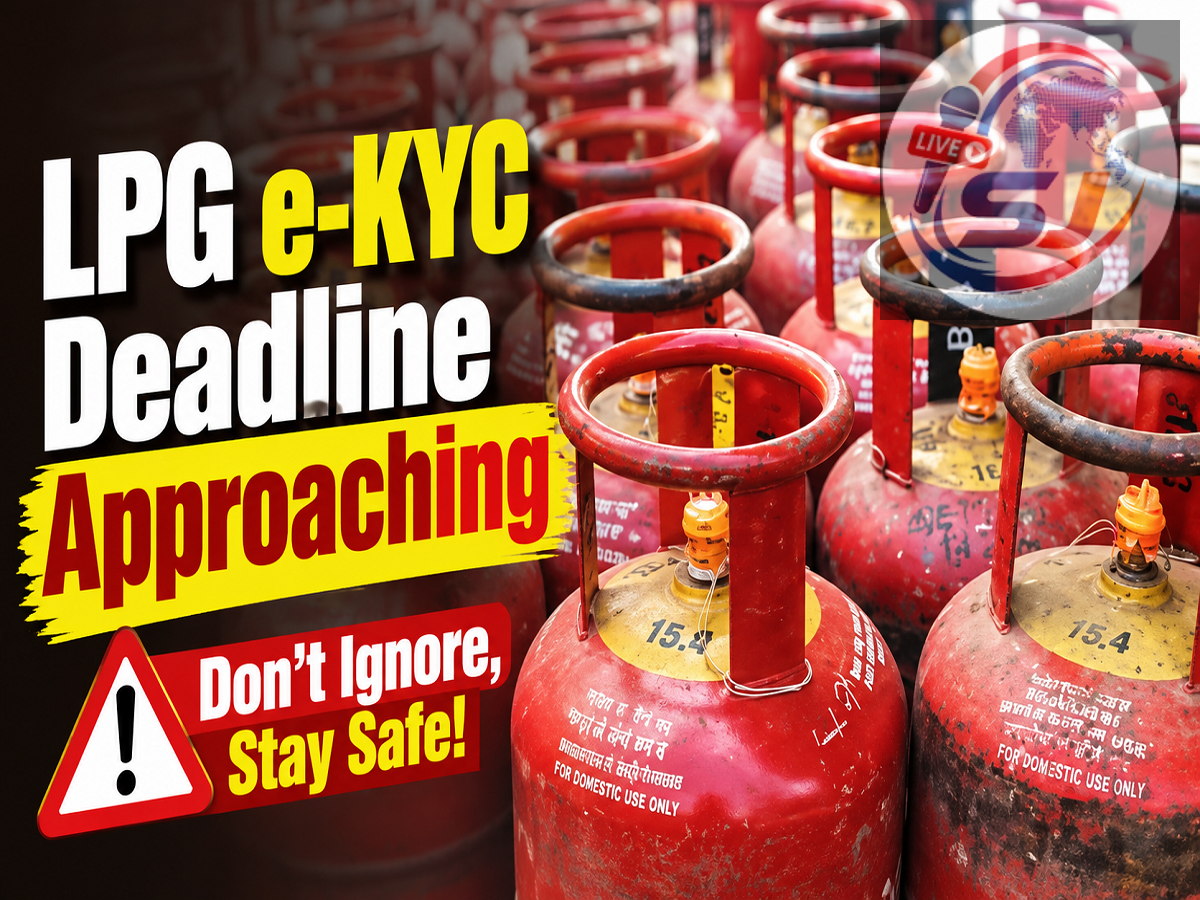
LPG consumers need to be extra careful while completing e-KYC or updating information linked to their gas connection. Fraudsters can exploit confusion around KYC requirements by pretending to be gas agency representatives and asking consumers to share OTPs, banking information or other sensitive details.
A typical scam may begin with an unexpected phone call, SMS or WhatsApp message. The fraudster may claim that the consumer's LPG e-KYC is incomplete and warn that the gas connection, cylinder booking facility or subsidy will be stopped unless verification is completed immediately.
The urgency is designed to make the victim act without checking whether the communication is genuine.
Consumers should remember a simple safety rule: never share an OTP, UPI PIN, debit or credit card PIN, CVV, internet-banking password or other confidential financial credential with an unknown caller in the name of LPG e-KYC.
How an LPG e-KYC Scam Can Begin
Fraudsters often rely on fear and urgency rather than complicated technology.
A caller may introduce themselves as an employee of an LPG distributor, oil marketing company or customer-care department. The consumer could then be told that e-KYC is pending and that immediate action is required to prevent disruption of LPG services.
The caller may already know basic information such as the consumer's name or mobile number. Having such details does not prove that the caller is genuine.
The next step may involve asking the customer to provide an OTP or click a link supposedly required to complete verification.
Consumers should stop at this stage and independently verify the request through their authorised LPG provider.
Never Share an OTP for LPG Verification With an Unknown Caller
An OTP is a security credential and should not be casually disclosed over a phone call.
Fraudsters can attempt to use an OTP to authorise financial transactions, account access or other actions initiated using the victim's details.
Consumers should therefore never read an OTP aloud to an unknown caller simply because the person claims to represent a gas agency.
The same precaution applies to banking passwords, UPI PINs, card PINs and CVVs.
A genuine KYC process may involve authentication through an authorised system, but that does not mean consumers should disclose confidential banking credentials to someone who contacts them unexpectedly.
Be Suspicious of Threats About Immediate LPG Disconnection
A common social-engineering technique is to create panic.
A fraudster may say, “Complete your e-KYC today or your LPG connection will be disconnected.”
Such threats can push consumers into making quick decisions.
Instead of responding to the caller's instructions, disconnect the call and independently contact your LPG distributor using contact details obtained from a trusted official source.
Consumers should also avoid calling numbers provided in suspicious messages or advertisements because fake customer-care numbers can themselves be part of a scam.
Don't Click Unknown KYC Links
Fraudulent LPG messages may contain a link claiming to open an e-KYC form.
The webpage may imitate a genuine LPG company website and ask for personal information, Aadhaar details or banking credentials.
Another possibility is that the victim is asked to download an application or APK file to complete KYC. Installing an unknown application can expose the phone to serious security risks.
Do not install APK files sent through WhatsApp, SMS, Telegram or other messaging services simply because they claim to provide LPG services.
Consumers should access their LPG provider through the company's official app, website or authorised distributor.
Where Should You Complete LPG e-KYC?
If your LPG account genuinely requires e-KYC, use the verification channels prescribed by your authorised oil marketing company or distributor.
Major public-sector LPG providers have their own official digital services and distributor networks. Consumers should independently access these services rather than opening links received from unknown numbers.
If there is any uncertainty, visiting or contacting the authorised LPG distributor directly is a safer way to confirm whether verification is actually pending.
The same principle should be followed when booking a cylinder, updating consumer information or checking subsidy-related details.
What Information Should Never Be Shared?
Consumers need to distinguish between identity verification and financial authorisation.
A scammer may claim that bank information is required to “activate” the LPG subsidy or complete e-KYC. They could then ask for an OTP or other confidential information.
Never disclose your UPI PIN, ATM/debit-card PIN, credit-card PIN, CVV, internet-banking password or OTP to an unknown caller.
Also avoid sharing unnecessary copies of identity documents through unofficial WhatsApp numbers or email addresses.
If a genuine LPG service requires a document, submit it only through the authorised process specified by your provider.
What to Do If You Have Already Shared an OTP
Speed becomes important if you realise that confidential financial information has been shared with a suspected fraudster.
If there is a risk of an unauthorised banking transaction, immediately contact your bank or payment provider through its official customer-care channel and request appropriate protective action.
In India, financial cyber-fraud complaints can also be reported by calling the national cybercrime helpline at 1930.
Consumers can additionally report cybercrime through the government's National Cyber Crime Reporting Portal.
Do not wait to see whether money is actually debited if you have already disclosed sensitive credentials and suspect fraud.
Check Your Bank Account and Payment Apps
After a suspected scam, review recent bank transactions and payment-app activity.
If an unauthorised transaction appears, immediately inform the relevant bank or financial institution and preserve evidence such as transaction IDs, SMS alerts, screenshots, the fraudster's phone number and copies of messages.
Avoid deleting the suspicious conversation before reporting the incident because those details may be useful when filing a complaint.
Consumers should also change compromised passwords and secure relevant accounts where necessary.
Fraudsters Can Exploit Genuine Government Processes
One reason scams involving e-KYC can appear convincing is that consumers may already know that LPG customer verification is a genuine process.
Fraudsters exploit this familiarity.
A real e-KYC requirement does not make every call, message or website mentioning LPG verification legitimate. Similarly, a person knowing your name, LPG provider or other basic information should not automatically be trusted.
Always verify the communication independently.
One Rule Can Prevent Many LPG e-KYC Scams
LPG consumers do not need to panic if they receive a call warning about incomplete e-KYC.
Instead, disconnect suspicious calls, avoid unknown links and independently check the status of the gas connection through the authorised LPG provider.
Most importantly, remember that OTP, UPI PIN, card PIN, CVV and banking passwords are confidential security credentials. They should never be disclosed to an unknown person claiming to complete LPG e-KYC.
If financial information has already been compromised, immediately contact the bank and report suspected cyber fraud through 1930. Acting quickly can improve the chances of limiting financial loss and securing affected accounts.