LPG Cylinder Delivery Rule From October 1: OTP Verification Gets Stricter; Check DAC and e-KYC Rules
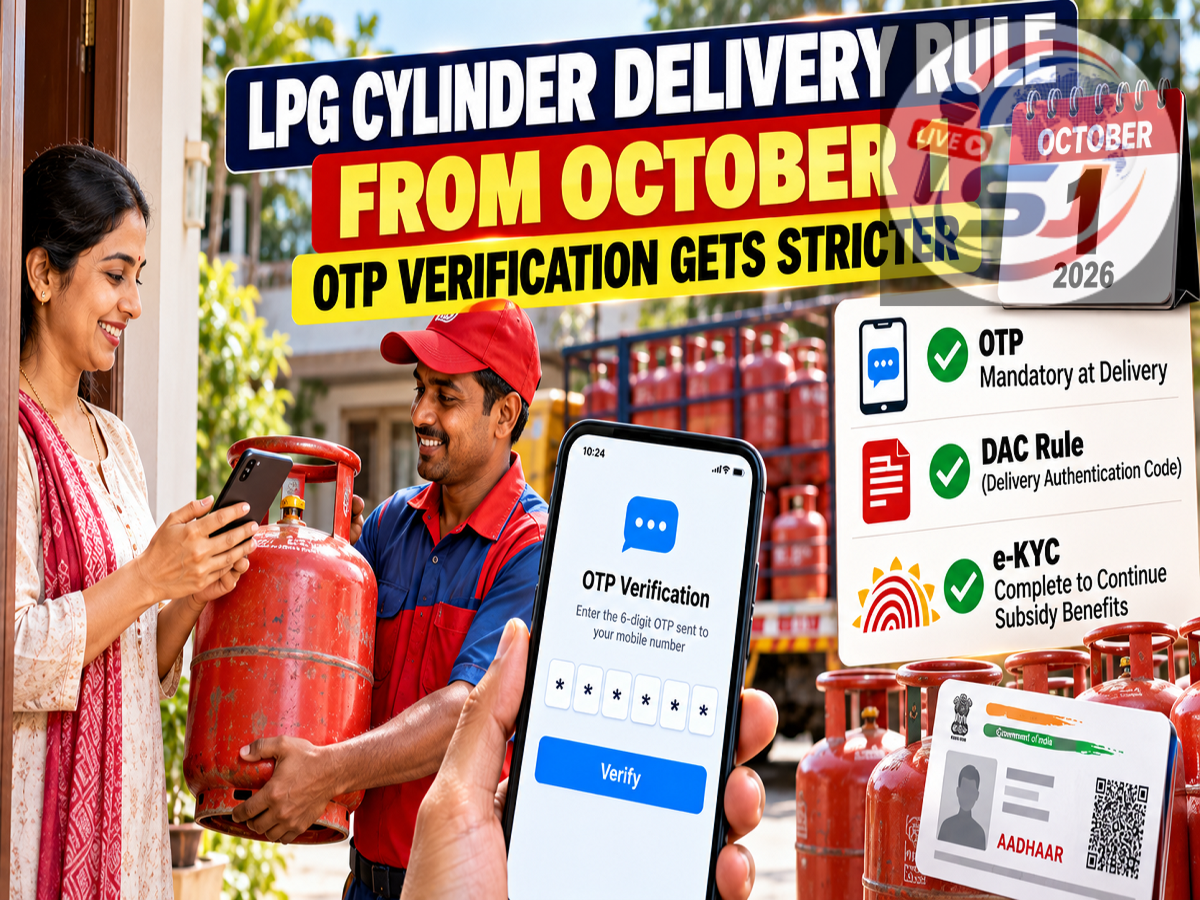
LPG consumers should pay attention to the delivery process when receiving a cooking gas cylinder from October 1, 2026. According to the information provided in the report, OTP-based verification at the time of cylinder delivery is being enforced more strictly, making it important for customers to keep access to their registered mobile number.
The verification code used for LPG delivery is commonly referred to as a Delivery Authentication Code (DAC). It is sent to the mobile number registered with the LPG connection and is used to authenticate the delivery.
Earlier, customers could in some cases receive a cylinder even when OTP verification was not completed. Under the stricter process described in the report, consumers may face difficulty completing the delivery if the required authentication code cannot be verified.
Consumers should therefore make sure that the mobile number registered with their LPG distributor is active and accessible before placing an order.
What Changes for LPG Customers From October 1?
The biggest change concerns stricter implementation of authentication during LPG cylinder delivery.
When an eligible customer books a refill, a verification code is sent to the registered mobile number.
This code needs to be retained until the cylinder arrives.
At the time of delivery, the customer provides the DAC or OTP to the authorised delivery representative. The delivery person enters it into the applicable delivery application or system to authenticate the transaction.
Once verification is successful, the delivery can be marked as completed.
The process can be understood simply as:
Book LPG refill → Receive DAC/OTP → Keep the code safe → Provide it at delivery → Delivery gets authenticated
What Is LPG Delivery Authentication Code or DAC?
DAC stands for Delivery Authentication Code.
It works as a verification mechanism designed to establish that a booked LPG cylinder is being delivered against the correct customer order.
The code is associated with the consumer's booking and registered mobile number.
For example, if you book a refill using your LPG connection and receive a delivery authentication code on your registered phone, you should keep that code until the authorised delivery representative arrives.
The delivery representative uses the code to authenticate completion of the delivery through the applicable system.
Can You Get an LPG Cylinder Without OTP?
According to the stricter process described in the supplied report, OTP or DAC verification is expected to become an important requirement for completing cylinder delivery from October 1.
Consumers who cannot provide the required authentication code could face problems completing the delivery through the normal process.
However, customers facing genuine problems—such as an outdated registered mobile number or failure to receive the code—should contact their authorised LPG distributor or oil marketing company's customer-support channel for the applicable resolution process.
Consumers should not pay an unauthorised person to bypass verification.
Make Sure Your Registered Mobile Number Is Correct
The new emphasis on OTP verification makes the registered mobile number particularly important.
If your LPG account contains an old mobile number that you no longer use, the authentication code could be sent to that number instead of your current phone.
Consumers should therefore check and update their registered mobile number through the authorised process provided by their LPG company or distributor.
This is especially important for connections that were registered several years ago and have not had their contact details updated since.
Why Is OTP Verification Being Used?
The primary purpose of delivery authentication is to improve transparency and ensure that a cylinder booked by a customer reaches the intended recipient.
OTP verification can help establish a digital record connecting the booking with the actual delivery.
The process is also intended to reduce the scope for problems such as unauthorised deliveries, fraudulent bookings and diversion of cylinders.
Once a customer provides the correct code and it is authenticated through the delivery system, the transaction can be recorded as a verified delivery.
Never Share the OTP Before the Cylinder Arrives
Consumers should be particularly careful about when they share the Delivery Authentication Code.
The OTP or DAC should generally be provided when the authorised delivery representative is actually completing the cylinder delivery.
Do not share the code with an unknown caller simply because the person claims to be calling from a gas agency.
If someone calls before delivery and asks you to reveal an OTP, verify the request with your authorised LPG distributor.
An OTP used to authenticate delivery should not be confused with OTPs related to banking transactions or other financial services.
LPG e-KYC Is a Separate Requirement
Consumers should also understand that LPG e-KYC and delivery OTP verification are two different processes.
The Delivery Authentication Code is associated with authenticating a particular cylinder delivery.
e-KYC, on the other hand, is used to verify the identity and customer details linked with an LPG connection, particularly where required for subsidy-related compliance.
Completing one process should not automatically be assumed to complete the other.
Consumers should therefore separately check whether their LPG connection's e-KYC requirement has been completed.
What Happens If LPG e-KYC Is Pending?
The supplied report states that e-KYC compliance is also being tightened from October 1 and links non-compliance with LPG subsidy eligibility.
Consumers whose e-KYC remains incomplete may face issues with receiving the applicable subsidy until the required verification is completed.
This should not automatically be interpreted as cancellation of the LPG connection itself.
The more relevant concern is that a consumer who has not completed the required verification could have to pay the applicable market price without receiving the subsidy benefit for which they would otherwise qualify.
Eligibility for subsidy and the treatment of an individual connection remain subject to the applicable government and oil marketing company rules.
OTP and e-KYC: Know the Difference
| Requirement | Purpose |
|---|---|
| DAC/OTP | Authenticates LPG cylinder delivery |
| Registered mobile number | Receives the delivery verification code |
| LPG e-KYC | Verifies the identity/details of the LPG consumer |
| Subsidy compliance | Determines eligibility for applicable subsidy under prevailing rules |
Keeping these requirements separate is important because misleading messages may suggest that the delivery OTP itself completes KYC or that every consumer automatically loses the connection if e-KYC is pending.
Those claims should not be accepted without verification.
What Should You Do Before Booking Your Next Cylinder?
Consumers can take a few simple precautions to avoid inconvenience.
First, ensure that the mobile number registered with the LPG connection is active.
Second, after booking a cylinder, check whether the relevant DAC or OTP has been received.
Third, retain the message until the cylinder is delivered.
When the authorised delivery representative reaches your address with the cylinder, provide the required code for authentication.
Consumers should also independently check their e-KYC status and complete the process through authorised channels if it remains pending.
What If the OTP Does Not Arrive?
Failure to receive a code does not necessarily mean there is a problem with your LPG connection.
The issue could be related to the registered mobile number, network delays or customer records.
Instead of repeatedly sharing personal information with unknown callers, contact the authorised distributor or customer-support channel associated with your LPG provider.
Consumers should also verify whether the mobile number registered against their LPG consumer account is correct.
Be Alert to LPG OTP Scams
The increased attention around OTP-based LPG delivery can also create opportunities for fraudsters.
A scammer may call a consumer and claim that an OTP is required to prevent the LPG connection from being blocked.
Consumers should never disclose banking OTPs, UPI PINs, debit-card PINs, CVV numbers, internet-banking passwords or other financial credentials for an LPG delivery.
An LPG delivery representative does not need your bank password or UPI PIN to deliver a cylinder.
Similarly, do not install an unknown mobile application merely because a caller claims it is necessary for LPG e-KYC.
Use only authorised LPG company, distributor or government channels.
Why the Change Matters
Millions of households depend on LPG cylinders for everyday cooking, so even a small change in the delivery process can affect a large number of consumers.
Stricter digital authentication is intended to make the supply chain more transparent and ensure that a booked cylinder reaches the correct customer.
At the same time, customers need to keep their contact information updated to prevent genuine deliveries from being delayed because an authentication code was sent to an outdated number.
Bottom Line
From October 1, 2026, LPG consumers should be prepared for stricter OTP or Delivery Authentication Code (DAC) verification when receiving a booked cylinder, according to the supplied report.
The authentication code is sent to the mobile number registered with the LPG connection and should be kept safely until the authorised delivery representative arrives.
Consumers should also check their LPG e-KYC status, particularly if they receive an applicable subsidy. OTP-based delivery verification and e-KYC are separate processes and should not be confused.
Most importantly, consumers should never share banking passwords, UPI PINs or financial OTPs with anyone claiming to complete an LPG delivery or e-KYC process.
Disclaimer: LPG delivery authentication, e-KYC, subsidy eligibility and exception procedures can depend on the oil marketing company, customer category and applicable government instructions. Consumers should verify account-specific requirements through their authorised LPG distributor or official service channel.