
LIC Rejects ₹2 Lakh Life Insurance Claim After Son’s Death, Consumer Court Orders Payment to Mother
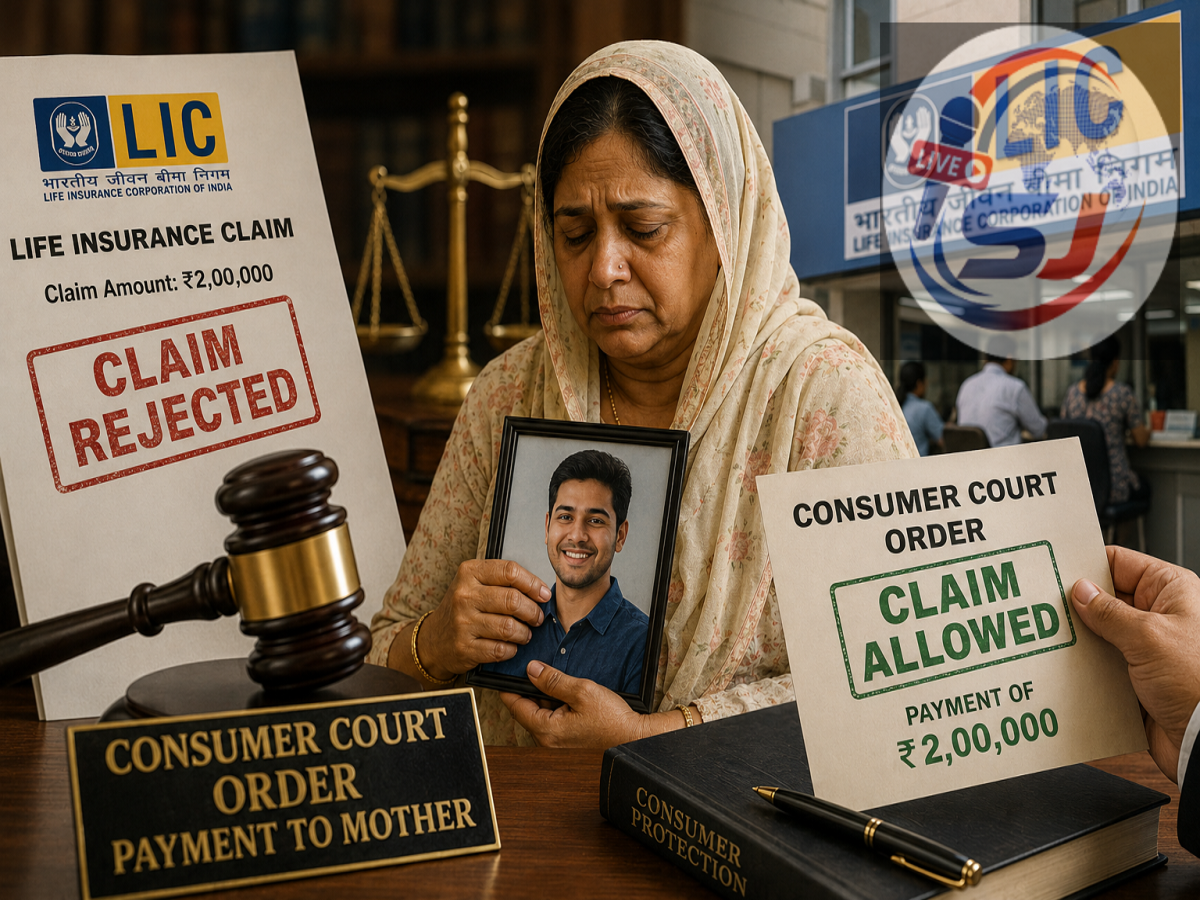
LIC Insurance Claim Case: A mother who lost her son during the Covid-19 period has received relief from a consumer commission after Life Insurance Corporation of India (LIC) rejected her insurance claim. LIC had argued that the policyholder had failed to disclose an earlier respiratory illness while buying the policy. However, the commission found that the insurer had not produced sufficient medical evidence to establish that allegation.
The consumer commission directed LIC to pay the ₹2 lakh policy amount, along with ₹20,000 as compensation for the inconvenience and hardship caused to the complainant and another ₹5,000 towards litigation expenses. The total amount awarded therefore comes to ₹2.25 lakh.
The case also highlights an important issue for policyholders and nominees: an insurance company can investigate whether important health information was withheld while taking a policy, but rejection of a claim must be supported by adequate evidence.
What Happened in the LIC Insurance Claim Case?
According to the case details, the woman's son had purchased an LIC life insurance policy with a sum assured of ₹2 lakh.
The policy reportedly became effective on November 15, 2020.
A few months later, during the second wave of the Covid-19 pandemic, the insured person developed serious health problems. In May 2021, he reportedly suffered breathing difficulty and heaviness in the chest.
He was taken to a hospital for treatment, but his condition deteriorated. While he was being shifted to another medical facility, he died on May 8, 2021.
Following his death, his mother, who was seeking the insurance benefit, informed LIC and submitted the documents required for settlement of the death claim.
Why Did LIC Reject the Claim?
Instead of settling the claim, LIC rejected it in November 2021.
The insurer reportedly maintained that the deceased had been suffering from respiratory problems since childhood and had not disclosed this medical history while filling out the insurance proposal form.
Disclosure of health conditions is important while purchasing life insurance because insurers assess factors such as medical history, age and health risks before issuing a policy.
If an insurer can establish that a policyholder knowingly concealed a material medical condition that could have influenced the underwriting decision, it may raise objections during claim settlement.
However, merely making such an allegation is not always enough. The insurer may need to support its position with relevant records and evidence.
Mother Challenged the Claim Rejection
After LIC declined to pay the insurance amount, the deceased policyholder's mother approached the consumer dispute redressal system.
She challenged the insurer's decision and sought payment of the policy benefit.
The central question before the consumer commission was whether there was reliable evidence showing that the insured person had a pre-existing respiratory illness and had deliberately concealed that information when taking the policy.
After examining the material placed before it, the commission was reportedly not convinced by LIC's argument.
What Did the Consumer Commission Say?
The commission observed that LIC had failed to produce convincing medical evidence establishing that the deceased had suffered from the alleged respiratory condition since childhood.
Without adequate supporting medical records, the commission found it difficult to accept the contention that the policyholder had knowingly hidden a pre-existing illness.
The commission therefore held that rejection of the insurance claim on that basis was not justified.
LIC was consequently directed to pay the insurance proceeds to the mother.
How Much Will the Mother Receive?
The order provided three separate amounts.
The primary amount was the ₹2 lakh insurance claim under the policy.
In addition, LIC was directed to pay ₹20,000 as compensation for the inconvenience and hardship suffered by the complainant.
A further ₹5,000 was awarded towards legal expenses incurred in pursuing the dispute.
Taken together, the total relief amounts to ₹2.25 lakh.
Can an Insurer Reject a Claim for Hiding an Illness?
Yes, insurance claims can face scrutiny if material information was not disclosed when a policy was purchased.
Proposal forms generally ask applicants questions about previous illnesses, treatment, hospitalisation, medication and other relevant medical conditions.
Policy buyers should answer these questions accurately.
However, claim rejection is not supposed to be based only on suspicion. If an insurer alleges that an important medical fact was concealed, the available medical and documentary evidence becomes crucial.
Every case depends on its own facts, policy terms, documents and applicable insurance law.
What Should You Do If Your Insurance Claim Is Rejected?
A rejected insurance claim does not necessarily mean that the matter is over.
The first step should be to obtain the rejection or repudiation letter from the insurance company and carefully understand the reason given.
Policyholders or nominees should keep copies of the policy document, proposal form, premium receipts, medical reports, hospital records, death certificate, correspondence with the insurer and documents submitted during the claim process.
If the claimant believes the rejection is unjustified, the grievance can first be raised through the insurer's internal grievance redressal mechanism.
Depending on the nature and value of the dispute, further remedies may include approaching the Insurance Ombudsman or the appropriate consumer dispute redressal commission.
Why Full Medical Disclosure Is Important
The case also serves as a reminder for anyone buying life or health insurance.
Applicants should never deliberately hide a known medical condition simply because they fear a higher premium or rejection of the proposal.
Accurate disclosure reduces the possibility of disputes at the claim stage, when family members may already be dealing with financial and emotional stress.
If a proposal form asks about an illness, hospitalisation, ongoing medication or previous diagnosis, it is safer to provide complete and truthful information.
Key Takeaway for Policyholders
The consumer commission's decision shows that an insurance company must be able to justify a claim rejection with relevant evidence.
In this case, LIC reportedly alleged that the deceased had concealed a childhood respiratory illness, but the commission found insufficient medical proof to support that contention. As a result, the mother was awarded the ₹2 lakh insurance amount plus ₹25,000 in compensation and legal costs, taking the total relief to ₹2.25 lakh.
For consumers, the broader lesson is clear: disclose health information honestly while buying insurance, preserve all policy and medical documents, and do not assume that a rejected claim cannot be challenged if the reason appears unsupported or unfair.
Disclaimer: This article is for general informational purposes only. Insurance disputes depend on individual policy terms, evidence and applicable laws. Consumers facing a claim dispute should consider obtaining professional legal or insurance advice.