LIC Jeevan Umang Plan: Get Life Cover, Annual Income and Bonus Benefits in One Policy
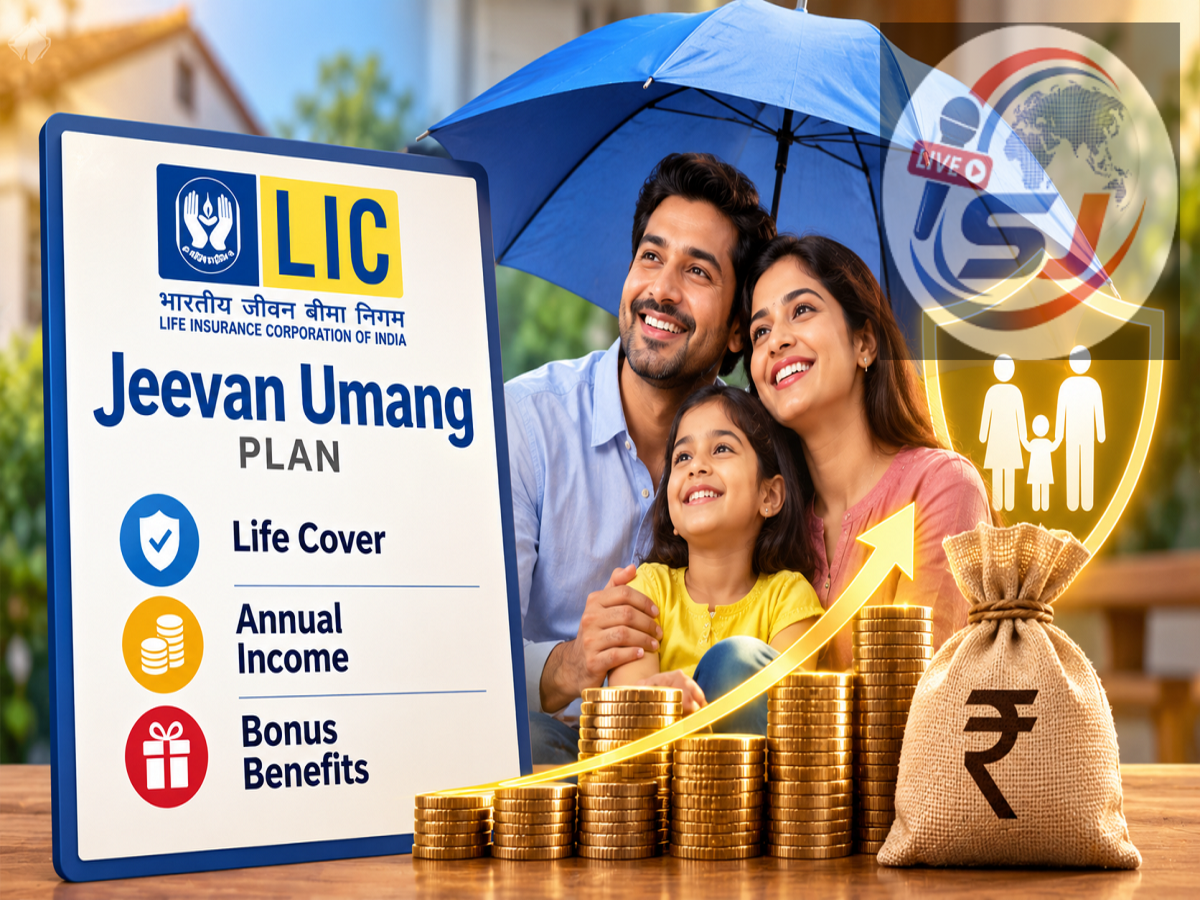
LIC Jeevan Umang Plan: Life Insurance Corporation of India (LIC) offers different types of insurance products designed for protection, savings and long-term financial planning. Among them, Jeevan Umang combines whole-life insurance coverage with regular survival benefits and the possibility of bonuses.
LIC Jeevan Umang is a non-linked, participating, individual whole-life insurance savings plan. Unlike market-linked products, its benefits are not directly tied to stock-market performance. The policy provides life insurance protection while also offering an annual survival benefit after completion of the premium-paying term, subject to the policy conditions.
One of its key features is an annual survival benefit equal to 8% of the Basic Sum Assured after the premium-paying term ends. This benefit can continue each year as specified under the policy, while maturity benefits become payable if the insured survives to the stipulated maturity age.
It is important, however, not to confuse the annual survival benefit with a conventional pension or annuity. Jeevan Umang is fundamentally a whole-life insurance and savings policy rather than a pure pension plan.
What Is LIC Jeevan Umang?
Jeevan Umang combines insurance protection, long-term savings and periodic income benefits.
According to the plan structure described, the policy can be purchased for an individual from the age of 30 days up to 55 years, subject to LIC's applicable eligibility conditions.
The minimum Basic Sum Assured is ₹2 lakh, while the maximum is subject to the insurer's prevailing underwriting and policy conditions.
The policy matures when the insured reaches 100 years of age.
Premium Payment Options
Policyholders do not necessarily have to pay premiums throughout the entire policy term. Depending on the entry age and eligibility conditions, premium-paying terms of 15, 20, 25 or 30 years may be available.
The options vary according to the insured person's age.
For example, certain premium-payment options may not be available for very young children. Similarly, people entering the policy at older ages have fewer premium-paying term choices.
According to the details provided, those entering between ages 51 and 55 may have the 15-year premium-paying option, while people aged 46-50 may have 15- or 20-year choices. Those aged 41-45 may have 15-, 20- or 25-year options.
Exact eligibility should be confirmed from the latest LIC policy document before purchasing the plan.
How Does the 8% Annual Benefit Work?
One of Jeevan Umang's biggest attractions is its survival benefit.
After the premium-paying term is completed and subject to the policy remaining in force, an amount equal to 8% of the Basic Sum Assured is payable annually according to the policy terms.
Consider a policy with a Basic Sum Assured of ₹10 lakh.
Eight percent of ₹10 lakh works out to:
₹10,00,000 × 8% = ₹80,000
This means an eligible policyholder could receive an annual survival benefit of ₹80,000 after completing the premium-paying term.
These payments continue according to the conditions of the policy until maturity or an earlier death claim.
What Happens at Age 100?
If the life assured survives to the maturity age specified under the policy, maturity benefits become payable.
The maturity benefit generally includes the applicable Sum Assured on Maturity along with vested Simple Reversionary Bonuses and a Final Additional Bonus, if declared and applicable under the policy terms.
The bonus portion should not be considered guaranteed. Jeevan Umang is a participating policy, meaning bonus additions depend on LIC's declarations and applicable conditions.
What Does the Nominee Receive in Case of Death?
Life insurance protection remains an important component of Jeevan Umang.
If the life assured dies after commencement of risk, the nominee receives the death benefit determined under the policy conditions. Applicable vested Simple Reversionary Bonuses and a Final Additional Bonus, if any, may also form part of the payout.
The precise death benefit should be calculated using LIC's official policy provisions rather than assuming it will always equal only the Basic Sum Assured.
Special Risk Rules Apply to Young Children
The commencement of risk works differently when Jeevan Umang is purchased for a young child.
For policies covering children below a specified age, full life risk may not begin immediately.
According to the policy conditions described, where the insured child is below eight years of age, risk begins either shortly before the completion of two years from commencement of the policy or shortly before the policy anniversary coinciding with or immediately following the child's eighth birthday, whichever occurs earlier, subject to LIC's exact policy wording.
If death occurs before commencement of risk, the amount payable is governed by the special provisions applicable to such cases.
Parents considering the plan for a child should therefore carefully read the commencement-of-risk clause.
Riders Can Provide Additional Protection
Jeevan Umang may also allow eligible policyholders to add riders by paying an additional premium and meeting applicable conditions.
Depending on the rider selected, additional protection may be available for specified events such as accidental death or disability.
A Premium Waiver Benefit rider can also be particularly relevant when insurance is purchased for a child. Subject to the rider's terms, future premiums may be waived following the specified event affecting the proposer, while the underlying policy continues.
Rider eligibility, exclusions and benefits should always be checked separately.
Example: ₹10 Lakh Policy for a Young Child
Consider the example provided for a two-year-old child with a ₹10 lakh Basic Sum Assured and a 20-year premium-paying term.
If the guardian is 35 years old and eligible Accidental Death and Disability Benefit (ADDB) and Premium Waiver Benefit (PWB) riders are selected, the illustrative annual premium is around ₹55,765, equivalent to approximately ₹153 per day when averaged over the year.
Without the PWB rider, the example places the annual premium at approximately ₹53,535.
Once the 20-year premium-paying term is completed and the child reaches around 22 years of age, an 8% survival benefit on the ₹10 lakh Basic Sum Assured would equal ₹80,000 annually, subject to all policy conditions.
Actual premiums can differ depending on age, sum assured, taxes, rider selection, underwriting and LIC's prevailing rates.
Another Example: ₹10 Lakh Cover With a 20-Year Payment Term
For an eligible adult taking a ₹10 lakh policy with a 20-year premium-paying term, the source calculation gives an annual premium of roughly ₹54,985 with the specified ADDB rider, or around ₹151 per day on an averaged basis.
After completing the premium-paying term, the policy could provide ₹80,000 annually because 8% of the ₹10 lakh Basic Sum Assured is ₹80,000.
If the insured subsequently dies, the nominee's payout would depend on the applicable death benefit, vested bonuses and any eligible rider benefit.
The source article gives illustrations running into several tens of lakh rupees after adding assumed bonuses and rider benefits. Such figures should be treated only as illustrations, not guaranteed returns, because future bonus rates cannot be known in advance.
Are Bonuses Guaranteed Under Jeevan Umang?
No. This distinction is important.
The policy is a participating plan, which means it may participate in LIC's profits and become eligible for bonuses in accordance with the insurer's declarations and policy terms.
Simple Reversionary Bonuses may accumulate over the policy period, while a Final Additional Bonus may also become payable in eligible cases.
However, future bonus rates are not guaranteed in advance. Therefore, investors should avoid assuming that an illustration based on current or historical bonus rates represents the amount they will definitely receive decades later.
What About Tax Benefits?
Premiums paid toward qualifying life insurance policies may be eligible for deductions under the applicable provisions of the Income-tax Act, subject to conditions and the tax regime chosen by the taxpayer.
Similarly, proceeds from a life insurance policy may qualify for tax exemption when the relevant statutory conditions are satisfied.
Tax laws can change, and not every policyholder will receive identical tax treatment. Buyers should therefore check the tax rules applicable to them rather than purchasing an insurance policy solely for a tax deduction.
Is LIC Jeevan Umang a Pension Plan?
Although the annual survival benefit can function like a regular source of income, Jeevan Umang should not be described as a traditional pension or annuity product.
Its structure is different: it combines whole-life insurance with savings, survival benefits and participating bonuses.
For someone with a ₹10 lakh Basic Sum Assured, the 8% annual survival benefit works out to ₹80,000. But buyers should compare this benefit with the total premiums paid, inflation, liquidity requirements, alternative investments and the level of life cover they actually need.
The policy can be useful for people who value long-term insurance protection and predictable survival benefits, but it may not suit everyone.
Before buying Jeevan Umang, customers should obtain the latest official LIC benefit illustration and policy document and carefully review premiums, surrender provisions, loan availability, exclusions, rider costs, bonus assumptions and death benefits.
Disclaimer: This article is for general informational purposes only and does not constitute insurance, investment or tax advice. Premiums and benefits can vary depending on age, sum assured, riders, underwriting and policy conditions. Bonuses are not guaranteed. Prospective buyers should verify the latest terms and benefit illustration directly with LIC before purchasing the policy.