
LIC Jeevan Lakshya Plan: Can ₹5,000 Monthly Build Around ₹28 Lakh? Check the Calculation and Benefits
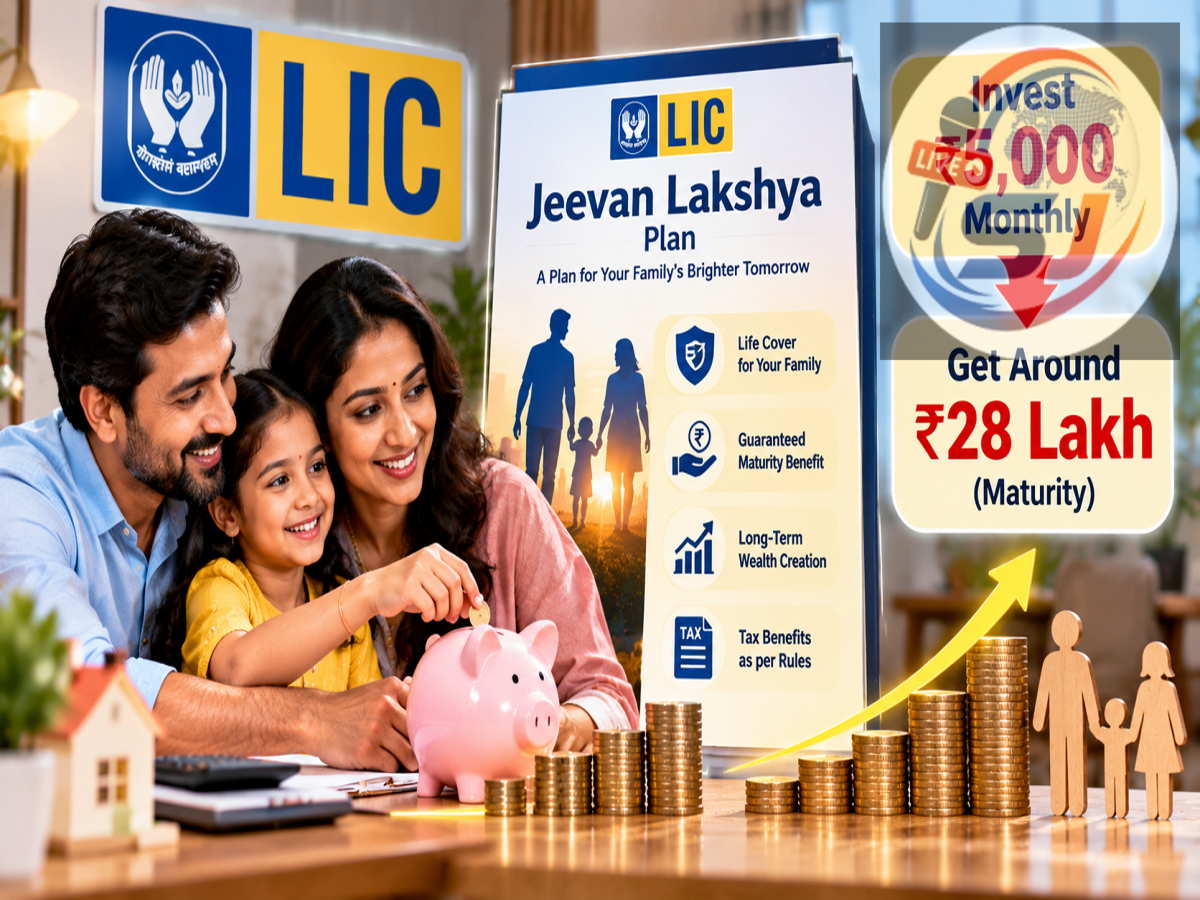
Life Insurance Corporation of India offers several policies designed to combine life insurance protection with long-term savings. One such product is LIC's Jeevan Lakshya, which is often considered by people looking to build a financial corpus while also securing insurance protection for their family.
According to the information provided in the report, an illustrative investment of around ₹5,000 per month under the policy could potentially result in a maturity amount of approximately ₹28 lakh, depending on the policy structure and benefits assumed in the calculation.
However, policyholders should understand an important point before purchasing the plan: the final maturity amount should not automatically be treated as a guaranteed ₹28 lakh payout. The actual benefits depend on factors such as the sum assured, policy term, age at entry, premium, bonuses and the policy conditions applicable to the chosen plan.
What Is LIC Jeevan Lakshya?
LIC Jeevan Lakshya is a life insurance-cum-savings policy designed to provide financial protection to the policyholder's family while also creating a maturity benefit if the insured survives the policy term.
The plan is structured for long-term financial planning and can be considered for goals such as children's education, marriage or building a future financial corpus.
Unlike a simple investment product, however, the policy also contains a life insurance component.
This means buyers should evaluate both the insurance protection and the expected maturity benefits rather than looking only at the headline return figure.
How Could ₹5,000 a Month Lead to Around ₹28 Lakh?
The report highlights an example in which a person invests approximately ₹5,000 per month.
At this level, the yearly outgo would be roughly:
₹5,000 × 12 = ₹60,000 per year
If premiums are paid over a long policy duration, the total amount contributed can become substantial.
The eventual maturity value can consist of the applicable Sum Assured on Maturity along with bonuses or other benefits that may be payable under the policy terms.
This is how a long-term premium commitment can potentially produce a significantly larger maturity corpus than the amount paid in a single year.
However, the ₹28 lakh figure depends on the assumptions used in the illustration. A person paying approximately ₹5,000 monthly should not assume that every Jeevan Lakshya policy will necessarily provide exactly ₹28 lakh at maturity.
Jeevan Lakshya Is More Than a Savings Plan
One of the main features of Jeevan Lakshya is that it combines savings with life insurance protection.
If the policyholder survives until maturity, the applicable maturity benefit is paid according to the policy terms.
If the insured dies during the policy term, benefits are provided to the nominee or beneficiary in accordance with the death-benefit provisions of the policy.
This protection component distinguishes a traditional life insurance policy from products designed purely for investment.
Family Protection Is an Important Feature
Jeevan Lakshya is designed with family financial security in mind.
The death of the earning member of a household can disrupt long-term plans such as a child's education or marriage. A life insurance policy aims to provide financial support to the family in such circumstances.
The exact amount payable after the policyholder's death depends on the applicable policy conditions and should be checked in the official benefit illustration before purchase.
Potential buyers should pay particular attention to the Sum Assured on Death and any additional benefits specified in their policy document.
Bonuses Can Affect the Final Maturity Value
Another important element in traditional participating LIC policies is the bonus structure.
Where applicable under the policy terms, bonuses declared by LIC can contribute to the eventual benefits.
This is also why a headline maturity figure should not be interpreted in the same way as a fixed bank deposit with a predetermined interest rate.
Some policy benefits may be guaranteed under the contract, while bonus-related components depend on declarations and applicable policy provisions.
Buyers should ask for an official benefit illustration clearly separating guaranteed and non-guaranteed benefits.
Premium Depends on Several Factors
Not everyone will necessarily pay exactly ₹5,000 per month.
The premium can vary depending on the policyholder's age, chosen sum assured, policy term, premium-payment structure, payment frequency and any additional options or riders selected.
Therefore, ₹5,000 should be understood as an example used to explain a particular calculation rather than a universal premium for the plan.
Two people buying Jeevan Lakshya could have very different premium requirements and maturity benefits.
Check the Policy Term and Premium-Paying Term
Long-term insurance policies require a sustained financial commitment.
Before purchasing the policy, buyers should understand how long the insurance coverage continues and for how many years premiums must be paid.
These two periods may not always be identical.
A policyholder should choose a premium that can comfortably be continued throughout the required premium-paying period. Buying a policy with an unaffordable premium and discontinuing it later could affect the expected benefits.
Is ₹28 Lakh Guaranteed?
Not necessarily.
This is the most important point for anyone evaluating the plan solely on the basis of the ₹28 lakh headline.
An illustration showing a potential corpus of around ₹28 lakh is based on a particular set of assumptions. The exact maturity amount for an individual policy can differ.
Before buying, customers should obtain an official policy illustration showing the premium, basic sum assured, maturity benefit, death benefit, guaranteed components and non-guaranteed components separately.
This makes it easier to understand what the policy actually promises contractually and what depends on future bonus declarations or other conditions.
Should You Buy Jeevan Lakshya Only for Investment?
Life insurance and pure investment products serve different purposes.
If the primary objective is insurance protection, buyers may also compare the amount of life cover available under different insurance products for the same premium.
If the primary objective is wealth creation, they should compare the policy's expected benefits with other suitable long-term savings or investment options after considering risk, liquidity, taxation and return expectations.
Jeevan Lakshya may appeal to people who specifically want a combination of disciplined long-term savings and insurance protection.
Check These Details Before Buying
Before committing to the policy, a buyer should carefully review the official benefit illustration, premium-paying period, policy duration, life cover, maturity provisions, death benefits, surrender conditions, loan facility where applicable, bonus structure and tax treatment under prevailing rules.
It is also important to understand what happens if premiums are not paid on time or if the policy is surrendered before maturity.
These details can materially affect the amount ultimately received.
LIC Jeevan Lakshya: Understand the Calculation Before Investing
The idea of contributing around ₹5,000 per month and potentially creating a corpus of approximately ₹28 lakh may appear attractive for long-term financial planning.
But Jeevan Lakshya should not be evaluated solely on that headline figure.
It is primarily a life insurance and savings product whose final benefits depend on the selected policy parameters and applicable bonus structure. Anyone considering the policy should therefore obtain a personalised official benefit illustration and carefully compare the guaranteed and non-guaranteed benefits before making a decision.
Disclaimer: Insurance benefits, premiums and maturity values depend on policy terms and individual circumstances. The ₹5,000 monthly premium and ₹28 lakh maturity amount discussed above are illustrative figures based on the supplied report and should not be considered a guaranteed return for every policyholder.