
KVIC Beekeeping Scheme 2026: Government Promotes Honey Production to Boost Rural Income and Employment
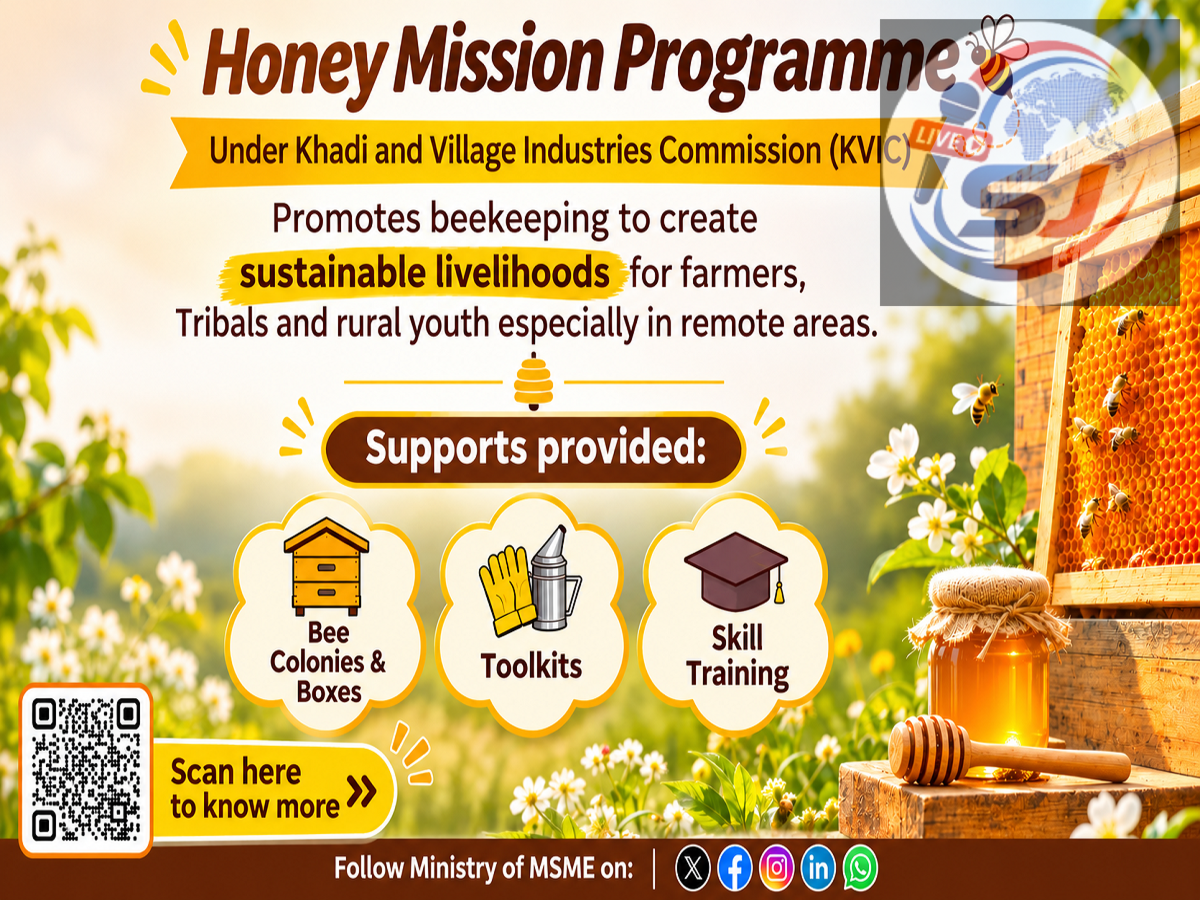
KVIC Beekeeping Scheme 2026: The Ministry of Micro, Small and Medium Enterprises (MSME) has highlighted an initiative by the Khadi and Village Industries Commission (KVIC) to promote modern beekeeping in remote rural areas. The initiative focuses on creating sustainable livelihood opportunities, increasing income-generating activities and supporting rural communities through honey production and related enterprises.
In an official social media update issued on November 2, 2026, the Ministry of MSME stated that KVIC is encouraging modern beekeeping practices to strengthen rural livelihoods.
The initiative is particularly relevant to rural entrepreneurs, farmers, artisans and individuals interested in exploring beekeeping as a source of supplementary income.
Beekeeping can support economic activity through the production and sale of honey, beeswax and other bee-related products. It can also contribute to agricultural pollination.
However, income and assistance depend on local conditions, training, production capacity and the specific government programme.
KVIC Promotes Modern Beekeeping in Rural India
According to the Ministry of MSME, KVIC is promoting modern beekeeping in remote rural areas to create sustainable livelihoods and empower communities.
The government communication highlights three major objectives: employment generation, income enhancement and rural development.
Modern beekeeping involves managing bee colonies using suitable equipment, appropriate techniques and established safety practices.
It can provide an additional livelihood option for people engaged in agriculture and other rural occupations.
The ministry's announcement does not specify the number of beneficiaries, districts covered or the amount of financial assistance available under the latest initiative.
What Is the KVIC Beekeeping Initiative?
The Khadi and Village Industries Commission is a statutory organisation under the Ministry of MSME.
KVIC works to promote khadi and eligible village industries, including activities that can generate employment and support rural entrepreneurship.
Beekeeping is one such activity.
KVIC has historically supported beekeeping development through initiatives such as the Honey Mission and relevant village industry programmes.
These efforts have included activities such as skill development, promotion of scientific beekeeping and support for eligible beneficiaries under applicable guidelines.
The latest ministry announcement reinforces KVIC's focus on modern beekeeping.
It does not, by itself, establish a newly launched subsidy scheme or guarantee free beekeeping equipment for every applicant.
KVIC Beekeeping 2026: Important Highlights
| Particulars | Details |
|---|---|
| Government ministry | Ministry of Micro, Small and Medium Enterprises |
| Implementing organisation | Khadi and Village Industries Commission |
| Activity | Modern beekeeping |
| Primary focus | Rural employment and livelihood development |
| Potential products | Honey, beeswax and other bee-related products |
| Target areas | Remote rural areas |
| Latest announcement | November 2, 2026 |
| Official website | https://www.kvic.gov.in/ |
How Can Beekeeping Help Rural Families?
Beekeeping can be undertaken as a specialised enterprise or, where suitable, as a supplementary activity alongside agriculture.
Unlike some businesses requiring extensive commercial premises, small-scale beekeeping may be developed using appropriate equipment and suitable locations.
However, successful beekeeping requires knowledge, regular colony management and attention to environmental conditions.
The activity may create opportunities in several areas.
1. Honey Production
Honey is one of the main commercial products obtained through beekeeping.
Producers may sell honey to local buyers, processors or authorised marketing channels.
The selling price depends on quality, demand, processing and market conditions.
2. Beeswax Production
Beeswax is used in various products and industrial applications.
It can provide an additional revenue opportunity where sufficient quantities are produced and suitable buyers are available.
3. Pollination Support
Bees play an important role in pollinating many flowering plants and agricultural crops.
Managed bee colonies may support pollination in suitable agricultural settings.
However, the benefits vary by crop, bee species and environmental conditions.
4. Rural Self-Employment
Beekeeping may offer a livelihood option for eligible individuals interested in developing small enterprises.
Training and practical experience are important for maintaining healthy colonies and managing production.
5. Local Business Development
Honey production can create related opportunities in processing, packaging, transportation and marketing.
These activities may contribute to rural value chains.
What Is Modern Beekeeping?
Modern beekeeping generally involves managing bee colonies in specially designed hives using recognised scientific methods.
It requires an understanding of bee behaviour, seasonal changes, colony health and honey harvesting.
Beekeepers may use protective clothing, smokers, hive tools and other specialised equipment.
Proper management is essential because bee colonies can be affected by disease, pests, inadequate forage and unsuitable weather.
Modern techniques aim to improve colony management and product quality while supporting safer working practices.
Beginners should receive appropriate training before attempting to manage bee colonies independently.
Who Can Explore KVIC Beekeeping Opportunities?
Rural residents, farmers and aspiring entrepreneurs interested in beekeeping may explore relevant training and assistance programmes.
However, eligibility depends on the particular scheme and its current guidelines.
Some initiatives may have specific requirements relating to location, age, training, beneficiary category or previous assistance.
Applicants should not assume that every interested person automatically qualifies for government-supported equipment or financial assistance.
They should confirm the current programme requirements with KVIC or the relevant implementing office.
How to Apply for KVIC Beekeeping Training or Assistance
Interested individuals can begin by visiting KVIC's official website.
Step 1: Open https://www.kvic.gov.in/.
Step 2: Check the sections relating to village industries, training and current programmes.
Step 3: Look for official information about beekeeping, Honey Mission or related initiatives.
Step 4: Read the eligibility requirements and programme guidelines.
Step 5: Contact the relevant KVIC office or authorised implementing agency.
Step 6: Complete the prescribed application or training registration process, where available.
Step 7: Submit the required documents and participate in any mandatory training or verification.
Step 8: Follow official instructions regarding assistance, equipment distribution or enterprise development.
The supplied announcement does not provide a dedicated application link, deadline or new beneficiary registration window.
Applicants should therefore verify whether applications are currently being accepted in their area.
What Documents May Be Required?
Document requirements vary according to the programme.
Applicants may be asked to provide identity proof, address details, contact information and other documents specified by the implementing authority.
Certain programmes may require training-related information or proof of eligibility.
Where financial assistance is involved, additional records may be required.
The final list should be obtained from the relevant official notification.
Does KVIC Provide Free Beehive Boxes?
KVIC has previously implemented beekeeping support initiatives that included assistance with equipment for eligible beneficiaries.
However, the ministry's latest announcement does not confirm a new universal distribution of free beehive boxes.
The availability of equipment, training support or financial assistance depends on the specific programme and approved beneficiary conditions.
Interested individuals should verify current benefits directly through KVIC.
They should avoid unofficial advertisements promising guaranteed free equipment or cash payments in exchange for registration fees.
How Much Can Someone Earn From Beekeeping?
Beekeeping income varies considerably.
Important factors include the number and health of bee colonies, honey yield, flowering resources, climate, production expenses and market prices.
The cost of equipment, transport, maintenance and packaging can also affect profitability.
Therefore, no fixed monthly income can be guaranteed.
Anyone considering beekeeping as a business should prepare a realistic cost and revenue estimate.
Training, market research and access to reliable buyers can help in evaluating commercial feasibility.
Why Is Beekeeping Important for Rural Development?
Beekeeping can support rural development by diversifying income-generating activities.
It may provide opportunities for people who want to supplement agricultural earnings or establish small businesses.
The activity can also contribute to local value addition through honey processing and packaging.
However, sustainable development requires suitable ecological conditions, healthy bee colonies and responsible management practices.
Poor colony management or unsuitable placement can lead to financial losses and safety concerns.
Government support and training can help address some of these challenges, but they do not eliminate business risks.
Important Precautions for New Beekeepers
Individuals entering beekeeping should obtain proper technical guidance.
Protective equipment and safe hive management are important.
Bee stings can cause serious allergic reactions in some individuals, so appropriate safety precautions are essential.
Beekeepers should also follow applicable food safety, labelling and quality requirements when selling honey commercially.
They should avoid making unverified medicinal claims about honey or other bee products.
Conclusion
The Ministry of MSME's latest announcement highlights KVIC's efforts to promote modern beekeeping in remote rural areas.
The initiative aims to support sustainable livelihoods, improve income opportunities and encourage rural entrepreneurship.
Honey production and related activities can provide additional sources of income for suitably trained individuals.
However, interested applicants should check the current eligibility rules, training availability and assistance provisions before applying.
Source Credit: Ministry of Micro, Small and Medium Enterprises (@minmsme), Government of India, official X post dated November 2, 2026.
Original Source: https://x.com/minmsme/status/2117220537617584419
Official KVIC Website: https://www.kvic.gov.in/
Official Ministry of MSME Website: https://msme.gov.in/
Disclaimer: This article is based on the ministry's public awareness communication and general information about KVIC's beekeeping activities. The announcement does not specify a new subsidy amount, guaranteed income, application deadline or universal entitlement to free equipment. Applicants should verify current programme details through official sources.