
Kitchen Budget Inflation 2026: Onion and LPG Prices Push Veg Thali Cost Up 10%, Check Latest Rates
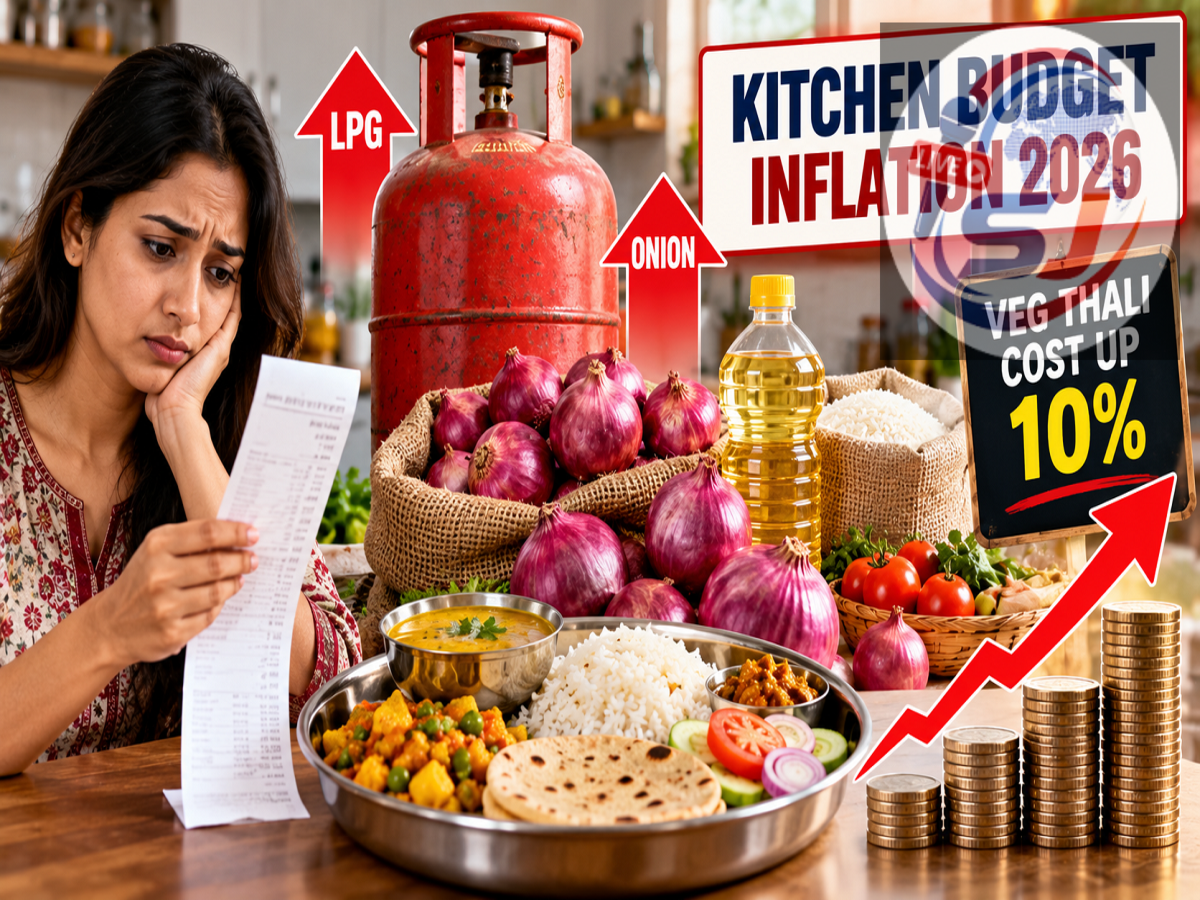
Kitchen Budget Inflation, October 2026: Rising prices of essential food items are once again putting pressure on household budgets across India. From onions and cooking oil to rice and LPG cylinders, several everyday kitchen essentials have become more expensive, increasing the cost of preparing meals at home.
According to the latest Roti Rice Rate report cited by CRISIL, the average cost of preparing a vegetarian thali increased by approximately 10% year-on-year in September 2026. Meanwhile, the cost of a non-vegetarian thali rose by around 6% during the same period.
The report highlights how changes in vegetable prices, cooking fuel costs and other essential ingredients can directly affect household spending.
With the festive season underway, consumers may need to plan their grocery purchases more carefully as demand for certain food items remains strong.
Veg Thali Price Rises to ₹30.80 in September 2026
According to the figures reported by CRISIL, the average cost of preparing a vegetarian thali increased to ₹30.80 in September 2026, compared with ₹28.10 during the same month last year.
This represents an increase of ₹2.70 per thali, or approximately 9.6%, rounded to 10%.
The average cost of preparing a non-vegetarian thali also increased, reaching ₹59.50 compared with ₹56 a year earlier.
Here is a comparison of the reported prices:
| Type of Thali |
September 2025 |
September 2026 |
Annual Increase |
|---|---|---|---|
| Vegetarian Thali |
₹28.10 |
₹30.80 |
10% |
| Non-Vegetarian Thali |
₹56.00 |
₹59.50 |
6% |
These figures represent estimated home-cooking costs under the report's methodology, not the prices charged by restaurants or food delivery platforms.
Onion Prices Jump 89%, Become Major Reason Behind Rising Costs
One of the biggest contributors to the increase in kitchen expenses has been the sharp rise in onion prices.
According to the report, average onion prices increased by approximately 89% year-on-year, reaching around ₹53 per kilogram in September 2026.
The increase was attributed to lower availability of stored rabi onions and reduced overall production.
Onions are widely used in Indian cooking, including vegetables, curries, gravies and several traditional dishes.
As a result, a substantial increase in onion prices can affect the cost of preparing meals across different regions.
Households that consume onions regularly may have noticed a significant increase in their monthly grocery expenses.
Cooking Oil and Rice Prices Also Increase
Onions were not the only ingredients responsible for rising food costs.
The report also recorded an increase in edible oil and rice prices.
Edible oil became approximately 12% more expensive compared with the corresponding period last year.
Rice prices increased by around 8%.
Both products are essential items in many Indian households, making their price movements important for family budgets.
Higher cooking oil prices can affect the preparation cost of vegetables, fried foods and other dishes.
Similarly, an increase in rice prices can put additional pressure on households where rice is consumed daily.
LPG Cylinder Prices Add to Household Expenses
Cooking gas prices also contributed to the increase in the estimated cost of preparing meals.
According to the report, LPG prices were approximately 10% higher on a year-on-year basis.
LPG is a major cooking fuel for millions of households across India.
Unlike certain food ingredients, which families may substitute depending on market prices, cooking fuel is a recurring household necessity.
An increase in LPG prices can therefore affect monthly spending even when a family does not significantly change its food consumption habits.
However, the 10% figure represents the annual change cited in the report. It does not mean that domestic LPG cylinder prices increased by 10% specifically on October 9.
Why Did Non-Veg Thali Prices Rise More Slowly?
While vegetarian thali costs increased by approximately 10%, the rise in non-vegetarian thali costs was relatively moderate at around 6%.
One important reason was the limited increase in broiler chicken prices.
According to the report, broiler chicken prices rose by approximately 2% year-on-year.
Since chicken represents a significant component of the estimated non-vegetarian thali cost, its relatively modest price increase helped limit the overall rise.
However, other ingredients and cooking expenses still pushed the total cost higher.
How Much More Could a Family Spend Every Month?
Even a small increase in the cost of a meal can become significant when multiplied over an entire month.
Consider a family of four preparing one vegetarian thali per person each day.
Using the reported average thali costs, the monthly calculation would look like this:
| Household Expense |
September 2025 Rate |
September 2026 Rate |
|---|---|---|
| Cost of One Veg Thali |
₹28.10 |
₹30.80 |
| Cost for Four People |
₹112.40 |
₹123.20 |
| Cost for 30 Days |
₹3,372 |
₹3,696 |
| Additional Monthly Expense |
— |
₹324 |
Under this illustration, a family of four would spend approximately ₹324 more per month on one vegetarian meal per person per day.
If the family prepares two comparable meals daily, the additional estimated cost could reach approximately ₹648 per month.
These are simplified calculations based on the report's average thali cost. Actual household expenses will vary depending on portion sizes, location, food preferences and shopping habits.
Will Onion Prices Remain High in October?
The festive season generally brings changes in demand for food products, including vegetables and other cooking ingredients.
According to the report, onion prices could remain elevated during October because of festive demand and supply conditions.
However, future prices will also depend on arrivals in agricultural markets, storage availability, transportation costs and the overall supply situation.
A change in any of these factors could influence retail prices.
Therefore, consumers should not assume that current prices will remain unchanged throughout the month.
How Can Families Manage Rising Kitchen Expenses?
With several essential commodities becoming more expensive, households may benefit from reviewing their grocery spending.
Comparing prices at local markets, purchasing seasonal vegetables and reducing food waste can help control expenses.
Families can also consider planning weekly meals based on available ingredients and market prices.
Buying large quantities solely because of fears of future price increases may not always be economical, especially for perishable products.
Monitoring local retail prices and avoiding unnecessary purchases can help households make better budgeting decisions.
Why CRISIL's Thali Cost Report Matters
The Roti Rice Rate report provides a practical way to understand food inflation through the cost of preparing a typical Indian meal.
Instead of looking only at individual commodity prices, the report considers how different ingredients and cooking expenses contribute to the overall cost of a thali.
This helps illustrate how inflation affects everyday household consumption.
However, the reported figures are estimates based on a defined meal composition and should not be interpreted as the exact cost incurred by every family.
Food prices can differ considerably across cities, rural areas and local markets.
Final Takeaway
The cost of preparing meals at home increased in September 2026, with vegetarian thali expenses rising approximately 10% and non-vegetarian thali expenses increasing around 6% compared with the previous year.
The average vegetarian thali cost reached ₹30.80, while the non-vegetarian thali cost rose to ₹59.50.
An 89% increase in onion prices, along with higher edible oil, rice and LPG costs, contributed to the pressure on household budgets.
With festive demand potentially keeping some commodity prices elevated, consumers may need to monitor local market rates and manage their grocery expenses carefully.
Source: Prabhat Khabar report updated October 9, 2026, citing CRISIL's September 2026 Roti Rice Rate report. All figures are reported year-on-year comparisons and may differ from current retail prices in individual cities.