
Kisan Credit Card: Eligible Farmers Can Access Loans Up to ₹5 Lakh, Effective Interest May Fall to 4%
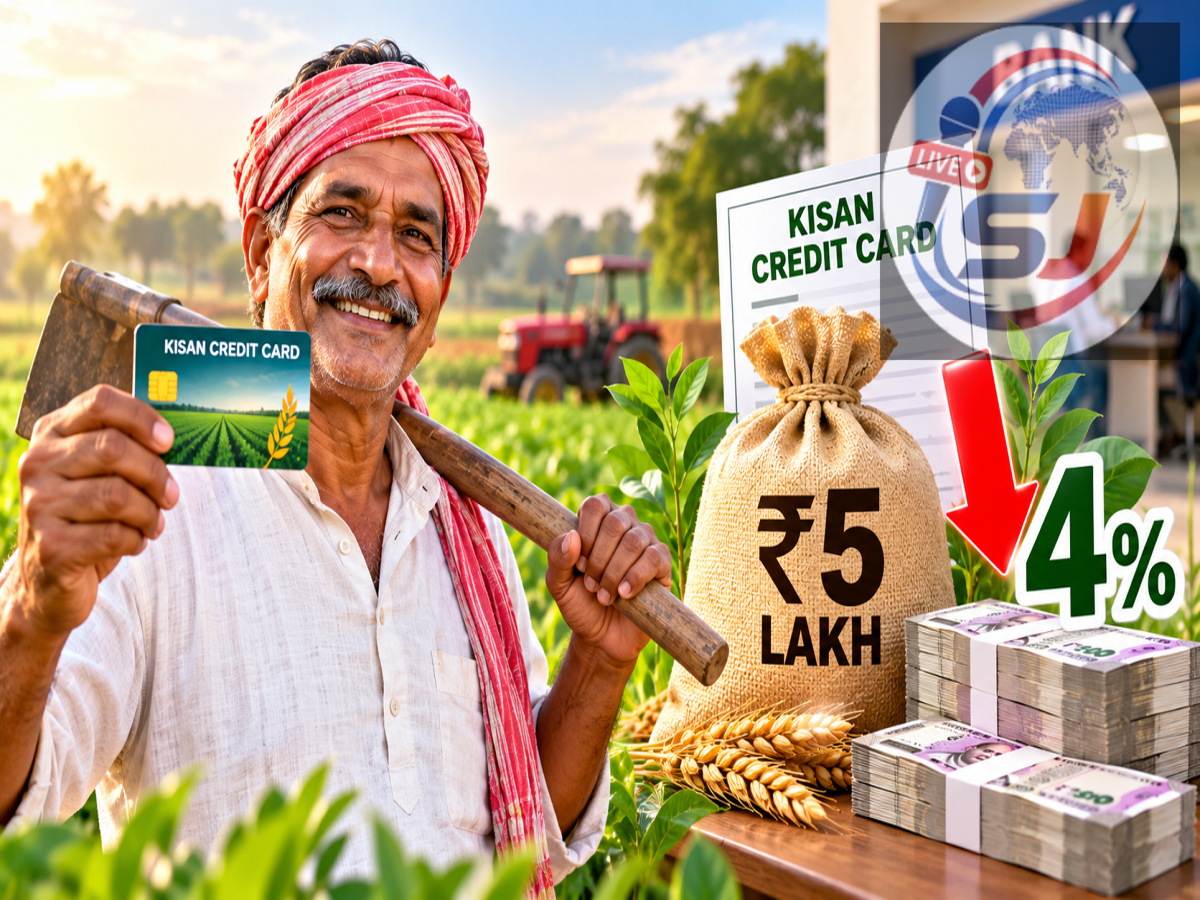
Farmers looking for affordable credit for agricultural and related expenses can benefit from the Kisan Credit Card (KCC) scheme, which provides access to institutional loans through participating banks. Under the government's interest-support framework, eligible borrowers can receive concessional agricultural credit, while timely repayment can reduce the effective interest burden further.
According to the latest details, the concessional credit limit under the relevant framework has been increased from ₹3 lakh to ₹5 lakh. In qualifying cases, the effective interest rate can come down to around 4%, subject to applicable conditions and timely repayment.
However, farmers should note that 4% is not an unconditional standard interest rate available on every KCC loan. The benefit is linked to the government's interest-support and prompt repayment provisions.
What Is the Kisan Credit Card Scheme?
The Kisan Credit Card scheme was introduced in 1998 to make it easier for farmers to obtain credit for crop production and agricultural requirements.
Instead of depending on informal lenders or arranging a new loan every time funds are required, eligible farmers can use the KCC facility to meet various short-term agricultural expenses within their approved credit limit.
Over the years, the scope of KCC has expanded beyond basic crop production requirements. Depending on eligibility and lending rules, credit can also cover certain investment requirements and allied agricultural activities.
The actual credit limit sanctioned to an individual farmer is determined after considering factors such as the crops being cultivated, operational landholding, scale of finance and the lending bank's assessment.
How Can the Effective Interest Rate Come Down to 4%?
The government introduced the interest-support mechanism, now referred to as the Modified Interest Subvention Scheme (MISS), to make short-term agricultural credit more affordable for farmers.
Under the framework described in the report, short-term agricultural loans receive government interest support. The applicable lending structure results in an effective rate of around 7% for eligible borrowing.
Farmers who repay their loans within the prescribed period can receive an additional 3% prompt repayment incentive.
As a result, an eligible farmer who meets the repayment conditions may effectively pay interest at approximately 4% per annum.
This distinction is important. Borrowers should not assume that every KCC loan automatically carries a 4% rate from the beginning. Eligibility, the type and amount of credit and timely repayment requirements can affect the final benefit.
Credit Limit Increased From ₹3 Lakh to ₹5 Lakh
A significant change was announced in the 2025-26 Union Budget, when the government proposed raising the concessional credit limit under the Modified Interest Subvention Scheme from ₹3 lakh to ₹5 lakh.
The higher limit is intended to give farmers greater access to formal credit as cultivation expenses and other agricultural input costs increase.
However, the availability of a ₹5 lakh ceiling does not mean every applicant will automatically receive the entire amount.
The actual sanctioned limit is assessed by the lending institution based on the borrower's agricultural activities, landholding, crop requirements, repayment capacity and other applicable banking criteria.
KCC Borrowers Can Also Get a RuPay Card
Another useful feature associated with Kisan Credit Card accounts is access to a RuPay card.
This can make it easier for eligible borrowers to withdraw funds and make digital transactions linked to their KCC facility.
The scheme is designed to simplify access to agricultural finance by reducing the need to repeatedly complete the entire loan process for routine credit requirements, subject to the bank's documentation and renewal conditions.
Funds available through the facility can be used for eligible agricultural expenses, including cultivation and certain post-harvest requirements. Coverage can also extend to specified allied and other permitted activities under applicable guidelines.
Who Can Apply for a Kisan Credit Card?
KCC eligibility is not restricted only to farmers who individually own agricultural land. Several categories of cultivators may qualify under the scheme.
Eligible categories can include individual farmers and joint borrowers who are owner-cultivators, as well as tenant farmers, oral lessees and sharecroppers.
The scheme can also cover Self-Help Groups (SHGs) and Joint Liability Groups (JLGs) consisting of farmers, including groups formed by tenant cultivators and sharecroppers.
Final approval, however, remains subject to the lending institution's eligibility checks, documentation requirements and credit assessment.
More Than 7.72 Crore KCCs Reportedly Active
The Kisan Credit Card programme has grown into a major channel for agricultural lending across the country.
According to PIB data cited in the report, more than 7.72 crore Kisan Credit Cards were active across India as of March 2026. Outstanding loans linked to these accounts were reported at approximately ₹10.2 lakh crore.
The large number of active accounts reflects the role KCC plays in providing institutional credit to India's agricultural sector.
The programme is implemented through various participating financial institutions, including commercial banks, regional rural banks and eligible cooperative banking institutions.
Why Timely Repayment Matters
One of the most important aspects of the KCC interest structure is timely repayment.
A farmer may qualify for concessional credit under the applicable scheme, but the additional prompt repayment benefit depends on clearing eligible dues within the prescribed timeline.
Failing to meet repayment conditions can mean losing the additional incentive and may result in a higher effective borrowing cost.
Farmers should therefore check the repayment schedule, applicable interest rate, sanctioned credit limit and conditions attached to interest concessions before using the facility.
Check With the Bank Before Applying
Kisan Credit Card can provide farmers with easier access to formal agricultural credit, but the exact benefits can differ depending on the applicant and loan.
The headline benefit of a credit limit of up to ₹5 lakh and an effective interest rate that may fall to around 4% comes with eligibility and repayment conditions.
Farmers planning to apply should confirm the latest rules with their participating bank, understand the sanctioned limit and repayment requirements, and verify which expenses can be financed through the KCC facility.
Used appropriately, KCC can help eligible farmers meet seasonal agricultural expenses while reducing dependence on higher-cost informal borrowing.