
ITR Filing Deadline 2026: Tax Audit Cases Must File Income Tax Return by November 21, Check Details
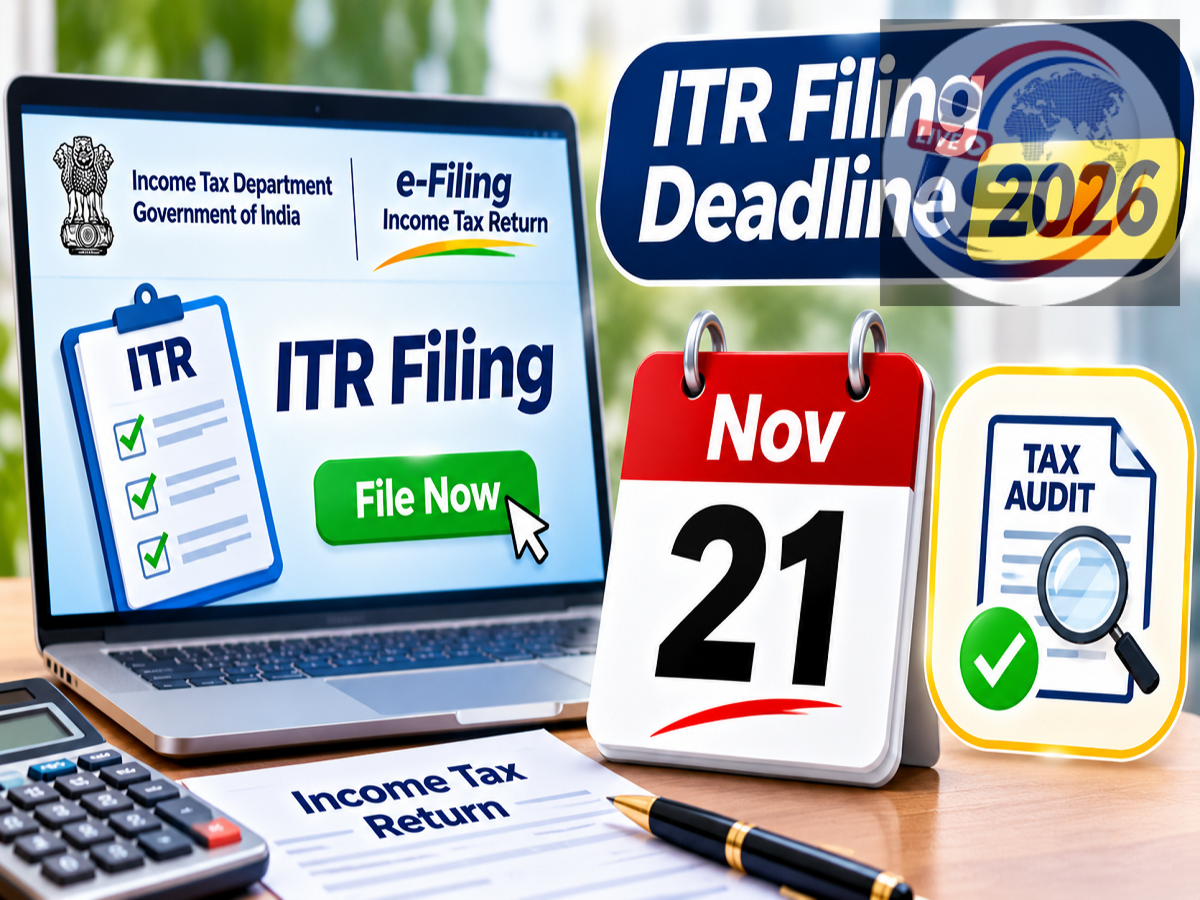
Income Tax Return Deadline 2026: Taxpayers whose accounts are required to be audited have been reminded to complete their Income Tax Return (ITR) filing for Assessment Year (AY) 2026-27 by November 21, 2026, according to the latest Income Tax Department communication.
The department has encouraged eligible taxpayers to complete the process well before the deadline rather than waiting until the final day.
For businesses and professionals covered by applicable tax audit requirements, completing the audit is an important compliance step. However, the submission of the audit report does not automatically complete the income tax return filing process.
Taxpayers must separately submit their applicable ITR and complete the required verification process.
ITR Filing Deadline: November 21, 2026
The Income Tax Department's latest reminder specifies November 21, 2026, as the filing deadline for taxpayers whose accounts are required to be audited for AY 2026-27.
Assessment Year 2026-27 relates to income earned during Financial Year 2025-26, covering April 1, 2025, to March 31, 2026.
The reminder is particularly relevant for taxpayers who have completed their audit-related requirements but have not yet submitted their income tax returns.
However, taxpayers should verify the applicability of this deadline to their specific category, particularly where separate provisions or due dates apply.
Who Is Required to File an ITR After a Tax Audit?
Tax audit requirements depend on the nature of the taxpayer's income, turnover, gross receipts, and applicable provisions of the Income-tax Act.
Certain businesses and professionals are required to have their accounts audited under Section 44AB when the relevant conditions are satisfied.
Tax audit requirements can also arise under particular presumptive taxation provisions.
The exact applicability depends on factors such as the taxpayer's business activity, receipts, transaction methods, and declared income.
Taxpayers should consult their chartered accountant or tax adviser to determine whether the audit provisions apply to them.
Tax Audit and ITR Filing Are Different Processes
Some taxpayers mistakenly assume that their tax compliance obligations are complete once the audit report has been submitted.
However, tax audit reporting and income tax return filing are separate requirements.
A tax audit involves examining the relevant books of account and reporting prescribed information through the applicable audit forms.
ITR filing involves declaring income, deductions, tax liability, taxes already paid, and other required financial information.
Even after the tax audit has been completed, the taxpayer must ensure that the appropriate income tax return is filed.
Failure to complete the ITR filing process within the applicable deadline may result in statutory consequences.
Important Details for AY 2026-27
| Particulars | Details |
|---|---|
| Assessment year | 2026-27 |
| Financial year | 2025-26 |
| Taxpayer category | Taxpayers whose accounts are required to be audited |
| Deadline mentioned in advisory | November 21, 2026 |
| Filing portal | incometax.gov.in |
| Audit requirement | As applicable under tax law |
| Return verification | Required to complete the filing process |
The exact filing deadline and applicable return form should be checked against the taxpayer's circumstances and the latest official notifications.
How to File Income Tax Return Online
Taxpayers can complete the filing process through the Income Tax Department's official e-filing portal.
Step 1: Visit https://www.incometax.gov.in.
Step 2: Sign in using the relevant user credentials.
Step 3: Navigate to the income tax return filing section.
Step 4: Select Assessment Year 2026-27 and the applicable filing option.
Step 5: Choose the correct ITR form based on the taxpayer's income sources and legal status.
Step 6: Review the available pre-filled information, financial statements, audit-related details, and tax records.
Step 7: Enter or confirm the required income, deduction, tax payment, and other information.
Step 8: Validate the return and complete submission.
Step 9: Verify the filed return through an available verification method.
Taxpayers should retain the acknowledgement and other relevant records for future reference.
Documents to Check Before Filing
Taxpayers subject to audit requirements should carefully review their financial and tax records before filing.
Important records may include audited financial statements, tax audit reports, Form 26AS, Annual Information Statement (AIS), Taxpayer Information Summary (TIS), and details of advance tax or self-assessment tax payments.
Businesses should also verify their income, expenses, depreciation calculations, and other relevant accounting information.
Where applicable, taxpayers should reconcile the information reported in the tax audit report with the figures disclosed in the income tax return.
Any mismatch should be examined and corrected in accordance with the applicable procedures.
What Happens If You Miss the ITR Deadline?
Missing the applicable income tax return deadline may have financial and compliance consequences.
Depending on the circumstances, taxpayers may face late filing fees under Section 234F, interest under relevant provisions, and restrictions on carrying forward certain losses.
Other consequences may arise under specific statutory requirements.
The actual amount of any fee or interest depends on the taxpayer's income, outstanding tax liability, and applicable legal provisions.
A taxpayer who misses the original due date should check whether a belated return can still be filed within the permitted statutory period.
Why Should Taxpayers Avoid Last-Minute Filing?
Waiting until the final day may increase the risk of mistakes or incomplete submissions.
Taxpayers may require additional time to reconcile financial statements, verify tax credits, or correct inconsistencies.
In some cases, professional assistance may be necessary to resolve technical or reporting issues.
Filing early also provides time to review the return and complete verification without unnecessary pressure.
The Income Tax Department's reminder encourages taxpayers to complete their obligations before the deadline.
Is ITR Verification Necessary?
Yes. Filing an income tax return generally requires completing the prescribed verification process.
Taxpayers may use an eligible electronic verification method or another permitted procedure.
Submitting the return without completing verification within the prescribed period can result in the return being treated as invalid, subject to applicable rules and exceptions.
Taxpayers should therefore check the filing acknowledgement and ensure that the return has been successfully verified.
Conclusion
The Income Tax Department has reminded taxpayers whose accounts are required to be audited to complete their income tax return filing for AY 2026-27 by November 21, 2026.
Those who have already completed their tax audits should not assume that their return filing obligations are finished.
They must submit the applicable ITR, verify the information, and complete the prescribed verification process.
Taxpayers are advised to visit the official e-filing portal, review the latest applicable instructions, and complete their returns before the deadline.
Source Credit: Income Tax Department, Government of India, official taxpayer reminder for AY 2026-27. Official website: https://www.incometax.gov.in. The November 21, 2026 date is attributed to the supplied departmental communication; taxpayers should confirm its applicability and any subsequent changes through official notifications.
Editorial note: The November 21 deadline is stated in the supplied Income Tax Department message, but I could not independently locate a matching official notification. Before publication, verify the deadline and taxpayer categories covered on the official e-filing portal.