
Inflation Alert October 2026: Three Economic Shocks in 7 Days Put Pressure on Household Budgets and Loan EMIs
Inflation News October 15, 2026: Indian households are facing renewed financial pressure as rising retail inflation, higher borrowing costs and a sharp increase in wholesale prices threaten to disrupt monthly budgets during the festive season.
According to economic figures reported this week, three major developments have emerged within a short period. Retail inflation has accelerated, the Reserve Bank of India (RBI) has reportedly raised its benchmark repo rate, and wholesale inflation has climbed significantly.
For middle-class families already managing groceries, school fees, electricity bills and loan repayments, these developments could make financial planning more challenging.
Here is a closer look at the three economic pressures and what they could mean for ordinary consumers.
First Shock: Retail Inflation Rises to 5.54% in September
The first major concern is the increase in consumer price inflation.
According to the October 15 report, India's Consumer Price Index (CPI)-based inflation rose to 5.54% in September 2026, compared with 4.82% in August.
This represents an increase of 0.72 percentage points in a single month.
Food inflation reportedly increased even more sharply, rising from 5.97% in August to 7.74% in September.
Reported September 2026 inflation
Retail inflation
5.54%
August: 4.82%
Food inflation
7.74%
August: 5.97%
Higher food inflation is particularly significant because groceries account for a substantial portion of spending in many Indian households.
When the prices of vegetables, pulses, edible oils and other essential items increase, families may have less money available for savings and discretionary purchases.
The impact can be especially difficult for households with fixed monthly incomes.
Second Shock: RBI Repo Rate Reportedly Increased to 5.50%
The second development concerns borrowing costs.
The report states that the RBI raised its policy repo rate by 25 basis points, or 0.25 percentage points, to 5.50%.
The repo rate influences the cost at which banks obtain short-term funds from the central bank.
Changes in this rate can eventually affect interest rates charged on home loans, personal loans and vehicle loans.
However, the impact on individual borrowers depends on the type of loan, the benchmark to which it is linked and the bank's interest-rate reset schedule.
Not every borrower experiences an immediate EMI increase following a repo rate change.
How Much Could Your Home Loan EMI Increase?
Consider a borrower with an outstanding home loan of ₹30 lakh and 20 years remaining.
If the applicable annual interest rate increases from 8.50% to 8.75%, the approximate EMI impact would be:
| Home Loan Details |
Before Rate Increase |
After Rate Increase |
|---|---|---|
| Outstanding loan |
₹30 lakh |
₹30 lakh |
| Interest rate |
8.50% |
8.75% |
| Remaining tenure |
20 years |
20 years |
| Approximate monthly EMI |
₹26,035 |
₹26,511 |
The monthly repayment would increase by approximately ₹476 if the lender adjusts the EMI while keeping the remaining tenure unchanged.
Some banks may instead extend the loan tenure, subject to contractual and regulatory limits.
This example is illustrative and does not mean every bank has increased lending rates by exactly 0.25%.
Third Shock: Wholesale Inflation Climbs to 11.39%
The third major concern is the reported rise in wholesale inflation.
According to the figures cited in the article, India's Wholesale Price Index (WPI)-based inflation increased to 11.39% in September 2026, compared with 9.92% in August.
Wholesale inflation measures price changes at an earlier stage of the supply chain than consumer inflation.
An increase in wholesale prices can raise costs for manufacturers, traders and retailers.
Businesses may absorb part of these additional expenses, but some costs can eventually be passed on to consumers.
Wholesale Inflation Breakdown
| Inflation Category |
August 2026 |
September 2026 |
|---|---|---|
| Overall wholesale inflation |
9.92% |
11.39% |
| Wholesale food inflation |
7.05% |
8.66% |
| Fuel and power inflation |
22.93% |
25.85% |
Figures are those reported in the October 15 article and have not been independently reconciled with the original statistical releases.
The reported increase in fuel and power inflation is particularly important because energy costs influence transportation, manufacturing, agriculture and distribution.
Higher operating expenses can affect the prices of many everyday products.
Inflation Comparison: August vs September 2026
Reported inflation rates rise in September
Year-on-year inflation percentages cited in the October 15 report.
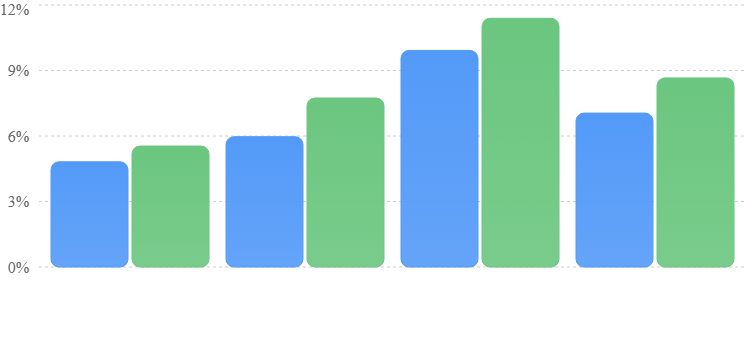
■ August 2026
■ September 2026
Prices of 41 Out of 42 Essential Items Reportedly Increased
Another concern highlighted in the report is the rising cost of essential household goods.
According to the cited government price-monitoring figures, retail prices of 41 out of 42 tracked essential commodities increased over the previous year.
Onion prices reportedly recorded the largest increase, rising by approximately 113%.
Potatoes were identified as the only commodity in the comparison whose price declined.
Other items mentioned in the report include sugar, edible oils, pulses, rice, wheat flour and tomatoes.
Such increases can affect households differently depending on their food consumption patterns and regional market prices.
A family that spends a significant portion of its income on groceries may feel the impact more strongly than one with greater disposable income.
Why Are Food Prices Rising?
Food inflation can be influenced by several factors, including agricultural production, seasonal supply, transportation expenses, storage costs and market demand.
Unexpected weather conditions may disrupt crop arrivals, while higher fuel prices can increase the cost of moving goods from farms to wholesale markets and retail shops.
Imported commodities can also become more expensive when global prices rise or the rupee weakens.
However, individual food products do not necessarily experience the same price movements.
Some vegetables may become cheaper during periods of abundant supply even while overall food inflation remains elevated.
Global Crude Oil Prices Add Another Risk
The report also points to international energy markets as a source of concern.
Uncertainty surrounding oil transportation through the Strait of Hormuz and developments in West Asia can influence global crude oil prices.
India's dependence on imported crude makes international energy prices relevant to domestic economic conditions.
Higher oil prices can increase transportation and production costs, potentially contributing to inflationary pressure.
Fertiliser prices and other agricultural input costs can also influence food production expenses.
Nevertheless, the effect on consumers depends on factors such as government pricing policies, taxes, exchange rates and the extent to which businesses pass costs along.
How Can Rising Inflation and EMIs Affect a Middle-Class Family?
Consider a household with monthly take-home income of ₹70,000.
Suppose its regular expenses include groceries, housing loan repayments, school fees, transport and utility bills.
If grocery expenses increase by ₹1,500 and the home loan EMI rises by approximately ₹500, the family could face an additional monthly burden of ₹2,000.
That amounts to ₹24,000 over a year if those increases persist.
For a household with limited savings, the additional expense may reduce the money available for investments, insurance premiums or emergency requirements.
This example is hypothetical, but it demonstrates how simultaneous price and borrowing-cost increases can affect household finances.
What Can Families Do to Manage Rising Expenses?
During periods of elevated inflation, reviewing monthly spending can help households identify areas where costs can be controlled.
Families may benefit from separating essential expenses from discretionary purchases and comparing prices before making large purchases.
Borrowers with floating-rate loans should review their bank's interest-rate reset provisions and understand whether a rate change affects their EMI, tenure or both.
Maintaining an emergency fund can also provide financial flexibility when unexpected expenses arise.
For long-term financial goals, investors should consider inflation when estimating how much money they may need in the future.
Will Inflation Continue to Rise?
The future direction of inflation will depend on several factors, including food supplies, international commodity prices, currency movements and monetary policy.
Higher wholesale costs can sometimes translate into increased retail prices, but the relationship is neither immediate nor guaranteed.
Businesses may adjust margins, supply conditions may improve, and consumer demand can influence pricing decisions.
Similarly, future lending rates will depend on RBI policy decisions and individual banks' pricing mechanisms.
Consumers should therefore avoid assuming that every reported increase will automatically continue in the coming months.
Final Word
The October 15, 2026 economic report highlights three developments that could put pressure on Indian household budgets: rising retail inflation, higher borrowing costs and an increase in wholesale inflation.
The reported figures show retail inflation at 5.54%, food inflation at 7.74% and wholesale inflation at 11.39% in September.
At the same time, the reported RBI repo rate increase to 5.50% raises concerns about borrowing costs for households with floating-rate loans.
For middle-class families, the combined effect could mean higher grocery expenses, reduced disposable income and additional pressure on monthly savings.
The key priority is to monitor actual household expenses, review loan obligations and plan for financial uncertainty rather than assuming that every price increase or interest-rate change will affect all consumers equally.
Editorial note: The October 15 report was reviewed, but the underlying Indian inflation releases and RBI policy notification were not independently verified for this rewrite. The reported statistics should be checked against official data before publication.