
Government Pushes Millet Procurement and Distribution: New Measures to Improve Supply and Nutrition Programmes
Millet Procurement Update 2026: The Government of India is focusing on strengthening the procurement and distribution of millets through several policy measures aimed at improving food availability, supporting farmers and expanding the use of nutritious grains in government welfare programmes.
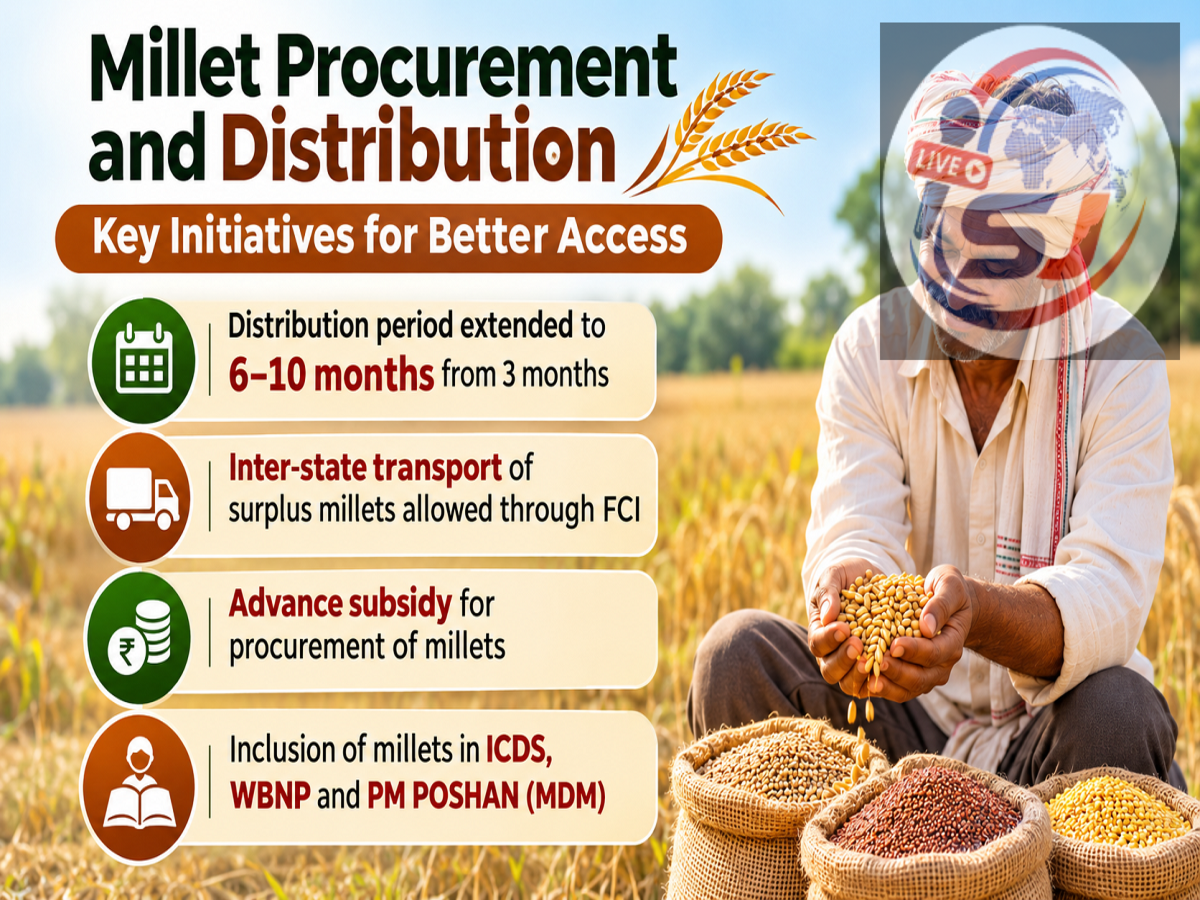
The Department of Food and Public Distribution has highlighted important steps designed to make millet procurement more effective and improve distribution across different states. These measures include extending the distribution period, facilitating the transportation of surplus millets between states through the Food Corporation of India (FCI), providing procurement-related subsidies and encouraging the use of millets in major nutrition schemes.
The initiative reflects the government's broader efforts to promote nutritious foodgrains while improving the functioning of the public food distribution system.
Government Highlights Major Steps to Strengthen Millet Distribution
According to information shared by the Department of Food and Public Distribution, several measures are being used to support millet procurement and distribution.
The department has identified four important areas:
-
Extending the period available for distributing procured millets.
-
Facilitating inter-state transportation of surplus millets through the Food Corporation of India.
-
Providing subsidies to support millet procurement.
-
Incorporating millets into government nutrition programmes, including ICDS, WBNP and PM POSHAN.
These measures are intended to address challenges associated with the procurement, storage, transportation and distribution of millets.
They can also help improve coordination between millet-producing regions and areas where these grains are required for public welfare programmes.
Extended Distribution Period to Support Better Millet Utilisation
One of the important measures highlighted by the department is the extension of the millet distribution period.
Millets are cultivated in different regions of India, and their availability varies according to agricultural seasons, production patterns and local procurement arrangements.
A longer distribution window can provide authorities with greater flexibility to plan the movement and allocation of procured grains.
This may help states manage their stocks more efficiently and improve the utilisation of millets purchased under government procurement arrangements.
However, the department's brief announcement does not specify the revised distribution period or provide a new deadline.
Beneficiaries and procurement agencies should therefore refer to the applicable government guidelines for detailed operational rules.
FCI to Facilitate Movement of Surplus Millets Between States
The Food Corporation of India plays an important role in the country's foodgrain procurement, storage and distribution arrangements.
The department has highlighted the facilitation of inter-state transportation of surplus millets through FCI as another measure to improve distribution.
Some states produce more millets than they require for local distribution, while others may need additional supplies for nutrition and food welfare programmes.
Arrangements for transferring surplus grains between states can help address this imbalance.
Such coordination may also improve the availability of millets in regions where local production is limited.
The announcement identifies FCI's role in facilitating these movements but does not provide state-wise transportation quantities or new allocation figures.
Procurement Subsidies to Support Millet Purchases
Another important element of the government's approach is the provision of procurement subsidies.
Millet cultivation is an important agricultural activity in several parts of India, particularly in regions where crops must withstand relatively dry conditions and limited water availability.
Procurement-related financial support can help government agencies manage eligible procurement operations and encourage the inclusion of millets in public food programmes.
Such support may also contribute to more organised purchasing arrangements for farmers, depending on the procurement rules and implementation in individual states.
However, the department's social media update does not specify the subsidy amount, eligible millet varieties or detailed conditions for receiving financial assistance.
Farmers and procurement agencies should consult official notifications for information about applicable benefits.
Millets to Play a Greater Role in Government Nutrition Schemes
The department has also emphasised incorporating millets into important nutrition programmes.
These include the Integrated Child Development Services (ICDS), the Wheat-Based Nutrition Programme (WBNP) and PM POSHAN.
| Government Programme |
Main Purpose |
|---|---|
| Integrated Child Development Services (ICDS) |
Nutrition and development support for young children, pregnant women and lactating mothers |
| Wheat-Based Nutrition Programme (WBNP) |
Foodgrain support for supplementary nutrition services |
| PM POSHAN |
Nutritional support through school meals for eligible children |
Including millets in these programmes can help diversify meals and provide additional nutritional options.
However, the actual inclusion of millet-based food items depends on programme guidelines, state implementation arrangements and approved menus.
Why Are Millets Important for Nutrition?
Millets are traditional grains cultivated and consumed across many parts of India.
Common varieties include bajra (pearl millet), jowar (sorghum) and ragi (finger millet), along with several small millets.
These grains offer nutritional benefits and can contribute to a balanced diet.
For example, ragi is known for its calcium content, while many millet varieties provide dietary fibre and important minerals.
Millets are also suitable for cultivation in several dryland agricultural regions, making them relevant to discussions about sustainable farming and crop diversification.
Their nutritional composition varies by variety, and their benefits depend on overall dietary patterns and preparation methods.
What Does the Initiative Mean for Farmers and Beneficiaries?
The measures highlighted by the Department of Food and Public Distribution have implications for both agricultural producers and people receiving nutrition assistance.
For farmers, more effective procurement arrangements may create additional opportunities to sell eligible millet produce through government-supported channels.
For distribution agencies, improved transportation coordination and greater flexibility in distribution can help manage millet stocks.
For beneficiaries, the inclusion of millets in nutrition programmes may provide access to a wider variety of foodgrains.
However, the announcement should not be interpreted as confirmation that every ration cardholder will automatically receive additional millets or that a new nationwide millet entitlement has been introduced.
The specific benefits will depend on the relevant programme and its implementation rules.
Government Focuses on Better Procurement and Nutritional Diversity
The latest awareness update highlights the importance of connecting agricultural procurement with public nutrition programmes.
By supporting millet purchases, facilitating the movement of surplus stocks and promoting their inclusion in welfare schemes, the government aims to strengthen the role of these traditional grains in India's food distribution system.
Farmers, ration beneficiaries and other stakeholders should follow official departmental announcements for detailed procurement guidelines, state-wise implementation updates and eligibility conditions.
Source Credit: Department of Food & Public Distribution, Government of India — Official X announcement.