
Government Business Loan: Get Funding to Start or Expand a Business; Know Eligibility and How to Apply Online
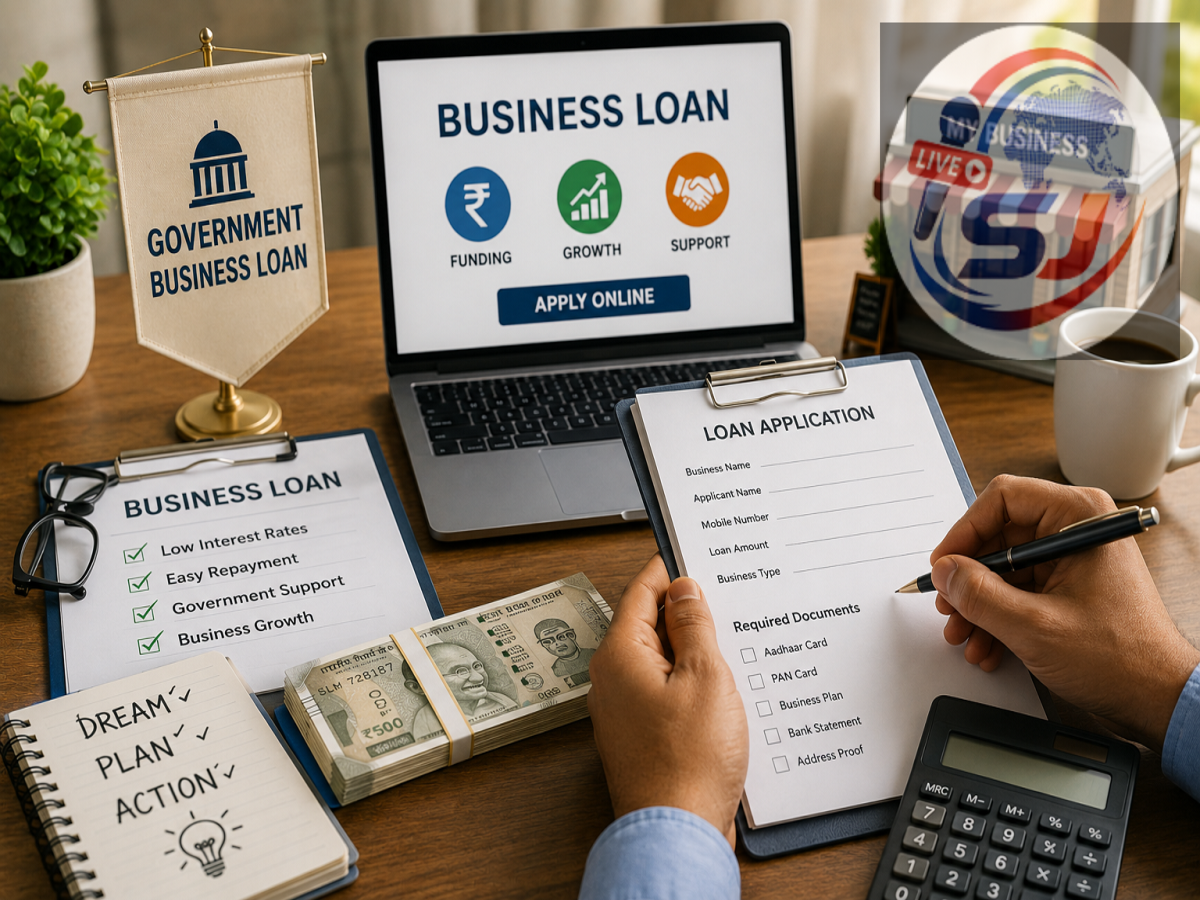
Government Business Loan: Starting a new business or expanding an existing enterprise usually requires substantial capital. For entrepreneurs and MSMEs, the government supports several credit programmes that make it easier to access bank financing. However, there is no single universal government scheme under which every applicant automatically receives a ₹1 crore loan. The amount sanctioned depends on the particular scheme, business profile, bank assessment and eligibility.
One important mechanism is the Credit Guarantee Fund Trust for Micro and Small Enterprises (CGTMSE), which supports eligible collateral-free credit facilities extended by participating lenders to micro and small enterprises.
What Is CGTMSE and How Does It Help Businesses?
CGTMSE was established to improve access to institutional credit for micro and small enterprises, particularly businesses that may not have sufficient collateral to offer a lender.
Under the credit-guarantee mechanism, eligible loans sanctioned by banks and other member lending institutions can receive guarantee cover from CGTMSE.
This does not mean the government directly deposits a ₹1 crore loan into an entrepreneur's account. The business still has to approach an eligible lender, satisfy its credit requirements and receive loan approval.
Can You Really Get a Business Loan Without Mortgaging Property?
Collateral-free financing is one of the biggest attractions for small entrepreneurs who do not own property that can be pledged against a business loan.
Eligible credit facilities covered under CGTMSE may be sanctioned without conventional collateral or a third-party guarantee, subject to the scheme and lender's applicable conditions.
However, "collateral-free" should not be confused with "guaranteed approval." Banks can still evaluate the applicant's repayment capacity, business viability, credit history, cash flow and financial records before deciding whether to sanction the loan.
Is the Business Loan Limited to ₹1 Crore?
Borrowers should be particularly careful about advertisements claiming that the government simply offers "₹1 crore to start any business."
Government-backed credit programmes have different limits, eligibility requirements and guarantee provisions. These can also change over time.
The actual amount available to an applicant therefore depends on factors such as the nature and size of the business, projected turnover, existing liabilities, repayment capacity and the lending institution's credit assessment.
Applicants should check the current scheme rules rather than assuming ₹1 crore is automatically available.
What Is the PSB Loans in 59 Minutes Facility?
The digital lending ecosystem has also made it easier for businesses to submit loan applications without beginning the process with repeated bank visits.
The PSB Loans in 59 Minutes platform has been used to facilitate digital applications and in-principle decisions for eligible business borrowers.
An important distinction is that in-principle approval is not the same as final loan disbursement. The selected lender may still verify documents, business information and other eligibility requirements before sanctioning and releasing the money.
Documents You May Need for a Business Loan
Documentation varies according to the lender and loan programme, but applicants may commonly be asked for PAN and identity details, business-registration information, bank statements, GST information where applicable, income-tax returns, financial statements and details of the proposed use of funds.
For a new venture, lenders may also seek a detailed project report explaining the business model, expected investment, projected revenue, operating expenses and repayment plan.
Existing businesses with organised financial records and banking transactions generally make it easier for lenders to evaluate their creditworthiness.
New Business? Prepare a Strong Project Report
For a first-time entrepreneur, a well-prepared project report can be particularly important.
The report should explain what the business will sell, how much capital is required, where that money will be spent, the expected customer base and how the venture plans to generate enough cash flow to repay the loan.
Avoid inflating sales or profit projections merely to qualify for a larger loan. Banks may compare projected figures with industry conditions and other financial information submitted during the application.
How to Apply for a Government-Supported Business Loan Online
One route for exploring eligible government-linked credit programmes is the JanSamarth portal.
Applicants can check relevant credit categories, complete an eligibility assessment and proceed with the application process for schemes available through the platform.
Depending on the facility selected, the applicant may have to provide personal, business and financial details and consent to verification of relevant records.
The lender ultimately evaluates the application and determines the loan amount, interest rate, tenure and other conditions.
Interest Rate Is Not Fixed by the ₹1 Crore Claim
There is no single interest rate applicable to every government-supported business loan.
The rate can vary depending on the bank, loan product, credit profile, business performance, repayment period and prevailing lending rates.
Before accepting an offer, compare not only the headline interest rate but also processing charges, repayment tenure, EMI obligations, prepayment conditions and other applicable costs.
Don't Pay Agents Who Promise Guaranteed Government Loans
Entrepreneurs should be cautious of websites, WhatsApp messages or agents claiming they can provide a "100% guaranteed ₹1 crore government loan" after collecting an advance payment.
Government credit support does not remove the lender's responsibility to evaluate the borrower.
Use official portals and authorised banks or financial institutions, and never share OTPs, banking passwords or UPI PINs with anyone claiming to arrange a government business loan.
Bottom line: Government-backed mechanisms such as CGTMSE can make collateral-free institutional credit more accessible to eligible micro and small enterprises. But a ₹1 crore loan is not an automatic government benefit. Final approval and the amount sanctioned depend on the relevant scheme, lender assessment, business viability and the borrower's financial profile.