Good news on DA coming soon! How much will the salary benefit if implemented from July 2026?
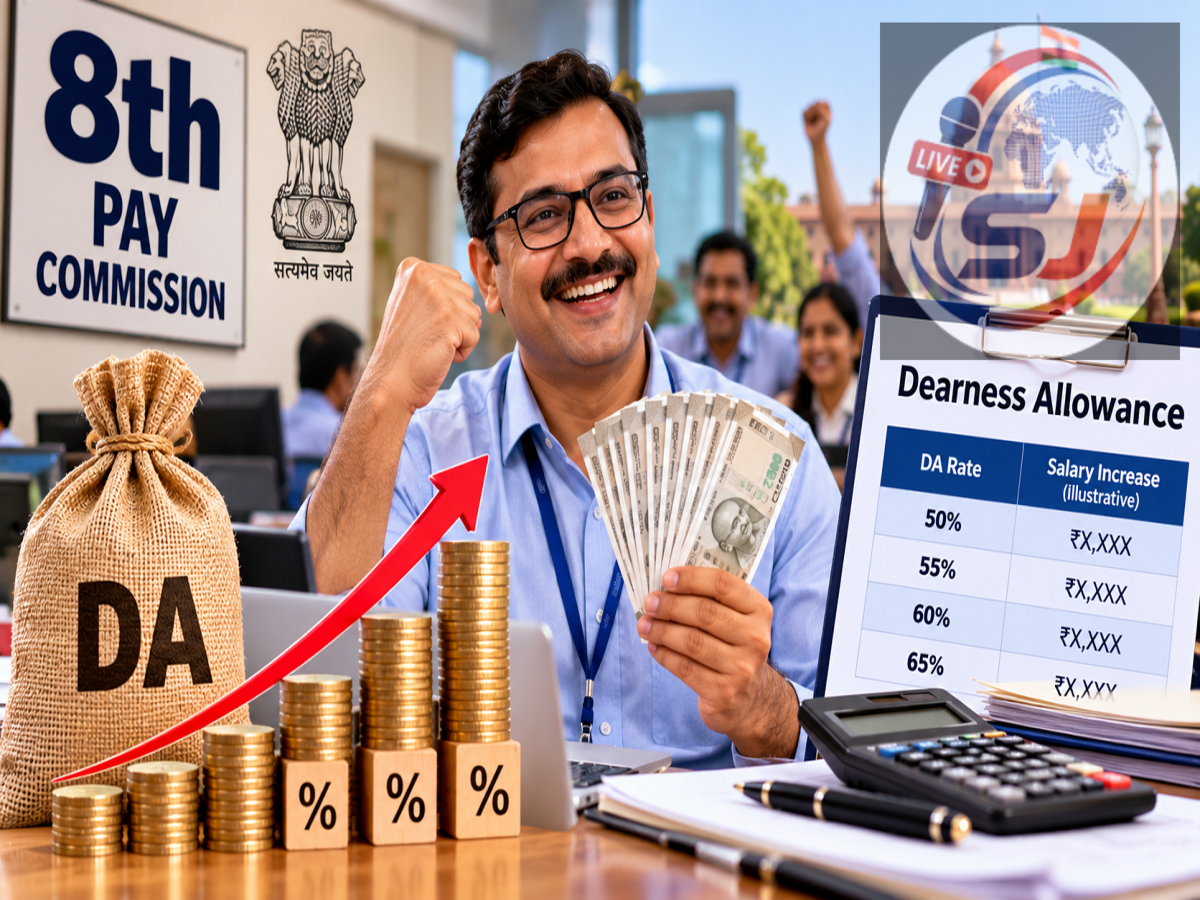
DA Hike July 2026: Central government employees and pensioners are waiting for the next revision in Dearness Allowance (DA) and Dearness Relief (DR). Expectations have increased that the government could announce a decision on the July 2026 DA cycle soon.
At present, DA is stated to be 60% of basic pay. Based on the movement in the All India Consumer Price Index for Industrial Workers (AICPI-IW), estimates cited in reports suggest an increase of around 3 to 4 percentage points.
If that estimate materialises, DA could rise from 60% to either 63% or 64%.
However, employees should note that these figures are estimates based on inflation-index data. The final DA rate will depend on the government's official decision.
DA Could Increase From 60% to 63% or 64%
Dearness Allowance is revised periodically to help central government employees offset the impact of inflation.
For pensioners, the corresponding benefit is provided through Dearness Relief.
The latest expectations relate to the revision applicable from July 2026.
If the government approves a 3-percentage-point increase, DA would rise:
60% → 63%
If a 4-percentage-point increase is approved, it would become:
60% → 64%
The difference may appear small in percentage terms, but the monthly benefit increases as basic pay rises.
How Much Could Salary Increase at 63% DA?
Consider a central government employee with a basic salary of ₹18,000 per month.
At the existing 60% DA rate, the employee receives:
₹18,000 × 60% = ₹10,800 per month
If DA rises to 63%, it would become:
₹18,000 × 63% = ₹11,340 per month
The employee would therefore receive an additional:
₹540 per month
If the 3-percentage-point increase is applicable retrospectively from July 2026, the corresponding difference for previous eligible months would form part of the arrears, subject to the government's final order.
What If DA Increases to 64%?
For the same ₹18,000 basic salary, DA at 64% would be:
₹18,000 × 64% = ₹11,520
Compared with the existing DA of ₹10,800, this would mean an additional:
₹720 per month
Therefore, at the minimum basic-pay illustration of ₹18,000, a 3-percentage-point increase would add ₹540 per month, while a 4-percentage-point increase would add ₹720.
DA Hike Calculation at Different Basic Pay Levels
The actual benefit depends directly on an employee's basic pay.
| Basic Pay | DA at 60% | DA at 63% | Increase at 63% | DA at 64% | Increase at 64% |
|---|---|---|---|---|---|
| ₹18,000 | ₹10,800 | ₹11,340 | ₹540 | ₹11,520 | ₹720 |
| ₹25,000 | ₹15,000 | ₹15,750 | ₹750 | ₹16,000 | ₹1,000 |
| ₹30,000 | ₹18,000 | ₹18,900 | ₹900 | ₹19,200 | ₹1,200 |
| ₹40,000 | ₹24,000 | ₹25,200 | ₹1,200 | ₹25,600 | ₹1,600 |
| ₹50,000 | ₹30,000 | ₹31,500 | ₹1,500 | ₹32,000 | ₹2,000 |
| ₹60,000 | ₹36,000 | ₹37,800 | ₹1,800 | ₹38,400 | ₹2,400 |
These are simple illustrations based only on the assumed DA rates. They do not represent the employee's complete salary revision because other allowances and deductions can affect take-home pay.
Will Employees Receive Arrears From July 2026?
If the government announces the revised DA later but makes it effective from July 1, 2026, eligible employees would generally become entitled to the difference between the old and revised rates for the applicable period, subject to the terms of the official order.
For example, suppose an employee has a basic salary of ₹50,000.
At 60% DA, the monthly amount is ₹30,000.
At 63%, it would be ₹31,500—a difference of ₹1,500 per month.
If 64% is approved, DA would become ₹32,000, producing a monthly difference of ₹2,000.
The actual arrears would depend on the final rate, effective date and the month in which the revised amount is paid.
Pensioners Could Also Benefit
The revision is also important for central government pensioners.
While serving employees receive Dearness Allowance, eligible pensioners receive Dearness Relief (DR).
If the government approves a corresponding increase in DR, the monthly pension payout would rise according to the applicable basic pension.
For example, if a pensioner's basic pension is ₹20,000, a 3-percentage-point increase would translate into an additional ₹600 per month.
A 4-percentage-point increase would mean an additional ₹800 per month.
These calculations are illustrative and assume the same percentage-point increase is formally approved for DR.
How Is DA Linked to AICPI-IW?
DA revisions are linked to inflation data represented by the All India Consumer Price Index for Industrial Workers (AICPI-IW).
Movement in this index is used in the applicable formula for calculating the DA rate.
As consumer prices rise, the index can lead to a higher DA entitlement under the prescribed calculation.
This mechanism is designed to provide employees and pensioners with partial protection against the impact of inflation on purchasing power.
However, the calculated figure and the government's formal announcement are two separate stages.
Until an official order is issued, estimates based on AICPI-IW data should not be described as an approved DA rate.
Is the 64% DA Rate Confirmed?
No.
The 63% or 64% figures currently being discussed are estimates, according to the information provided.
The government has not confirmed either figure merely because calculations based on AICPI-IW point towards that range.
Employees should therefore be cautious about social-media posts or reports claiming that a particular percentage has already been approved unless supported by an official government notification.
What Happens to DA Under the 8th Pay Commission?
The ongoing discussion around the 8th Pay Commission has also created questions about what happens to existing DA when a new pay structure eventually comes into effect.
DA under the current pay structure and the implementation of a future Pay Commission are separate matters.
Any treatment of DA while transitioning to a new pay structure would depend on the recommendations, implementation methodology and final government decision.
Therefore, employees should not assume that the anticipated July 2026 DA revision reveals anything about the eventual 8th Pay Commission fitment factor or revised minimum salary.
How Much Could Employees Gain?
For every ₹100 of basic pay, a 3-percentage-point DA increase adds ₹3, while a 4-percentage-point increase adds ₹4.
That makes the calculation relatively straightforward.
An employee with ₹30,000 basic pay could gain ₹900 to ₹1,200 per month under the estimated 63%–64% range, while someone with ₹50,000 basic pay could gain ₹1,500 to ₹2,000 per month.
The final amount will become clear only after the government officially announces the revised DA rate.
For now, central government employees and pensioners should treat 63% and 64% as projected figures for the July 2026 cycle—not confirmed rates. Once the official order is issued, the final percentage, effective date, arrears and payment timeline will determine the actual benefit.