Gold Silver Prices: GST Council May Review IGST Exemption on Imports—Will Bullion Become Costlier?
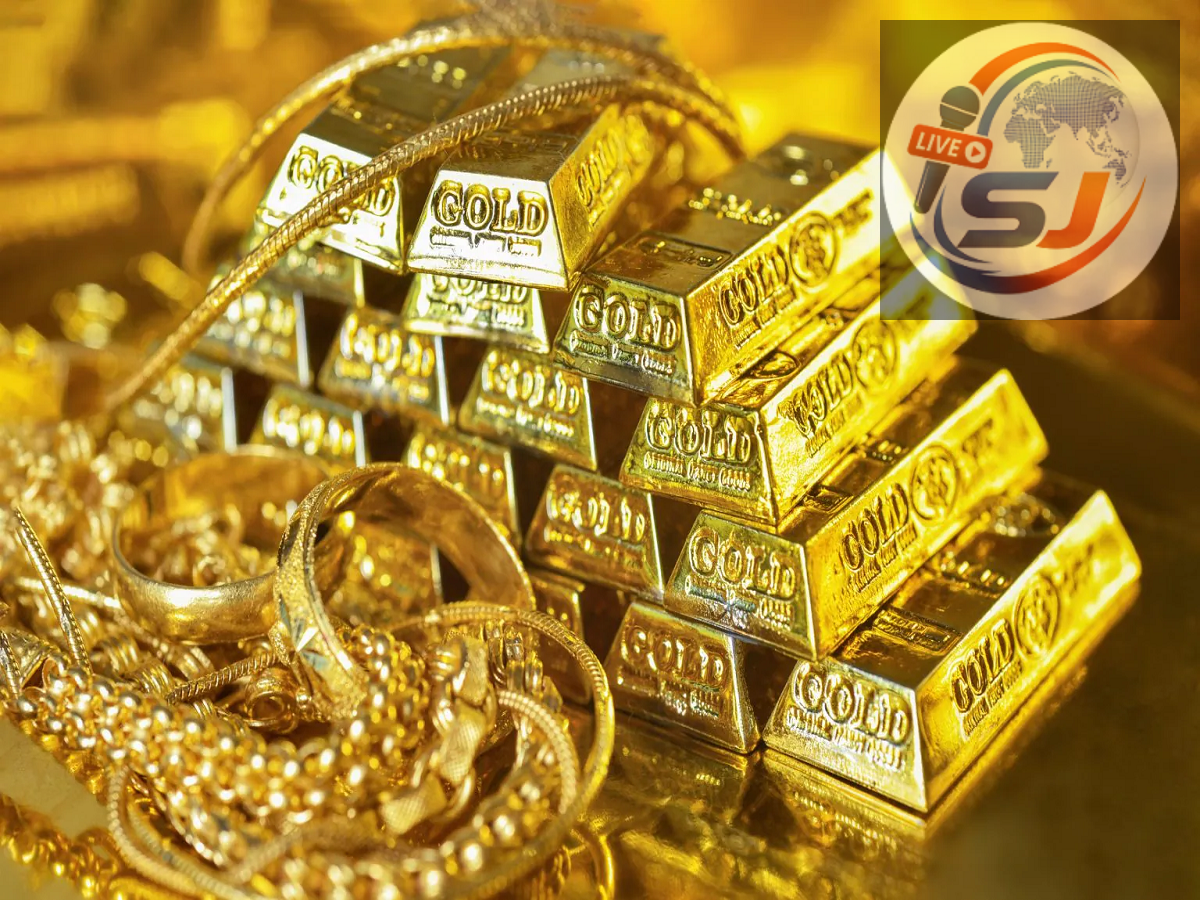
Gold and silver buyers could soon see an important tax-policy development, with the GST Council expected to consider a proposal concerning the import of precious metals at its meeting scheduled for October 7, 2026.
The proposal relates to the Integrated Goods and Services Tax (IGST) exemption currently available to certain banks and government-designated agencies when importing gold, silver and platinum.
At present, a 3% IGST applies to imports of these precious metals under the framework described in the report, while specified banks and nominated agencies are eligible for an exemption.
If the proposed change receives approval and is subsequently implemented, these institutions could also be required to pay the applicable 3% IGST when importing precious metals.
However, consumers should not interpret this as meaning that gold and silver prices at jewellery stores would immediately become exactly 3% more expensive.
The actual impact could be more complicated.
What Could the GST Council Discuss on October 7?
The GST Council is expected to consider whether the existing IGST exemption available to specified banks and nominated agencies should continue.
The exemption has reportedly been in place since 2017, when the precious-metals import and trading ecosystem operated under a different structure.
Under the proposal now being discussed, eligible banks and nominated agencies could lose this exemption.
If approved and formally implemented, they would have to pay IGST at the applicable rate when importing gold, silver or platinum.
It is important to underline that this is currently a proposal under consideration.
A discussion by the GST Council is not the same as a final rule coming into force. The Council could approve, reject or modify the proposal, and implementation would depend on the necessary official notification or other legal steps.
What Is the Current IGST Arrangement?
According to the information provided, gold, silver and platinum imports are subject to 3% IGST, but specified banks and nominated agencies currently receive an exemption.
The exemption was introduced in 2017.
This creates a situation in which the tax treatment can differ depending on the route through which precious metals enter the domestic market.
One objective behind the proposed change is reportedly to create greater tax parity between banks, nominated agencies and bullion exchanges.
If the exemption is removed, different import channels could face a more uniform tax treatment.
Why Is the Government Reviewing the Exemption?
India is one of the world's largest consumers of gold, while a substantial portion of domestic demand is met through imports.
Large precious-metal imports can have implications for the country's foreign-exchange requirements because international transactions are generally settled in foreign currencies such as the US dollar.
According to the figures cited in the report, India's gold imports between April and August 2026 increased 3.38% to $17.47 billion.
Silver imports during the same period reportedly declined 8.81% to $1.74 billion.
These numbers show the scale of India's precious-metal import bill.
When imports increase, demand for foreign currency can also rise. That can become more significant when the Indian rupee is already facing pressure against the US dollar.
The proposal is therefore being considered against the broader backdrop of precious-metal imports, foreign-exchange outflows and efforts to make the tax structure more consistent across different import channels.
Will Gold Become 3% More Expensive?
Not necessarily.
This is one of the most important points for consumers to understand.
Even if the IGST exemption is withdrawn, it would be misleading to simply calculate today's gold price, add 3%, and call that the new retail rate.
The proposal concerns the tax treatment of specified importing entities.
The eventual impact on the market would depend on how the additional tax affects importers' effective costs, the availability of input-tax credit under applicable GST rules, supply-chain pricing and the extent to which any additional cost is passed on.
Several other variables determine the final domestic gold price.
These include international bullion prices, movements in the rupee against the US dollar, customs duties, domestic demand and supply, dealer premiums and broader financial-market conditions.
Could Silver and Platinum Prices Also Be Affected?
Yes, the proposal described in the report is not limited to gold.
It also covers silver and platinum imports by eligible banks and nominated agencies.
Therefore, if the exemption is withdrawn and the change affects effective import costs, there could potentially be an impact across these precious-metal markets.
But once again, a direct 3% increase in retail prices should not be assumed.
Silver, in particular, has a significant industrial-demand component in addition to investment and jewellery demand. Its market price can therefore be affected by manufacturing demand, international supply conditions and investor sentiment.
Platinum also has substantial industrial applications, making its price sensitive to factors beyond taxation.
Gold Prices Depend on Several Global Factors
Tax policy is only one part of the gold-price equation.
International bullion prices remain a major driver of Indian gold rates.
If global gold prices fall sharply at the same time as an import-related tax change, the international decline could offset some or all of the domestic cost impact.
The reverse can also happen. If global bullion prices rise, the rupee weakens and domestic import costs increase simultaneously, Indian gold prices could face stronger upward pressure.
This is why the impact of a tax-policy change cannot be assessed in isolation.
Import Duties Were Also Raised Earlier in 2026
The government has already taken measures affecting the taxation of precious-metal imports this year, according to the figures cited in the report.
In May 2026, the import duty on gold and silver was reportedly increased from 6% to 15%.
For platinum, the cited rate was raised from 6.4% to 15.4%.
The proposed withdrawal of the IGST exemption for specified banks and nominated agencies would be a separate development from those import-duty changes.
Consumers should therefore avoid combining different taxes and assuming that each one translates directly into an identical percentage increase in retail jewellery prices.
What Could the Proposal Mean for Jewellery Buyers?
For ordinary consumers, the immediate question is whether buying jewellery, coins or bars will become more expensive.
At present, there is no definitive answer because the proposal has yet to be considered and its final structure is not known.
Even if approved, the market impact would depend on implementation details.
Jewellery prices also include factors beyond the underlying bullion value, such as purity, weight, making charges and applicable taxes.
A customer buying jewellery should therefore look at the complete invoice rather than only the benchmark gold rate.
October 7 Meeting Will Be Important
The GST Council meeting scheduled for October 7 will be closely watched by bullion traders, importers, jewellers and consumers.
The key question is whether the Council approves the proposal to withdraw the IGST exemption currently available to specified banks and nominated agencies importing gold, silver and platinum.
If approved, further clarity would be needed on when the new arrangement takes effect and exactly how it will operate.
Until an official decision and implementation details are announced, consumers should treat reports of an imminent 3% increase in gold or silver prices with caution.
The proposal could influence import costs and, indirectly, market prices, but it does not automatically mean that gold, silver or platinum will become exactly 3% more expensive at retail stores.
For now, the October 7 GST Council decision—and any subsequent official notification—will determine what changes, if any, actually take effect.
Disclaimer: This article discusses a proposal reportedly expected to be considered by the GST Council. It should not be treated as an approved tax change unless officially announced and implemented. Gold, silver and platinum prices are influenced by multiple domestic and international factors and can fluctuate rapidly.