
Gold Silver Prices Fall: Why Bullion Is Under Pressure and What Investors Should Watch Next
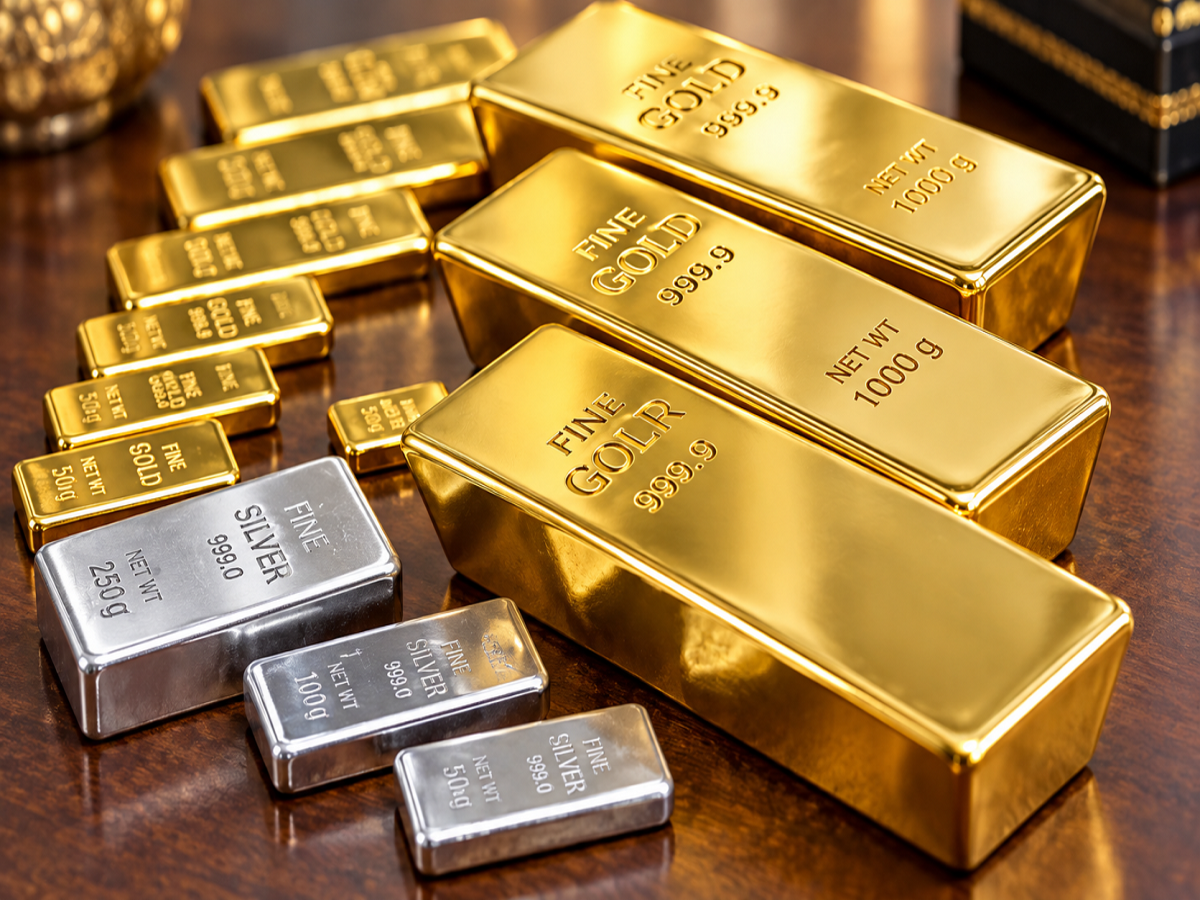
Gold and silver prices came under pressure in international markets on September 15 as investors turned cautious ahead of the US Federal Reserve's policy meeting. Higher crude oil prices, strength in the US dollar and rising Treasury yields were among the major factors influencing precious metals.
COMEX gold futures fell 0.28% to $4,339.60 per ounce, while COMEX silver declined 0.58% to $63.765 per ounce. Spot gold slipped 0.15% to $4,291.59 per ounce, while spot silver was down 0.31% at $63.03 per ounce, according to the figures in the supplied report.
The weakness followed pressure at the beginning of the week. In India's domestic market, gold prices in New Delhi had dropped by ₹500 on September 14 to around ₹1.55 lakh per 10 grams, while silver remained around ₹2.34 lakh per kilogram including taxes.
With several major global factors moving simultaneously, bullion prices could remain volatile in the near term.
Why Are Gold and Silver Prices Falling?
The current pressure on precious metals is linked to a combination of higher energy prices, a firmer US dollar and rising bond yields.
These factors matter because gold and silver do not generate regular interest income.
When returns available from interest-bearing assets such as government bonds increase, holding non-yielding assets can become relatively less attractive to some investors.
At the same time, a stronger dollar can make dollar-denominated commodities more expensive for buyers using other currencies, potentially weighing on demand.
Crude Oil Prices Add Another Layer of Uncertainty
Oil prices have become an important factor for the bullion market.
According to the supplied report, renewed geopolitical tensions in West Asia increased concerns about oil supplies.
US crude climbed 1.27% to $102.68 per barrel, while Brent crude rose 1.21% to $106.96 per barrel.
Higher energy costs can complicate the inflation outlook because fuel and transportation expenses affect many parts of the economy.
If expensive energy keeps inflation elevated, central banks may have less room to ease monetary policy. Expectations that interest rates could remain higher can, in turn, create pressure on non-interest-bearing assets such as gold and silver.
Stronger Dollar Can Hurt Precious Metal Demand
The US dollar is another important piece of the equation.
The report said the US Dollar Index rose 0.05% to 99.53.
Gold and silver are internationally priced in US dollars. When the dollar strengthens, buyers using currencies such as the euro, yen or rupee may effectively face a higher cost.
That can potentially reduce demand and put downward pressure on bullion prices.
Currency movements are therefore closely watched by precious-metal traders, especially around major central-bank policy announcements.
Rising US Treasury Yields Put Pressure on Gold
Bond yields have also moved higher.
The benchmark 10-year US Treasury yield reached 5% overnight, which the supplied report describes as its highest level since 2023.
This matters for gold because the metal itself does not pay interest.
When bond yields rise, investors can potentially earn better returns from interest-bearing assets. Economists often describe this as an increase in the opportunity cost of holding gold.
If yields continue climbing, bullion may remain under pressure. Conversely, falling yields can improve the relative appeal of gold.
Why the Federal Reserve Meeting Is Crucial
Attention is now focused on the US Federal Reserve.
According to the supplied article, the Federal Open Market Committee is beginning its two-day meeting on September 15, with investors closely watching both the interest-rate decision and the accompanying policy commentary.
The language used by the Fed could be just as important as the rate decision itself.
If policymakers indicate that monetary conditions need to remain tighter, bond yields and the dollar could receive additional support. Such a scenario could create further short-term pressure on gold and silver.
If the Fed delivers less restrictive signals, however, pressure on the dollar and Treasury yields could ease, potentially providing support to precious metals.
Geopolitical Tensions Could Still Support Gold
The outlook is not entirely negative for gold.
Geopolitical uncertainty can create two opposing effects.
On one side, geopolitical tensions can push oil prices higher, increase inflation concerns and potentially keep interest rates elevated. Those developments can be negative for bullion.
On the other side, the same geopolitical uncertainty can increase demand for assets traditionally viewed as safe havens.
Gold has historically been considered such an asset during periods of heightened global uncertainty.
The supplied report points to renewed tensions in West Asia and concerns surrounding oil infrastructure as factors that could encourage some investors to seek protection in gold.
This creates a tug-of-war between higher yields and safe-haven demand.
Silver Has an Additional Factor: Industrial Demand
Silver shares many of the macroeconomic drivers that affect gold, including interest rates, the dollar and investor sentiment.
However, silver is also widely used in manufacturing and technology.
That means expectations for global economic growth and industrial activity can have a greater direct influence on silver than on gold.
A strong economic outlook can support industrial demand for the metal, while concerns about slowing manufacturing or economic activity can weigh on prices.
This dual role—precious metal as well as industrial commodity—can sometimes make silver more volatile.
Silver Saw a Sharp Fall Earlier
Silver had already experienced significant selling pressure before the September 15 session.
According to the supplied figures, global spot silver fell around 3% to $62.82 per ounce on September 14.
During early Asian trading on September 15, COMEX silver was trading at approximately $64 per ounce.
Such movements demonstrate how quickly silver prices can change when macroeconomic expectations shift.
What Should Gold and Silver Investors Watch Next?
The Federal Reserve's policy decision and its commentary are likely to remain among the most important immediate triggers for bullion.
Investors will also be monitoring crude oil prices, the US dollar and Treasury yields.
A decline in oil prices or softer signals from the Fed could provide support to precious metals. On the other hand, another sharp rise in crude oil, the dollar or bond yields could keep gold and silver under pressure.
Geopolitical developments will remain another important variable because they can influence both energy prices and safe-haven demand.
Is the Long-Term Gold Outlook Still Positive?
Despite the near-term weakness, the source notes that some market estimates continue to maintain a positive longer-term outlook for gold.
For example, ANZ has maintained a 12-month gold price target of $5,400 per ounce, according to the supplied article.
Factors cited for that view include improving holdings in gold-backed ETFs, institutional demand in China and increasing participation from Indian investors.
Geopolitical uncertainty could also increase gold's appeal as a safe-haven asset.
However, a price target is an analyst forecast, not a guaranteed future price.
Gold and Silver Outlook: Key Takeaway
Gold and silver are currently caught between several powerful global forces.
Higher oil prices, a stronger US dollar and rising Treasury yields are creating downward pressure. At the same time, geopolitical uncertainty could support safe-haven demand, particularly for gold.
The Federal Reserve's next policy signals could determine the near-term direction.
For investors, this means volatility may remain elevated. Instead of reacting only to a single day's rise or fall, it is important to watch the combined movement of interest rates, Treasury yields, the dollar, crude oil and geopolitical developments.
Silver investors should additionally keep an eye on the outlook for global industrial activity because manufacturing demand can have a significant influence on the metal's price.
Disclaimer: Precious-metal and market-linked investments involve price risk. Forecasts and price targets are estimates and should not be treated as guaranteed returns. Investors should consider their own financial situation and, where necessary, seek advice from a qualified professional before making investment decisions.