
Gold Silver Price Today: MCX Rates Rise as Gold Crosses ₹1.55 Lakh and Silver Nears ₹2.39 Lakh
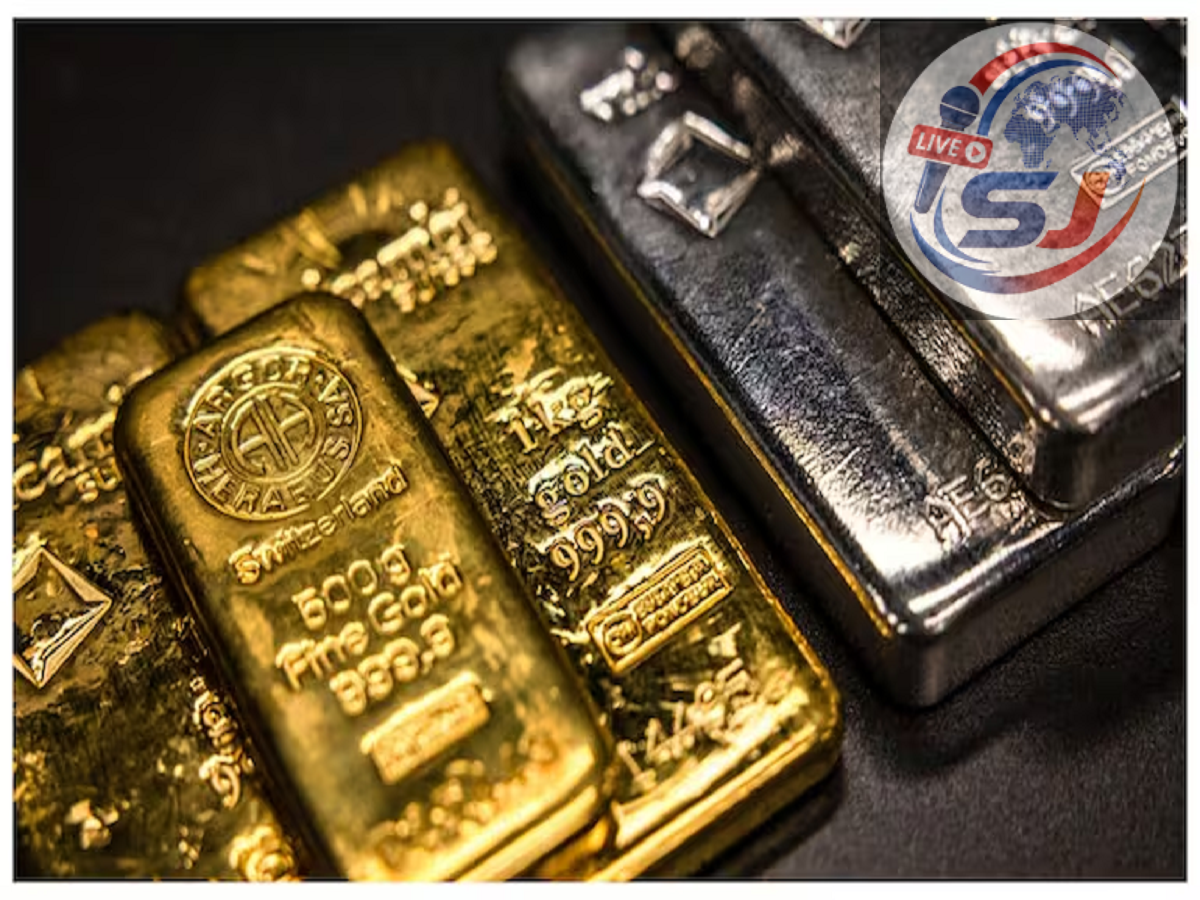
Gold and Silver Price Today, August 17, 2026: Precious metals opened the week on a positive note, with both gold and silver futures trading higher on the Multi Commodity Exchange (MCX) on Monday. A softer US dollar and changing expectations around the US Federal Reserve's interest-rate outlook provided support to bullion prices.
At around 11:40 am, MCX October gold futures were trading near ₹1,55,191 per 10 grams, gaining ₹685 or approximately 0.44%. Silver showed a stronger move, with the September futures contract rising ₹2,692, or 1.14%, to around ₹2,38,616 per kg.
Despite the upward momentum, uncertainty surrounding geopolitical developments and global inflation remains an important factor for the precious metals market.
Gold and Silver Prices Rise on MCX
Gold remained firmly above the ₹1.55 lakh mark during Monday's session.
The October futures contract on MCX was quoted at approximately ₹1,55,191 per 10 grams, representing an intraday gain of ₹685.
Silver outperformed gold in percentage terms. The September silver contract climbed more than 1% and traded around ₹2,38,616 per kg.
The sharp movement in silver is particularly important for traders because the metal is influenced by both investment demand and industrial consumption.
MCX Gold and Silver Rates on August 17
| Commodity | Futures Contract | Price | Change | Percentage Change |
|---|---|---|---|---|
| Gold | October | ₹1,55,191 | +₹685 | +0.44% |
| Silver | September | ₹2,38,616 | +₹2,692 | +1.14% |
These prices were recorded at around 11:40 am and can change throughout the trading session.
Why Are Gold and Silver Prices Rising?
Several international developments are influencing bullion markets.
One important factor is movement in the US dollar. Gold is internationally priced in dollars, and weakness in the American currency can make the precious metal relatively more attractive to buyers using other currencies.
Expectations surrounding the US Federal Reserve's interest-rate policy are another major factor.
Changing expectations about future US interest rates can significantly influence gold because the metal itself does not generate interest. When markets expect monetary policy to become less restrictive, the opportunity cost of holding non-yielding assets such as gold can decline.
However, interest-rate expectations can change quickly following inflation, employment and economic-growth data.
Geopolitical Uncertainty Remains in Focus
Precious metals are also reacting to geopolitical developments.
Uncertainty surrounding US-Iran negotiations and the situation involving the Strait of Hormuz remains important for global commodity markets.
The Strait of Hormuz is a crucial route for global energy supplies. Any disruption or uncertainty involving the region can influence crude oil prices and inflation expectations.
Higher energy prices can potentially keep inflation elevated, which may complicate expectations around future monetary-policy decisions.
For bullion traders, this creates a mixed environment in which safe-haven demand can support gold while changing interest-rate expectations can simultaneously create volatility.
Key International Levels for Gold
According to the market levels cited in the original commodity analysis, international gold has immediate support around $4,400 and $4,364 per troy ounce.
Resistance is seen around $4,470 and $4,500 per troy ounce.
Support and resistance are technical-market reference levels rather than guaranteed price floors or ceilings. Prices can move beyond these levels depending on market developments.
For international silver, the cited support zones are around $63.40 and $62.60, while resistance is seen near $65.80 and $67 per troy ounce.
Important MCX Levels for Gold
In the domestic futures market, the cited technical support range for MCX gold is approximately ₹1,53,650 to ₹1,52,800.
On the upside, resistance has been identified around ₹1,55,500 to ₹1,56,100.
With gold already trading around ₹1,55,191 during Monday's session, the metal was approaching the lower end of the cited resistance zone.
A sustained move above resistance could change the short-term technical picture, while weakness below support levels could increase selling pressure.
Silver Approaches an Important Resistance Zone
MCX silver has also moved close to an important technical area.
The cited support zone for silver is around ₹2,34,000 to ₹2,31,600 per kg, while resistance is placed between approximately ₹2,38,000 and ₹2,41,000.
With September silver futures trading near ₹2,38,616, prices were already within that resistance zone.
This makes subsequent price action particularly important for short-term traders.
Copper Moves Higher
Precious metals were not the only commodities seeing notable movement.
MCX August copper futures were trading around ₹1,396.30, gaining approximately ₹17.80 or 1.30%.
Copper is closely watched as an industrial metal because demand is connected to construction, manufacturing, electrical equipment and infrastructure activity.
Its price can therefore be influenced by expectations for global economic growth, particularly developments involving major industrial economies.
Crude Oil Trades Lower
While gold, silver and copper moved higher, crude oil was trading under pressure.
MCX September crude oil futures were around ₹7,771, down approximately ₹36 or 0.46%.
Crude prices can be influenced by geopolitical developments, global supply conditions, inventories, demand forecasts and production decisions by major oil-producing countries.
Changes in crude oil prices are particularly important for India because the country imports a substantial portion of its energy requirements.
Natural Gas Falls More Than 3%
Natural gas witnessed a much sharper decline.
MCX August natural gas futures were trading around ₹254.50, falling ₹9.30 or approximately 3.53%.
Natural gas is known for relatively high price volatility. Weather forecasts, storage data, electricity demand, production levels and global energy-market developments can all contribute to sharp short-term movements.
What Should Gold Buyers Watch?
People buying physical gold for jewellery, weddings or festivals should remember that MCX futures prices and jewellery-store prices are not identical.
The final amount paid for jewellery can include several additional components, including:
-
Gold purity and prevailing local bullion rate
-
GST and other applicable charges
-
Making charges
-
Wastage or design-related charges where applicable
-
Jeweller-specific pricing
Buyers should therefore check the final per-gram rate and all additional charges before completing a purchase.
Hallmarking and purity should also be verified when purchasing gold jewellery.
Investors Should Be Careful With Short-Term Trading Calls
Commodity futures can move sharply in a short period, particularly when markets are responding to geopolitical developments, currencies or central-bank expectations.
Technical analysts may provide entry levels, targets and stop-loss recommendations, but these are market opinions rather than assured outcomes.
A price target does not guarantee that the commodity will reach that level, while a stop-loss cannot eliminate every form of trading risk, particularly during highly volatile sessions.
Leveraged commodity trading can magnify both gains and losses.
What Could Drive Gold and Silver Next?
Several developments could determine the next major direction for bullion prices.
The US dollar, Federal Reserve policy expectations, inflation data, geopolitical tensions, crude oil prices and investor demand for safe-haven assets are likely to remain important.
For Indian traders, movements in the rupee against the dollar can also influence domestic precious-metal prices.
Silver additionally has a strong industrial component, meaning developments in sectors such as electronics, renewable energy and manufacturing can influence demand.
For now, gold and silver remain firm on MCX, with silver showing stronger percentage gains during Monday's session.
Disclaimer: Commodity prices are volatile and the figures mentioned above are intraday market levels that can change rapidly. This article is for informational purposes only and should not be considered investment or trading advice. Investors should evaluate their financial circumstances and consult a qualified financial professional before making investment decisions.