
Gold Price Outlook: Could Rates Fall Further Before Dhanteras and Diwali? HSBC Revises 2026 Forecast
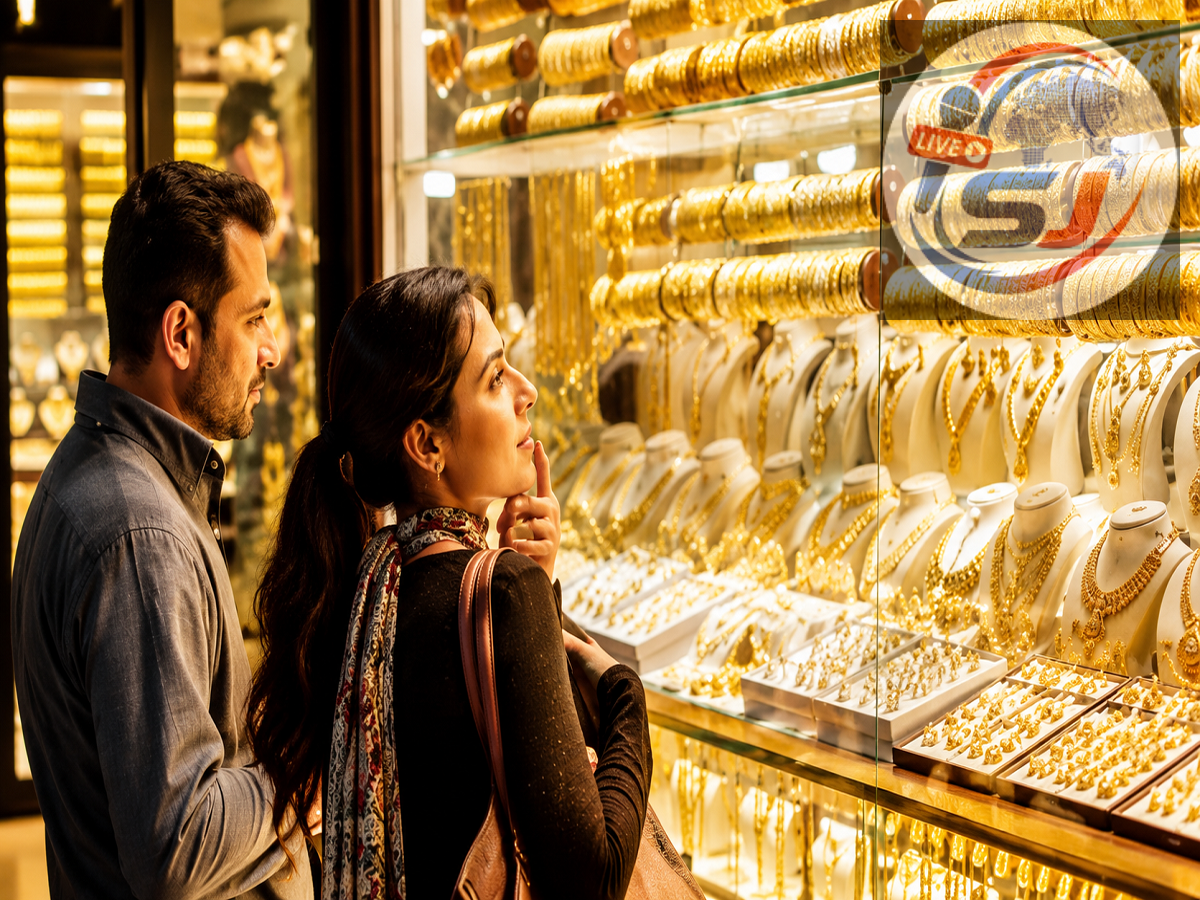
Gold Price Outlook 2026: Gold buyers waiting for Dhanteras and Diwali may want to keep a close watch on bullion prices over the coming weeks. After retreating sharply from record levels, the precious metal continues to face pressure in international markets, and HSBC has now lowered its average gold price forecast for 2026.
The revision does not guarantee that gold will become cheaper before the festive season. However, HSBC’s latest outlook indicates that further short-term downside pressure remains possible, even as the metal may be moving closer to a potential bottom.
The forecast comes at an important time for Indian consumers because Dhanteras and Diwali traditionally see strong demand for gold jewellery, coins and other precious-metal products.
HSBC Cuts Its 2026 Gold Price Forecast
HSBC has lowered its average gold price forecast for 2026 to $4,490 per ounce, compared with its previous estimate of $4,560 per ounce.
The bank has also reduced its 2027 average price forecast to $4,825 per ounce, according to reports on its latest outlook.
Gold has been trading substantially below the record highs reached earlier in 2026. Spot gold was quoted at around $4,184.45 per ounce in the figures cited on October 2, while the precious metal had declined by roughly 2% during the week at that point.
The important point for buyers is that HSBC's revised forecast represents an average price expectation, not a fixed target or guaranteed future market price.
Could Gold Become Cheaper Before Dhanteras and Diwali?
Further declines are possible, but there is no certainty that prices will fall continuously until the festive season.
Gold is influenced by several global factors, including US bond yields, interest-rate expectations, the dollar, inflation, geopolitical developments, investment flows and central-bank demand.
Higher Treasury yields have recently been an important headwind for precious metals because gold does not generate interest income. When yields on interest-bearing assets rise, the opportunity cost of holding gold can increase.
The World Gold Council has also highlighted rising yields as one of the conditions that could put pressure on gold. However, it has simultaneously identified central-bank demand, investment buying and renewed geopolitical or economic uncertainty as factors that could support prices.
Therefore, a short-term decline cannot be treated as a one-way trend.
$4,000 Level Could Become Important for Gold
One of the key levels mentioned in reports around HSBC's outlook is $4,000 per ounce.
If international gold moves toward that level, buying interest from central banks and other investors could potentially strengthen. Such demand could provide support and limit the extent of further declines.
This makes the $4,000 zone important to watch, but it should not be interpreted as a guaranteed floor.
Gold prices can move sharply in response to changes in global economic conditions, monetary policy expectations and investor sentiment.
Why Did Gold Recover in Recent Sessions?
Although the broader market has been under pressure, gold also recorded gains during some recent sessions.
One factor has been changing expectations around US monetary policy. Softer economic and inflation-related signals can alter expectations for Federal Reserve interest rates, which in turn affect bond yields and the dollar.
Lower yields can sometimes support gold because they reduce the relative disadvantage of holding a non-yielding asset.
Investors are consequently paying close attention to major US economic indicators, including employment data, inflation readings and signals about future Federal Reserve policy.
Gold Prices in Delhi
The reported Delhi retail rates around October 2 showed just how expensive precious metals remain for Indian consumers despite the correction in international markets.
The cited rates placed 24-carat gold at ₹1,53,314 per 10 grams, while 22-carat gold was around ₹1,41,141 per 10 grams.
The price of 18-carat gold was reported at ₹1,15,563 per 10 grams.
Silver, meanwhile, was quoted within a broad range of approximately ₹2.35 lakh to ₹2.519 lakh, depending on the applicable market quotation.
Retail gold rates can differ from international prices because Indian consumers also face the impact of currency movements, taxes, import-related costs, dealer margins and making charges.
Festive Buyers Face a Difficult Timing Decision
The latest correction creates an important question for households planning to purchase gold during Dhanteras or Diwali: buy after the recent fall or wait to see whether prices decline further?
There is no reliable way to know the exact bottom in advance.
HSBC's revised forecast suggests that short-term pressure could continue, but lower prices themselves could attract fresh demand. Central-bank purchases, physical buying, falling yields, a weaker dollar or renewed geopolitical uncertainty could also change the direction of gold quickly.
Consumers buying jewellery for personal use may therefore view the situation differently from investors attempting to profit from short-term price movements.
What Could Decide Gold's Next Move?
Bond yields are likely to remain one of the key factors. HSBC Private Bank has previously identified US yields as a major driver of gold prices, noting that higher yields increase the opportunity cost associated with holding the precious metal.
At the same time, central-bank purchases and portfolio diversification demand can provide longer-term support.
The World Gold Council has similarly outlined multiple possible scenarios for the metal rather than assuming a single direction. Under conditions involving stronger growth and rising yields, gold could face additional pressure. Conversely, economic weakness, falling interest-rate expectations or renewed geopolitical stress could support another rally.
For Indian buyers, the rupee-dollar exchange rate adds another variable because a weaker rupee can keep domestic gold expensive even when international bullion prices decline.
What Should Gold Buyers Watch Before Diwali?
Gold has already corrected significantly from its 2026 peak, and HSBC's latest revision indicates that the precious metal could remain under short-term pressure.
However, describing another fall as certain would be misleading. HSBC's $4,490-per-ounce average forecast for 2026 is an estimate and does not mean gold will necessarily trade at that exact level during Dhanteras or Diwali.
Buyers should therefore keep an eye on international bullion prices, US Treasury yields, Federal Reserve expectations, the dollar and the rupee before making a purchase.
With festive demand approaching and gold remaining volatile, prices could continue to move sharply in either direction.
Disclaimer: Gold and silver prices are volatile, and analyst forecasts are estimates rather than guaranteed future prices. This article is for general information only and does not constitute investment advice. Consider your financial circumstances and seek qualified professional advice where appropriate before making an investment decision.