
Gold Loan Demand Surges in India: NBFC Portfolio Jumps 69% as Borrowers Seek Faster Credit
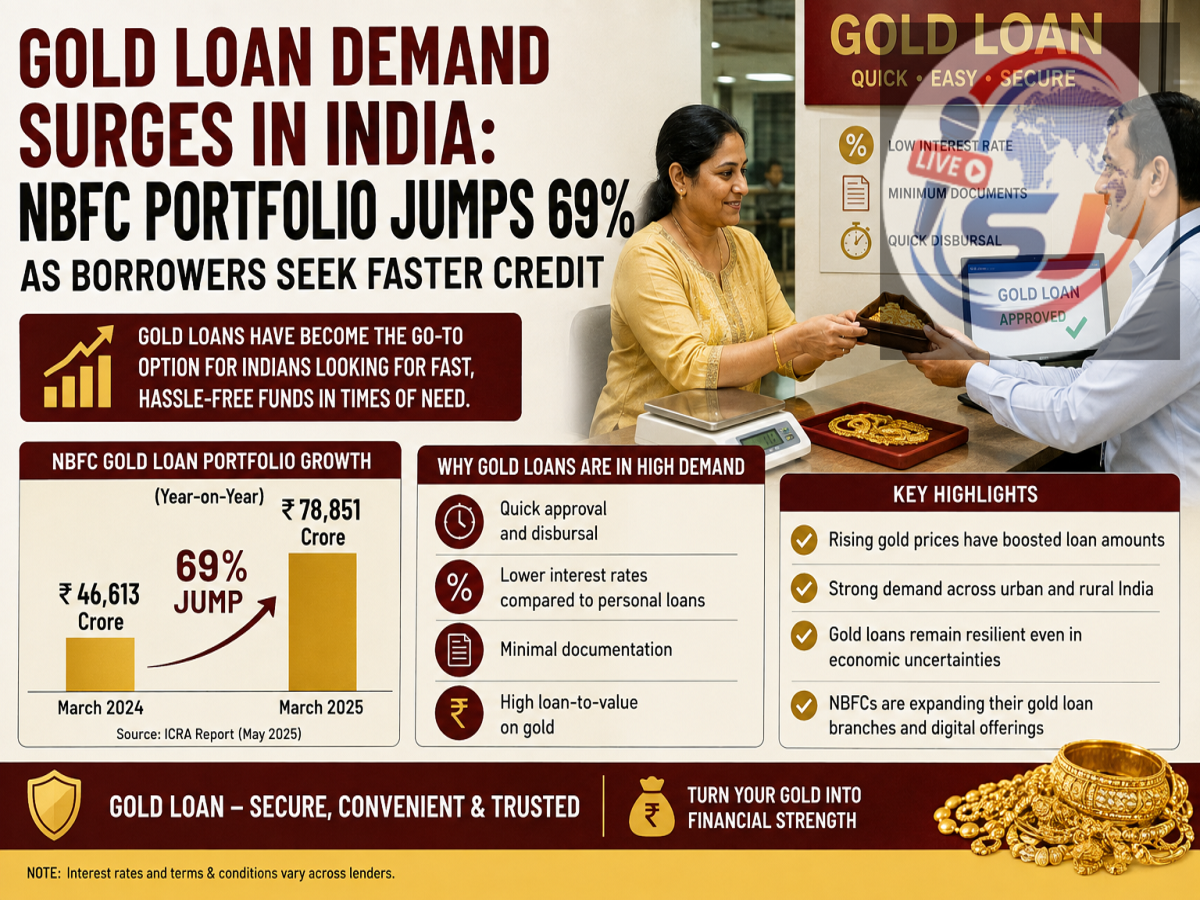
Gold kept in household lockers is increasingly being used as a source of quick credit in India. Demand for loans against jewellery has risen sharply, with borrowers turning to gold-backed financing for relatively fast access to funds without having to sell their precious metal holdings.
Despite tighter regulatory oversight of the lending segment, gold loan portfolios of non-banking financial companies (NBFCs) recorded strong year-on-year expansion by June 2026.
The gold loan portfolio of NBFCs reportedly surged 69.3% from a year earlier to approximately ₹3.41 lakh crore. The pace of expansion was around three times the growth recorded across the broader retail credit segment, highlighting the increasing popularity of loans secured against gold jewellery.
Quick processing is one of the biggest attractions. Depending on the lender, documentation and borrower eligibility, some gold-backed loans can reportedly be approved within a short period, making them particularly useful for customers who require urgent liquidity.
Why Are Gold Loans Growing So Quickly?
Gold has traditionally occupied an important place in Indian households. Jewellery is purchased for weddings, festivals, investment and long-term family savings.
However, rather than leaving these assets unused in lockers during a financial requirement, more households are considering them as collateral for borrowing.
A gold loan allows a customer to pledge eligible jewellery with a bank or NBFC and receive money against its assessed value. Once the loan and applicable interest are repaid according to the agreement, the pledged jewellery is returned.
This provides an important advantage: borrowers can unlock the financial value of their gold without permanently selling it.
The combination of simple collateral, relatively quick processing and fewer hurdles than some unsecured borrowing products has helped gold loans gain popularity.
NBFC Gold Loan Portfolio Reaches ₹3.41 Lakh Crore
The scale of growth provides an indication of how rapidly this lending category is expanding.
By June 2026, NBFC gold loan portfolios had reportedly reached approximately ₹3.41 lakh crore, representing year-on-year growth of 69.3%.
More significantly, the segment expanded at roughly three times the pace of the overall retail credit market.
Such strong growth suggests that gold-backed borrowing is moving beyond its traditional customer base and becoming an increasingly mainstream financing option.
NBFCs have historically played an important role in the gold loan market because of their large branch networks, quick loan processing and specialized focus on loans backed by jewellery.
Banks have also expanded their presence in this segment, increasing competition for customers.
Loan Approval Can Be Relatively Fast
Speed is a major reason some borrowers choose a gold loan.
Unlike many unsecured loans, where lenders need to assess a borrower's income, credit profile and repayment capacity extensively, a gold loan is secured by the jewellery pledged with the lender.
The lender first evaluates the purity and value of eligible gold. Based on the valuation and applicable loan-to-value rules, a maximum loan amount is calculated.
If the required documentation is available and verification is completed successfully, the process can be considerably faster than certain other forms of credit.
Some lenders advertise very quick processing, potentially within minutes in eligible cases. However, a “15-minute approval” should not be interpreted as a universal guarantee. Actual disbursal times can vary depending on the lender, jewellery valuation, KYC verification, loan size and individual circumstances.
Rising Gold Prices May Be Supporting Borrowing Capacity
Higher gold prices can also influence the gold loan market.
When the market value of gold increases, the value of jewellery pledged as collateral generally rises as well. Subject to regulatory loan-to-value limits and lender policies, this can potentially allow borrowers to access larger loan amounts against the same quantity of eligible gold.
For example, jewellery that supported a smaller loan when gold prices were lower could potentially qualify for a higher borrowing limit when valuations increase.
However, lenders do not generally provide a loan equal to the full market value of pledged jewellery. Loan-to-value requirements and internal lending policies determine how much can actually be borrowed.
Why Borrowers May Prefer Gold Loans Over Personal Loans
Gold loans and personal loans serve similar short-term funding requirements but work very differently.
A personal loan is usually unsecured, meaning the borrower does not pledge an asset. Because the lender carries greater risk, interest rates can be comparatively high, particularly for borrowers with weaker credit profiles.
A gold loan is secured by physical collateral. This can make the approval process more straightforward and may result in competitive borrowing costs depending on the lender and loan product.
Gold-backed credit can be used for a variety of legitimate financial requirements, subject to lender terms. Borrowers may seek funds for business working capital, education expenses, medical emergencies, household requirements or other short-term needs.
However, lower paperwork or faster approval does not automatically make a gold loan the right choice for every borrower.
RBI Oversight Keeps Focus on Lending Practices
Rapid expansion in any credit category can attract regulatory attention, particularly when lending is secured by household assets such as jewellery.
The Reserve Bank of India has focused on ensuring that regulated lenders follow appropriate practices relating to gold valuation, loan-to-value limits, documentation, storage of pledged jewellery, repayment and auction procedures.
For borrowers, regulatory safeguards are important because the collateral may carry significant financial as well as emotional value.
Customers should choose a regulated lender, carefully review the loan agreement and obtain proper documentation describing the jewellery deposited as collateral.
The Biggest Risk: Your Gold Can Be Auctioned
Fast access to money should not cause borrowers to overlook the fundamental risk associated with a gold loan.
The jewellery remains collateral until the debt is repaid.
If a borrower fails to repay the loan according to the agreed terms, the lender can eventually initiate procedures to recover the outstanding amount, which may include auctioning the pledged gold after following applicable rules and providing required notices.
This makes repayment planning essential.
Before borrowing, customers should understand the interest rate, processing charges, repayment schedule, penal charges, tenure and auction-related conditions.
Borrowers should also compare the total repayment amount rather than choosing a lender solely because it promises fast approval.
Gold Is Becoming an Active Financial Asset
The sharp rise in gold-backed lending highlights a broader shift in how Indian households are using their jewellery holdings.
Instead of treating gold exclusively as an asset stored for emergencies or future generations, many consumers are increasingly using it to access liquidity when needed.
A 69.3% year-on-year rise in NBFC gold loan portfolios to around ₹3.41 lakh crore by June 2026 demonstrates the scale of this trend.
Gold loans can provide fast access to funds without requiring owners to permanently sell their jewellery, but convenience comes with responsibility. Borrowers should compare lenders, understand all costs and, most importantly, ensure they have a realistic repayment plan before pledging valuable household gold.