
Gold and Silver Prices Tumble: Silver Drops Over ₹9,000, Gold Falls ₹4,000 in Sharp Sell-Off
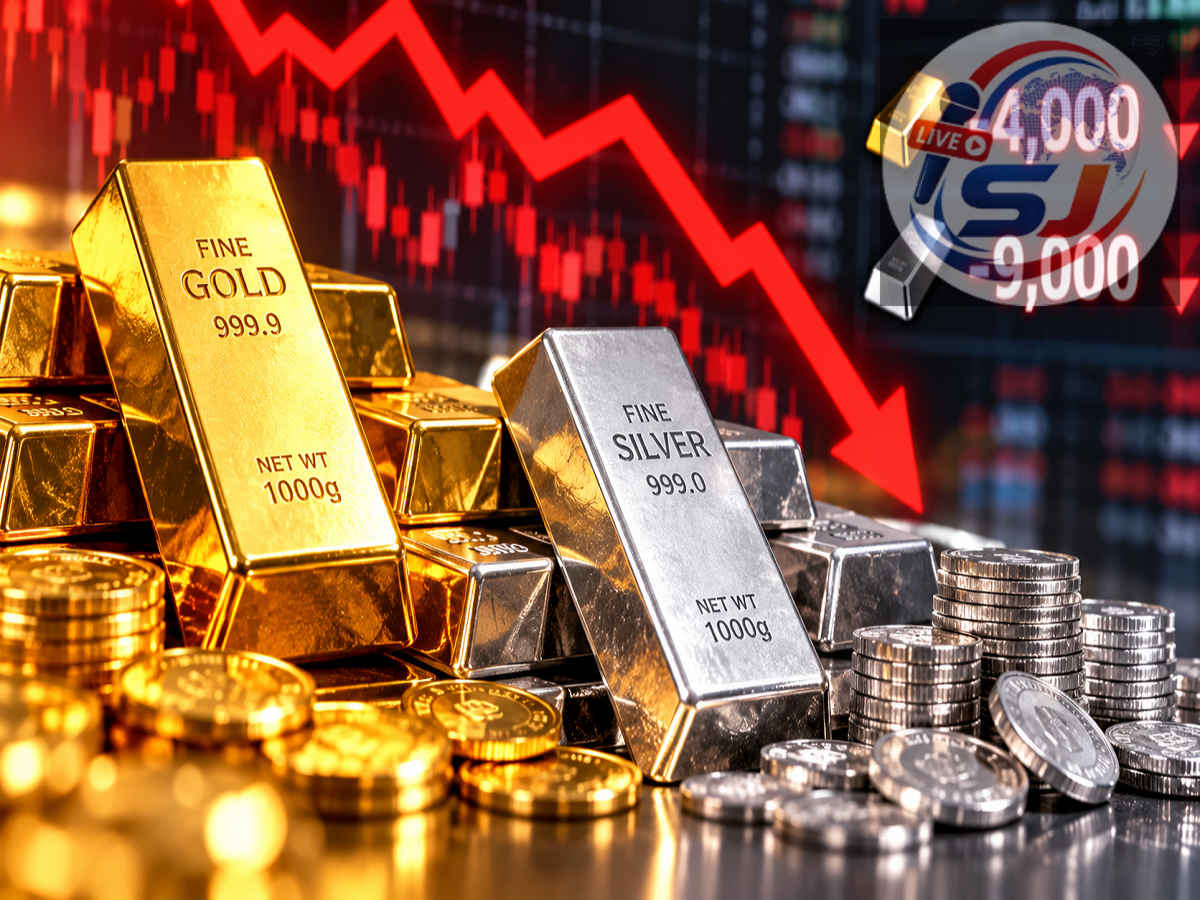
Gold and silver prices witnessed a sharp correction on Monday, September 28, 2026, giving buyers and investors another reason to closely track the precious-metals market.
According to the reported market update, gold prices dropped by around ₹4,000 per 10 grams, while silver recorded an even steeper fall of more than ₹9,000 per kilogram.
The decline is significant because precious metals had previously attracted strong investor attention following a period of elevated prices. The latest correction shows how quickly bullion prices can move when market sentiment and global financial conditions change.
For consumers planning to buy jewellery as well as investors tracking gold and silver, the latest decline makes it important to understand that daily prices can remain volatile.
Gold Becomes Cheaper by Around ₹4,000
Gold witnessed a steep decline during Monday's trading, with the reported price dropping by approximately ₹4,000 per 10 grams.
A movement of this magnitude can make a noticeable difference for buyers, particularly those purchasing larger quantities of gold for weddings, festivals or investment.
For example, if a quoted gold rate falls by ₹4,000 per 10 grams, the price difference on 50 grams mathematically works out to:
₹4,000 × 5 = ₹20,000
However, this does not mean a jewellery buyer will necessarily save exactly ₹20,000.
The final jewellery bill can include making charges, applicable taxes and differences in purity. Retail prices can also vary across cities and jewellers.
Silver Records an Even Bigger Fall
Silver experienced a sharper absolute decline.
According to the reported figures, the price of one kilogram of silver fell by more than ₹9,000.
For consumers purchasing silver jewellery, utensils, coins or bars, such a large single-session movement can substantially alter the cost of a purchase.
Silver is also widely used for industrial purposes, which means its price can be influenced not only by investment demand but also by expectations surrounding manufacturing and industrial consumption.
This can sometimes make silver more volatile than gold.
Why Can Gold and Silver Prices Fall So Quickly?
Precious-metal prices are influenced by several domestic and international factors.
Gold is traded globally, so changes in international bullion prices can quickly affect Indian rates.
The strength of the US dollar, movements in bond yields, expectations regarding interest rates, geopolitical developments and investor demand for safe-haven assets can all influence gold.
For Indian buyers, the rupee-dollar exchange rate also matters because India imports a significant portion of its gold requirements.
Silver is affected by many of the same macroeconomic factors, but it also has substantial industrial demand.
As a result, changes in expectations for sectors such as electronics, solar energy and manufacturing can contribute to movements in silver prices.
A Falling Price Doesn't Guarantee the Bottom
A sharp correction can naturally attract buyers who were waiting for lower prices.
But a one-day fall does not establish that gold or silver has reached its lowest level.
Prices can decline further, recover quickly or remain volatile over several trading sessions.
Investors should therefore avoid treating a large daily drop as a guarantee that prices will immediately rebound.
The same caution applies when prices are rising rapidly. A strong rally does not guarantee that the upward movement will continue indefinitely.
Jewellery Buyers Should Check More Than the Gold Rate
People buying physical gold should remember that the quoted bullion rate is only one component of the final bill.
The actual amount paid for jewellery can depend on purity, weight, making charges, wastage policies where applicable, taxes and other charges.
Buyers should check the purity and hallmarking details and ask for a proper invoice.
Comparing the final payable amount across sellers can provide a more useful picture than comparing only the headline gold rate.
Gold Investors Should Avoid Making Decisions on a Single Session
For investors, a ₹4,000 decline in gold or a ₹9,000-plus fall in silver may look like an immediate buying opportunity.
But investment decisions should ideally consider the broader objective.
Someone buying gold for portfolio diversification has a different requirement from a person purchasing jewellery for an upcoming wedding.
Similarly, an investor with a long-term horizon may evaluate volatility differently from a short-term trader.
Instead of attempting to predict the exact bottom, long-term investors sometimes use staggered purchases to reduce the risk of committing their entire amount at one price. Whether such an approach is suitable depends on individual circumstances and risk tolerance.
Silver Can Be More Volatile
Silver deserves additional caution because its price movements can be particularly sharp.
Unlike gold, which is heavily influenced by investment and safe-haven demand, silver has a substantial industrial component.
This creates exposure to both financial-market sentiment and expectations for industrial activity.
A sharp rise can therefore be followed by an equally noticeable correction.
Anyone investing in silver should take this volatility into account rather than assuming that recent price trends will continue.
Should You Buy After the Latest Price Drop?
There is no single answer that works for every buyer.
Someone who needs jewellery for personal use may see a sharp correction as an opportunity to compare retail prices.
An investor, meanwhile, needs to consider asset allocation, investment horizon and risk capacity before increasing exposure.
Short-term traders face an entirely different risk because bullion prices can react rapidly to global economic data, currency movements, interest-rate expectations and geopolitical developments.
The latest fall therefore needs to be viewed in context rather than as an automatic buy signal.
Keep an Eye on International Markets
The next direction for gold and silver is likely to remain sensitive to global developments.
Investors will continue watching the US dollar, bond yields, central-bank policy expectations, geopolitical tensions and movements in international bullion markets.
For Indian consumers, changes in the rupee against the dollar can further influence domestic prices.
This means local gold and silver rates can change even when international prices appear relatively stable.
Check the Latest Rate Before Making a Purchase
The sharp Monday correction shows why buyers should verify current prices immediately before completing a transaction.
According to the September 28 report, gold became cheaper by around ₹4,000 per 10 grams, while silver dropped by more than ₹9,000 per kilogram.
Whether this correction continues or prices rebound will depend on subsequent market conditions.
Consumers purchasing physical gold or silver should therefore check the latest local rate, purity and additional charges before paying, while investors should consider their financial goals rather than making decisions solely on the basis of a single day's price movement.
Disclaimer: Precious-metal prices can change rapidly and vary by city, market, purity and seller. The figures mentioned above are based on the reported market movement and are for general informational purposes only. This article does not constitute investment advice. Consider your financial circumstances and, where necessary, consult a qualified adviser before making investment decisions.