
Gold and Silver Prices Plunge: Gold Drops Over ₹11,000, Silver Falls ₹20,000 in a Week; What Next?
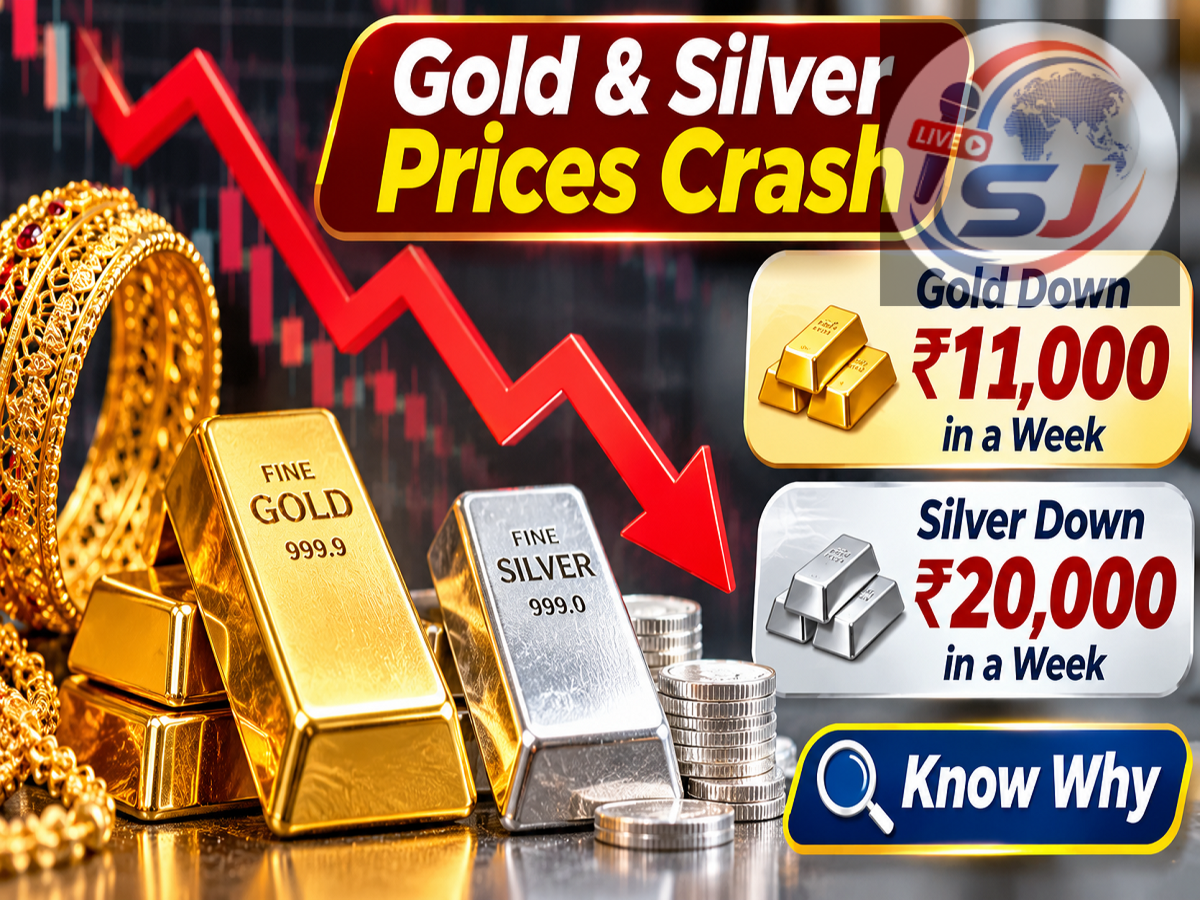
Gold and Silver Price Today, November 21, 2026: Gold and silver prices have witnessed a significant correction in the Indian bullion market, providing some relief to jewellery buyers during the ongoing wedding season. According to recent market reports, gold has become cheaper by more than ₹11,000 within a week, while silver has recorded a decline of approximately ₹20,000 per kilogram during the same period.
The sudden fall in precious metal prices has attracted attention from investors, traders and consumers who were waiting for a correction after earlier price increases.
Market analysts have linked the weakness primarily to concerns about the US Federal Reserve's future interest rate decisions, rising bond yields, fluctuations in the US dollar and increased selling pressure.
With prices moving sharply, buyers are now wondering whether gold and silver will become even cheaper or recover in the coming weeks.
Gold Prices Fall More Than ₹11,000 in Seven Days
Gold prices have come under considerable pressure during the past week, with the reported decline exceeding ₹10,000 and reaching approximately ₹11,000 in some market comparisons.
The correction comes at a time when demand for jewellery traditionally increases across India because of the wedding season.
Gold remains a preferred choice for wedding purchases, family celebrations and long-term household savings.
A decline of this magnitude can make a noticeable difference to the cost of purchasing gold jewellery, particularly for families planning larger purchases.
However, buyers should remember that the final jewellery price depends on the purity of gold, prevailing local rates, making charges and applicable taxes.
The price quoted in the bullion market may therefore differ from the amount charged by a jewellery retailer.
Silver Prices Crash by ₹20,000 Per Kilogram
Silver has also experienced substantial selling pressure alongside gold.
According to the November 21 report, silver prices declined by approximately ₹20,000 per kilogram within one week.
The decline is significant because silver is used not only for jewellery and decorative products but also in various industrial applications.
Silver demand is influenced by manufacturing activity, electronics, solar energy equipment and investment purchases.
As a result, its price can react strongly to changes in economic expectations and financial market sentiment.
The recent correction has created interest among buyers who were previously discouraged by higher silver prices.
However, silver can experience sharp price fluctuations, and a recent decline does not guarantee that prices will remain at the same level.
Gold and Silver Price Crash: How Much Have Rates Fallen?
The reported weekly changes highlight the extent of the recent correction in precious metals.
| Precious metal |
Reported weekly decline |
|---|---|
| Gold |
More than ₹10,000, approximately ₹11,000 |
| Silver |
Approximately ₹20,000 per kilogram |
Note: These figures reflect the price movements reported by the original source. The precise comparison depends on the market benchmark, purity, trading date and whether spot or futures prices are being considered.
Why Are Gold and Silver Prices Falling?
Several domestic and international factors can influence bullion prices. The latest decline has been associated with uncertainty surrounding US interest rates and broader financial market developments.
1. Federal Reserve Interest Rate Expectations
One of the major reasons cited for the recent decline is concern that the US Federal Reserve may maintain higher interest rates or adopt a tighter monetary policy stance.
Gold and silver generally do not provide regular interest income.
When investors expect higher returns from interest-bearing assets, the relative attractiveness of holding precious metals may decline.
This can encourage some investors to shift funds toward bonds or other financial instruments.
However, expectations about future interest rates can change quickly in response to inflation, employment and economic growth data.
2. Stronger US Dollar Puts Pressure on Bullion
International gold and silver prices are generally quoted in US dollars.
When the dollar strengthens, precious metals become relatively more expensive for buyers using other currencies.
This can reduce demand in some international markets and place downward pressure on prices.
For Indian consumers, the rupee-dollar exchange rate is particularly important because imported gold is priced in foreign currency.
A weaker rupee can partially offset a decline in international gold prices, while a stronger rupee may increase the benefit of falling global rates.
3. Profit Booking After Earlier Gains
Another possible factor behind the correction is profit booking by investors.
When precious metal prices rise substantially over a period, some traders choose to sell their holdings and secure gains.
Increased selling activity can accelerate price declines, especially when short-term traders respond to changing market trends.
Such movements are common in commodity markets, where prices can fluctuate rapidly because of global developments.
4. Rising US Bond Yields
Higher government bond yields can also affect demand for gold.
When bonds offer more attractive returns, some investors may prefer them over assets that do not generate interest.
This relationship is one reason why gold prices often react to changes in Federal Reserve policy expectations.
However, gold prices are influenced by multiple factors, and the relationship between bond yields and bullion is not always consistent.
5. Changes in Global Investment Sentiment
Precious metal markets are closely connected with international financial conditions.
Changes in inflation expectations, economic growth forecasts, geopolitical developments and investor risk appetite can influence demand for gold and silver.
During periods of uncertainty, investors may reduce exposure to commodities or rebalance their portfolios.
Silver can experience greater volatility than gold because of its industrial applications and sensitivity to economic activity.
Will Gold and Silver Prices Fall Further?
The biggest question for consumers and investors is whether the recent correction will continue.
The direction of gold and silver prices will largely depend on upcoming economic developments, particularly in the United States.
If investors continue expecting higher interest rates and stronger bond yields, precious metals could face additional selling pressure.
However, if the Federal Reserve signals a more accommodative monetary policy outlook, gold and silver may find support.
Movements in the US dollar, international demand and geopolitical uncertainty could also influence prices.
Therefore, predicting an exact price target or identifying the lowest point of the market remains difficult.
Is This the Right Time to Buy Gold and Silver?
The recent decline may provide an opportunity for consumers planning jewellery purchases for weddings or family functions.
However, purchasing decisions should depend on individual requirements rather than short-term market speculation.
For buyers with a fixed wedding date, spreading purchases across different dates may help reduce the risk of buying the entire quantity during a temporary price increase.
Consumers should also compare rates offered by different jewellers and check making charges before finalizing a purchase.
For gold jewellery, verifying BIS hallmarking and the Hallmark Unique Identification (HUID) number can help confirm authenticity.
Investors considering gold or silver for financial purposes should assess their investment horizon, risk tolerance and overall portfolio allocation.
What Should Investors Watch in the Coming Days?
Several developments could determine the next major movement in precious metal prices.
-
US Federal Reserve announcements: Interest rate decisions and policy statements can influence international bullion prices.
-
US inflation figures: Inflation data may affect expectations about future interest rates.
-
Dollar index: A stronger or weaker dollar can influence international demand for gold and silver.
-
Bond yields: Changes in US Treasury yields can affect the relative attractiveness of precious metals.
-
Domestic demand: India's wedding and festive demand can influence retail buying activity.
-
Global economic conditions: Industrial demand, particularly for silver, may respond to changes in manufacturing activity.
Monitoring these factors can help buyers understand why prices are moving, although none can guarantee future returns.
Conclusion
The reported weekly decline of more than ₹11,000 in gold and approximately ₹20,000 per kilogram in silver has created significant interest in the Indian bullion market.
Expectations surrounding US Federal Reserve policy, currency movements, bond yields and profit booking are among the factors contributing to the correction.
While lower prices may offer some relief to jewellery buyers during the wedding season, uncertainty remains over the direction of precious metals in the coming weeks.
Consumers should verify current market quotations and compare retail prices before making purchases, while investors should avoid treating short-term market movements as guaranteed indicators of future performance.
Disclaimer: This article is intended for informational purposes only. Gold and silver prices fluctuate according to market conditions, location, purity and trading platform. The price changes mentioned are based on the supplied report and have not been independently verified against live market quotations. Readers should consult a qualified financial adviser before making investment decisions.