
Gold and Silver Prices Fall on October 21, 2026: Can Festive Buying Help Precious Metals Recover?
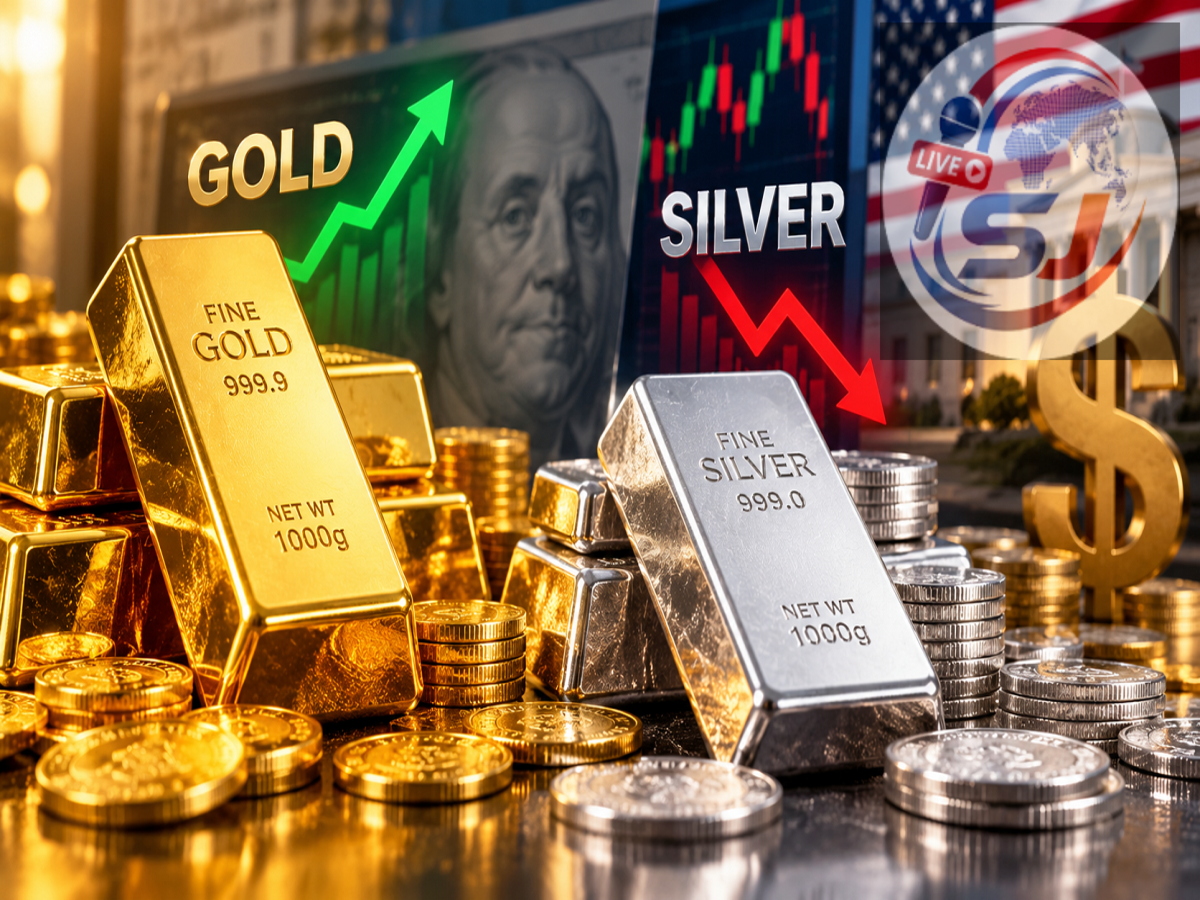
Gold Silver Price Today, October 21, 2026: Gold and silver prices declined in international markets during early Asian trading on Wednesday as expectations of higher US interest rates weighed on precious metals. COMEX gold futures were quoted around $4,128.50 per ounce, while silver futures slipped to approximately $57.70 per ounce. In India, however, demand ahead of the festive and wedding seasons could provide some support to domestic bullion prices. Market experts believe the direction of gold and silver will depend on US monetary policy, geopolitical tensions, currency movements and consumer demand.
Gold and Silver Prices Decline in Global Markets
Precious metal markets started October 21, 2026, on a weaker note as investors assessed the possibility of tighter monetary conditions in the United States.
Gold and silver prices faced selling pressure following expectations that the US Federal Reserve could maintain elevated interest rates to control inflation.
According to the market figures cited in the report, COMEX gold futures declined by $14.10, or approximately 0.34%, to $4,128.50 per troy ounce during early trading.
Silver futures also moved lower, reflecting cautious sentiment among commodity traders.
Despite the decline, geopolitical uncertainty and seasonal physical demand in countries such as India continue to provide potential support to precious metals.
The market is currently influenced by competing forces. While higher interest rates and a stronger US dollar can weigh on bullion prices, central bank purchases, geopolitical risks and demand for physical gold may help limit the downside.
Gold Silver Price Today: Latest International Market Rates
The following figures represent the international futures market quotations reported for October 21, 2026.
| Precious Metal | Reported Futures Price | Previous Closing Price | Market Movement |
|---|---|---|---|
| Gold (COMEX) | $4,128.50 per ounce | $4,143.40 per ounce | Down approximately 0.34% |
| Silver (COMEX) | $57.70 per ounce | $58.155 per ounce | Down approximately 0.52% |
Note: These are reported market quotations, not live prices. The source contains small inconsistencies between the quoted price changes and closing values, so the percentage movements should be treated as approximate.
The decline indicates that investors are becoming more cautious about the near-term outlook for precious metals.
However, international futures prices should not be confused with domestic retail jewellery prices, which also depend on currency movements, import-related costs, taxes and local market conditions.
Gold Price in India: 24-Carat Gold Near ₹1.48 Lakh per 10 Grams
Gold prices in India have also experienced a correction after reaching elevated levels during the previous month.
According to Rajiv Sharan, Head of Research at Brickwork Ratings, 24-carat gold was trading near ₹1.48 lakh per 10 grams around Dussehra.
He indicated that prices had declined by more than 6% from the record levels reached in the preceding month.
The correction has attracted attention from consumers preparing for festival-related purchases and upcoming weddings.
However, gold remains expensive compared with historical price levels, encouraging buyers to reconsider the quantity and type of jewellery they purchase.
Some consumers are reportedly shifting toward lightweight ornaments, smaller gold articles and alternative investment products to manage their budgets.
Why Are US Interest Rates Putting Pressure on Gold Prices?
One of the biggest factors influencing gold and silver markets is the outlook for US monetary policy.
Gold does not generate regular interest income. Consequently, when interest rates and government bond yields rise, interest-bearing financial instruments may become relatively more attractive.
Higher US interest rates can also strengthen the dollar, making dollar-denominated commodities more expensive for buyers using other currencies.
This combination can reduce investment demand for precious metals.
According to a Reuters survey published on October 20 and cited in the source report, economists expected the Federal Reserve to leave interest rates unchanged at its October 27–28 meeting.
However, the survey also pointed to expectations of another potential rate increase in December.
Persistent inflation and elevated energy prices were among the factors influencing these forecasts.
The Federal Reserve's actual policy decisions will depend on incoming economic data, including inflation, employment and broader financial conditions.
Experts Explain Why Gold Could Remain Under Pressure
Vikas Gupta, CEO and Smallcase Manager at OmniScience Capital, highlighted the challenges created by elevated gold valuations, inflation concerns and the possibility of higher interest rates.
According to his assessment, continued central bank demand could provide some support to gold prices.
However, selling by other categories of investors may offset part of that demand.
Gupta expects Indian gold prices to receive some seasonal support before stabilising, while international prices could remain under pressure if the Federal Reserve adopts a more restrictive monetary stance.
His assessment suggests that investors should distinguish between short-term festival-related demand and the broader global economic factors determining bullion prices.
Why Are Geopolitical Tensions Not Always Pushing Gold Higher?
Gold is widely regarded as a safe-haven asset during periods of economic or geopolitical uncertainty.
However, geopolitical tensions do not always result in an immediate increase in gold prices.
For example, disruptions to global oil supplies can push crude oil prices higher.
More expensive energy can increase inflationary pressure, potentially encouraging central banks to maintain higher interest rates.
These developments can create opposing influences on gold.
While uncertainty may encourage investors to purchase safe-haven assets, expectations of higher bond yields can reduce gold's relative appeal.
Vikram Kasat, Chief Business Officer for Advisory and Dealing at PL Capital, identified elevated crude oil prices as a concern for inflation and corporate profitability.
With Brent crude reported near $108 per barrel, higher energy costs could complicate the economic outlook.
As a result, the direction of gold and silver prices may depend on whether safe-haven demand or monetary policy concerns have a stronger influence on investors.
Can India's Festive Season Support Gold Prices?
India's festive and wedding seasons traditionally generate significant demand for gold jewellery, coins and other precious metal products.
Consumers frequently purchase gold during major festivals, family celebrations and weddings.
This seasonal buying can support domestic bullion demand even when international markets are experiencing weakness.
However, high prices can discourage customers from purchasing larger quantities.
According to Rajiv Sharan of Brickwork Ratings, the domestic market may experience relatively limited price movements as higher US interest rates restrict the potential for a strong rally.
He suggested that gold prices could fluctuate within a range of approximately 5% on either side of prevailing levels in the near term.
This is an analyst's expectation rather than a guaranteed trading range.
Sharan also observed changes in consumer preferences, with buyers increasingly considering lighter jewellery, gold coins, bars and exchange-traded funds.
These developments indicate that consumers are adapting their purchasing decisions rather than abandoning gold purchases altogether.
World Gold Council Observes Improvement in Seasonal Demand
Recent observations from the World Gold Council suggest that India's physical gold market has received some support from seasonal buying.
In an update cited on October 20, the organisation indicated that demand was improving ahead of the festive and wedding seasons.
Domestic gold market discounts had reportedly narrowed, while jewellers were seeing encouraging order flows.
Nevertheless, elevated gold prices remain a challenge for buyers.
Even when consumers maintain their planned spending budgets, higher prices mean they may purchase fewer grams of gold than in previous years.
This distinction between spending value and purchase volume is important when evaluating the strength of jewellery demand.
Lightweight Jewellery and Lower-Carat Gold Gain Attention
Changing consumer preferences are becoming increasingly visible in India's jewellery market.
Colin Shah, Managing Director of Kama Jewelry, reported stronger interest in lightweight jewellery and 9-carat gold products during the Dussehra period.
Demand for diamond-studded jewellery was also observed.
These trends suggest that consumers are looking for ways to participate in festive shopping while controlling their overall expenditure.
Lower-carat gold jewellery contains a smaller proportion of pure gold than 18-carat, 22-carat or 24-carat products, which can reduce the gold-content cost of an item.
However, the final price also depends on design, craftsmanship, gemstones, making charges and taxes.
Consumers should verify purity, hallmarking and product details before making a purchase.
Silver Price Outlook: Why Is the White Metal More Volatile?
Silver shares several characteristics with gold, particularly its sensitivity to interest rates, currency movements and investment sentiment.
However, silver also plays an important role in industrial production.
It is used in electronics, solar energy technologies, electrical components and other manufacturing applications.
Consequently, silver prices can respond to changes in industrial activity and expectations for global economic growth.
This dual role makes silver's price movements different from those of gold.
Even when gold receives support from central bank purchases and jewellery demand, silver may remain under pressure if industrial demand expectations weaken or investors reduce commodity exposure.
The recent sharp correction in silver highlights the importance of analysing the two metals separately.
Investors should not assume that a recovery in gold will automatically lead to an equivalent increase in silver prices.
What Should Gold and Silver Investors Watch Next?
Several important developments could influence precious metal prices over the coming weeks.
US Federal Reserve decisions: Statements on interest rates and future monetary policy could affect international gold and silver prices.
Inflation and bond yields: Higher inflation expectations and rising Treasury yields may influence demand for non-interest-bearing assets.
US dollar movements: A stronger dollar can create additional pressure on globally traded precious metals.
Geopolitical developments: Tensions in West Asia and disruptions to energy supplies could influence inflation expectations and safe-haven demand.
Indian festive demand: Jewellery purchases during the festive and wedding seasons may provide support to domestic physical gold demand.
Rupee-dollar exchange rate: Changes in the Indian currency can affect domestic gold and silver prices even when international quotations remain relatively stable.
These factors can operate simultaneously, making short-term price movements difficult to predict.
Is This a Good Time to Buy Gold or Silver?
The recent correction may encourage some consumers to consider purchasing precious metals at lower prices.
However, investors should avoid treating every price decline as a guaranteed buying opportunity.
Those purchasing jewellery for weddings or family occasions may focus on their budget, purity requirements and making charges.
Investors seeking financial exposure to precious metals should consider factors such as liquidity, taxation, storage costs and price volatility.
Gold exchange-traded funds and other regulated products may offer alternatives to physical ownership, although they carry market-related risks.
Silver investments require particular attention to volatility because industrial demand and investor sentiment can produce substantial price fluctuations.
A diversified investment approach and a clearly defined financial objective are generally more important than attempting to predict the exact market bottom.
Gold and Silver Price Forecast: Will Markets Recover After the Correction?
The near-term outlook for precious metals remains uncertain.
On one side, physical demand in India, central bank gold purchases and geopolitical risks could support prices.
On the other, expectations of higher US interest rates, elevated bond yields and a strong dollar may restrict gains.
The direction of silver may also depend on industrial demand expectations and broader economic conditions.
Although festive buying could improve domestic market sentiment, it does not guarantee a sustained increase in prices.
Investors and consumers should therefore monitor official market quotations and economic developments before making significant purchases.
Final Takeaway
Gold and silver prices declined in international trading on October 21, 2026, as concerns about tighter US monetary policy weighed on bullion markets.
COMEX gold futures were reported near $4,128.50 per ounce, while silver futures traded around $57.70 per ounce.
In India, 24-carat gold was quoted near ₹1.48 lakh per 10 grams around Dussehra, following a correction of more than 6% from the previous month's reported peak.
Seasonal demand from festivals and weddings may provide some support to domestic prices, but global interest rates, inflation expectations and currency movements will remain important.
For buyers and investors, the key consideration is whether stronger physical demand can offset continued pressure from international financial markets.
Disclaimer: This article is intended for general information only and does not constitute investment advice. Precious metal prices are subject to market fluctuations, and expert forecasts are not guarantees. Readers should verify current prices and consult a qualified financial adviser before making investment decisions.
Tighten repetitive market analysisClarify the price table inconsistency