
Free Ration Rules 2026: Check Your AAY or PHH Card Category and Monthly Foodgrain Entitlement
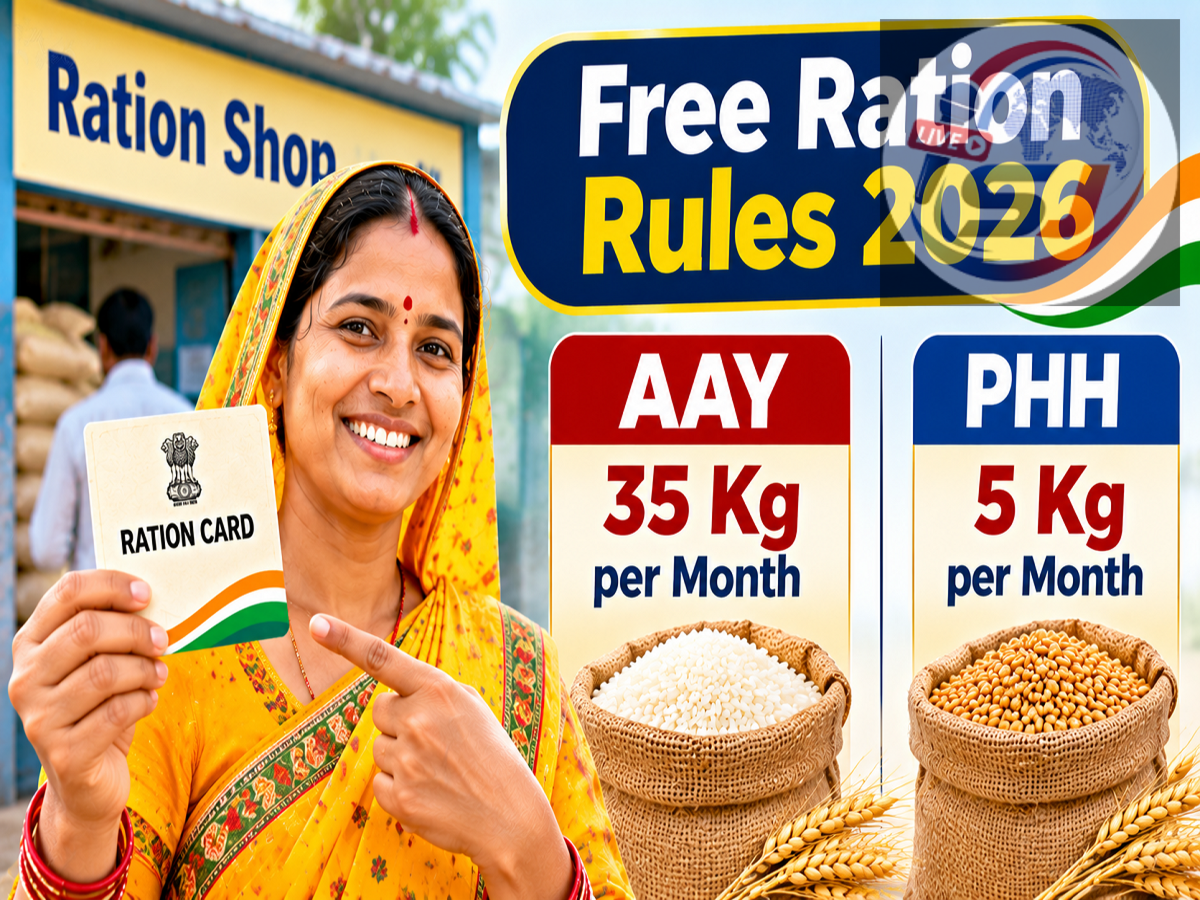
Ration Card Update 2026: Millions of eligible families across India receive free foodgrains through the Public Distribution System (PDS). However, the amount of ration a household can collect depends on its ration card category and, in some cases, the number of eligible family members.
The Department of Food and Public Distribution has encouraged beneficiaries to check their monthly ration entitlement and verify the quantity of foodgrains they receive from Fair Price Shops.
Under the National Food Security Act (NFSA), beneficiaries are primarily covered under two categories: Antyodaya Anna Yojana (AAY) and Priority Households (PHH).
While AAY households are entitled to 35 kilograms of foodgrains per month, PHH beneficiaries receive 5 kilograms per eligible family member every month.
Understanding these rules can help families identify their correct entitlement and avoid receiving less than the quantity allocated to them.
AAY and PHH Ration Card 2026: How Much Free Ration Can You Get?
The monthly foodgrain entitlement differs between the two categories.
| Ration Card Category | Monthly Foodgrain Entitlement | Calculation Method |
|---|---|---|
| Antyodaya Anna Yojana (AAY) | 35 kg | Fixed quantity per eligible household |
| Priority Household (PHH) | 5 kg | Per eligible family member |
Both categories receive their regular NFSA foodgrain entitlements free of cost under the applicable Pradhan Mantri Garib Kalyan Anna Yojana (PMGKAY) arrangement.
The free distribution arrangement was approved for five years beginning January 1, 2024.
How Much Ration Does a PHH Family Receive?
For Priority Household beneficiaries, the quantity of foodgrains is calculated according to the number of eligible members registered under the ration card.
Each eligible person is entitled to 5 kilograms per month.
For example, a family with four eligible members receives 20 kilograms of foodgrains monthly.
A household with six eligible members receives 30 kilograms.
PHH Monthly Ration Entitlement Chart
| Number of Eligible Family Members | Monthly Free Ration |
|---|---|
| 1 Member | 5 kg |
| 2 Members | 10 kg |
| 3 Members | 15 kg |
| 4 Members | 20 kg |
| 5 Members | 25 kg |
| 6 Members | 30 kg |
| 7 Members | 35 kg |
| 8 Members | 40 kg |
| 9 Members | 45 kg |
| 10 Members | 50 kg |
This calculation applies to eligible members recorded under the PHH ration card.
Beneficiaries should verify the number of eligible household members in their official ration card records.
How Much Free Ration Is Available Under an AAY Card?
Antyodaya Anna Yojana is intended for households identified under the applicable AAY eligibility criteria.
Unlike PHH, the AAY entitlement does not increase according to the number of family members.
Every eligible AAY household receives 35 kilograms of foodgrains per month.
For example, an AAY household with three members is entitled to 35 kilograms, while another AAY household with six members is also entitled to 35 kilograms.
The allocation is fixed at the household level.
This distinction is important because beneficiaries may otherwise calculate their entitlement incorrectly.
How to Check Your Ration Card Category Online
Beneficiaries can check whether their ration card belongs to the AAY or PHH category through the relevant state food department portal.
The general procedure is as follows:
-
Visit the official National Food Security Portal at https://nfsa.gov.in/.
-
Find the section containing state ration card information.
-
Select your state or Union Territory.
-
Open the relevant ration card or beneficiary search facility.
-
Enter the required details, such as your ration card number.
-
Complete any verification requested by the portal.
-
Check the ration card category and eligible household members.
The exact process may differ depending on the state and the services available on its portal.
Why Should You Check the Quantity While Collecting Ration?
The Department of Food and Public Distribution has emphasised the importance of checking the quantity of foodgrains received.
Beneficiaries should know their monthly entitlement before visiting a Fair Price Shop.
For example, if a PHH household has five eligible members, its regular monthly NFSA entitlement is 25 kilograms.
If the family receives a smaller quantity without a valid reason, it should seek clarification from the ration dealer or the relevant authorities.
Similarly, an AAY household should verify its entitlement against the fixed 35-kilogram monthly allocation.
Checking the quantity can help beneficiaries identify discrepancies in distribution.
What Should You Check at the Ration Shop?
When collecting foodgrains, beneficiaries should verify several important details.
-
Confirm that the ration card category is correctly recorded.
-
Check the number of eligible family members.
-
Verify the monthly quantity available under the entitlement.
-
Observe the weighing process where possible.
-
Check the quantity actually received.
-
Obtain a transaction receipt or acknowledgement wherever available.
-
Report unexplained shortages through the appropriate grievance channel.
These precautions can help beneficiaries understand whether the distribution matches their authorised entitlement.
What If You Receive Less Ration Than Your Entitlement?
If a beneficiary receives less than the authorised quantity, the first step is to ask the Fair Price Shop dealer for clarification.
There may be a technical issue, a previously recorded transaction or another matter requiring verification.
If the explanation is unsatisfactory, beneficiaries can contact the relevant state Food and Civil Supplies Department.
They may also use the grievance redressal mechanism available through the state's public distribution system.
While reporting a problem, it is useful to retain the ration card number, ration shop details, transaction date and any available receipt.
Beneficiaries should avoid sharing OTPs or other sensitive authentication details with unauthorised individuals.
Can You Collect Free Ration Outside Your Home State?
Eligible NFSA beneficiaries can use the One Nation One Ration Card (ONORC) facility to access foodgrains from participating Fair Price Shops outside their home state.
This is particularly helpful for migrant workers and families who relocate for employment.
For example, a beneficiary registered in Uttar Pradesh may be able to collect the permitted foodgrain entitlement while working in Maharashtra.
However, portability does not increase the household's total monthly entitlement.
The quantity available depends on the beneficiary's category, eligible members and previously recorded distribution transactions.
Are AAY and PHH Foodgrains Completely Free?
Under the current PMGKAY free-foodgrain arrangement, eligible AAY and PHH households receive their regular NFSA foodgrain entitlements without paying for those foodgrains.
The government approved the continuation of free foodgrain distribution for five years from January 1, 2024.
However, this benefit should not be confused with additional state-specific ration items or other commodities that may be distributed under separate arrangements.
Beneficiaries should confirm which products are included in their free entitlement.
Why Is Knowing Your Ration Entitlement Important?
Awareness of ration card categories can help eligible families access the foodgrains allocated to them.
For PHH households, the monthly quantity depends on the number of eligible family members.
For AAY households, the quantity is fixed at 35 kilograms per month.
By checking their ration card information and verifying the quantity distributed, beneficiaries can identify potential errors and seek assistance when necessary.
Digital ration card services and official state portals can also help households stay informed about their eligibility and distribution records.
Ration Card Rules 2026: Know Your Entitlement Before Visiting the Fair Price Shop
The Department of Food and Public Distribution has encouraged beneficiaries to understand their ration card category and monthly foodgrain entitlement.
AAY households are entitled to 35 kilograms per month, while PHH beneficiaries receive 5 kilograms per eligible person.
Families should verify their recorded household details and check the quantity of foodgrains when collecting ration.
If there is any unexplained shortage, beneficiaries can seek clarification and use the applicable complaint mechanism.
Official Websites:
-
Department of Food and Public Distribution: https://dfpd.gov.in/
-
National Food Security Portal: https://nfsa.gov.in/
Source Credit: Department of Food and Public Distribution, Government of India, official public awareness communication on AAY and PHH ration entitlements under PMGKAY. Additional information is based on the National Food Security Act and the government's public distribution framework.
Disclaimer: The quantities mentioned refer to regular central NFSA foodgrain entitlements. State-specific additional benefits, eligibility conditions and distribution procedures may differ. Beneficiaries should verify their current allocation through official government channels.
Add a quick entitlement summaryClarify the free-ration scheme timeline