
Forgot Your Ration Card? You Can Still Collect Foodgrains Using Aadhaar Under ONORC
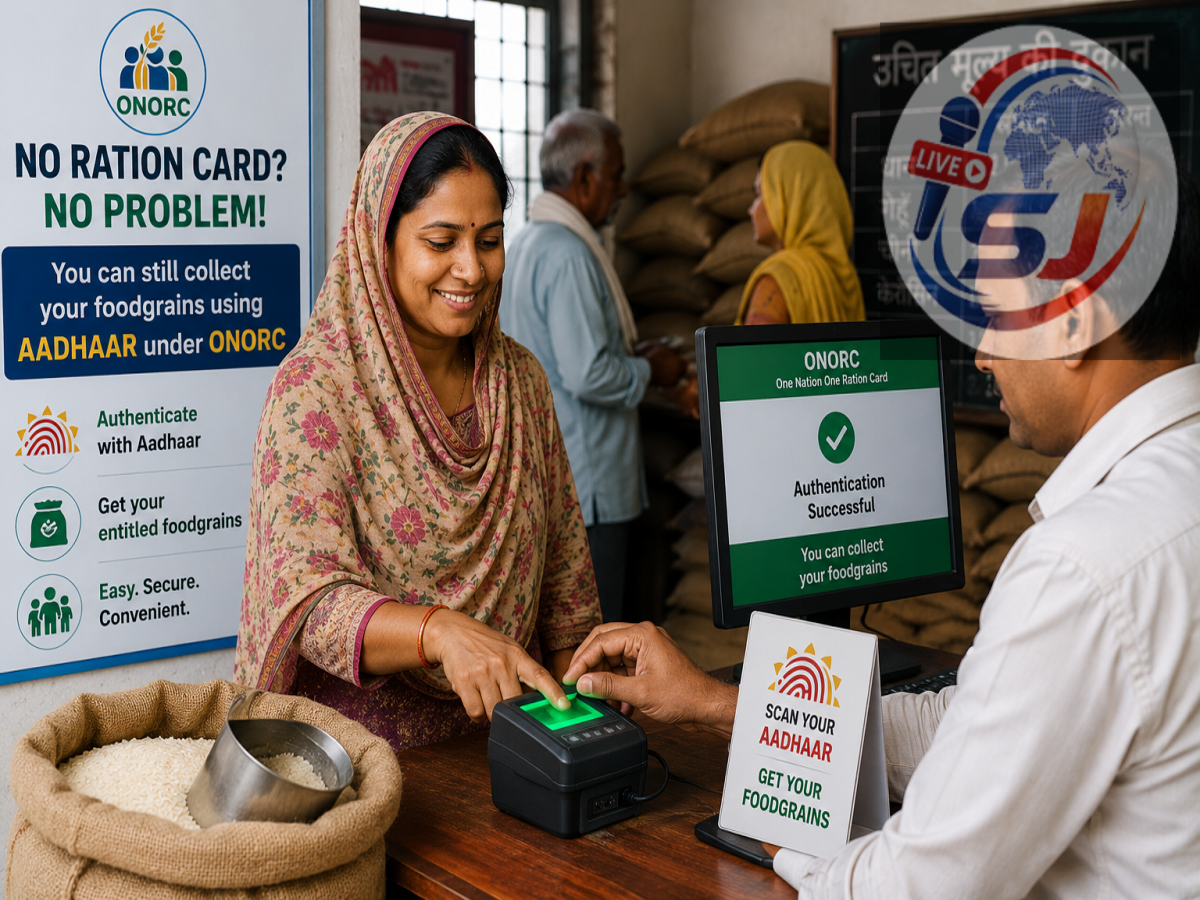
Ration Card Rules: If you reach a fair price shop and realise that you have left your physical ration card at home, you may still be able to collect your entitled foodgrains. Under the One Nation One Ration Card (ONORC) system, eligible beneficiaries can use their ration card number or Aadhaar number linked with the ration card and complete biometric authentication through an electronic Point of Sale (ePoS) machine.
This facility is especially useful for migrant workers and families living away from their home state. The ONORC system allows beneficiaries covered under the National Food Security Act (NFSA) to access their entitlement from an ePoS-enabled fair price shop anywhere in the country.
Do You Need to Carry the Physical Ration Card?
No, carrying the original physical ration card is not always necessary for an ONORC portability transaction.
The Department of Food and Public Distribution states that NFSA beneficiaries can produce a copy of their ration card or Aadhaar card, or simply provide the ration card number or Aadhaar number linked with the ration card to the fair price shop dealer. The beneficiary then needs to complete Aadhaar-based authentication on the ePoS device.
This means forgetting the ration card at home does not automatically mean you must return without collecting your foodgrains.
How Can You Get Ration Using Aadhaar?
At an ePoS-enabled fair price shop, the dealer can access the beneficiary's entitlement electronically.
The beneficiary can provide the Aadhaar number seeded with the ration card or the ration card number. Aadhaar-based biometric authentication is then carried out through the ePoS machine.
Authentication may typically involve fingerprints or iris verification, depending on the available system. Once the beneficiary's identity and entitlement are successfully verified, the eligible quantity of foodgrains can be issued.
What Is One Nation One Ration Card?
The One Nation One Ration Card programme was created to make foodgrain entitlements portable across India.
Earlier, ration-card beneficiaries were generally dependent on the fair price shop connected to their home location. This could cause difficulty for workers and families who moved from one state or city to another for employment.
ONORC changed this by allowing NFSA beneficiaries to access their entitled foodgrains from an ePoS-enabled fair price shop of their choice while continuing to use the existing ration card issued by their home state or Union Territory.
The system has now been implemented across all 36 states and Union Territories.
No Need to Apply for a New Ration Card After Moving
One of the major benefits of ONORC is that beneficiaries do not need to obtain a new ration card every time they move to another state.
The Department of Food and Public Distribution says the same existing AAY or PHH ration card issued under NFSA can be used to access foodgrain entitlements through portability. There is also no additional registration or financial burden simply for using ONORC portability.
This makes the system particularly useful for migrant labourers, daily-wage workers and other people who frequently move for employment.
Can Family Members Collect the Remaining Ration Back Home?
Yes. ONORC also provides flexibility for families whose members live in different places.
A beneficiary staying in another city or state can collect part of the household's entitlement through portability, while family members remaining at the home location can collect the remaining quantity using the same ration card.
This feature helps migrant workers access foodgrains where they currently live without preventing their family from using the balance entitlement at home.
Aadhaar Must Be Linked for Biometric Authentication
The system relies heavily on Aadhaar seeding and ePoS authentication.
According to government data, Aadhaar has been seeded with the overwhelming majority of ration cards, helping beneficiaries authenticate themselves electronically. In December 2023, the government reported that around 99.8% of ration cards had been Aadhaar-seeded.
If your Aadhaar is not correctly linked with the ration-card database or your details do not match, you may face difficulty completing an ONORC transaction.
Beneficiaries should therefore ensure that their ration-card and Aadhaar records are properly updated.
Is Carrying Aadhaar Card Compulsory?
The original Aadhaar card itself does not necessarily need to be carried.
Government ONORC guidance says a copy of the ration card or Aadhaar can be used, and beneficiaries can also simply quote the ration card number or seeded Aadhaar number. Identity must then be established through Aadhaar-based authentication at the ePoS device.
This is useful if you forget both documents but know the relevant number.
However, local procedures may vary, so carrying a digital or physical copy can still make the process easier.
What If Biometric Authentication Fails?
Fingerprints may sometimes fail to match because of age, worn fingerprints, device problems or connectivity issues.
If authentication does not work, ask the fair price shop dealer about the alternative authentication process permitted under the applicable state rules.
Beneficiaries should avoid assuming that a failed fingerprint scan automatically cancels their entitlement. State food departments may have fallback mechanisms depending on local rules and technology.
If the issue continues, it is advisable to contact the concerned food and civil supplies department or ration authorities.
Why ONORC Is Important for Migrant Workers
The biggest advantage of ONORC is portability.
A worker whose ration card was issued in Bihar, Uttar Pradesh, Rajasthan or another state can move for employment and still access eligible NFSA foodgrains through an ePoS-enabled fair price shop elsewhere.
The government describes migrant workers, daily-wage earners, domestic workers and other mobile populations as key beneficiaries of this system.
It reduces the dependence on a specific shop in the beneficiary's home district and makes food security benefits more portable.
You Can Also Check Entitlement Details Digitally
The government has provided digital services for NFSA and ONORC beneficiaries, including tools that can help users check entitlements, nearby fair price shops and previous transactions.
The Department of Food and Public Distribution has also promoted the Mera Ration application for ONORC beneficiaries, particularly migrants.
Using official digital services can help beneficiaries verify their details before visiting a ration shop.
What Should You Do If a Dealer Refuses Ration?
If you are an eligible NFSA beneficiary and authentication is successful but a dealer refuses to provide the entitled foodgrains, you can approach the relevant state food and civil supplies department or grievance mechanism.
Keep details such as the fair price shop name, location, date and transaction information where possible.
ONORC is specifically designed to allow eligible beneficiaries to access foodgrains through portability, so unnecessary denial should be reported through official channels.
The Bottom Line
Leaving your ration card at home does not necessarily mean you will have to return without foodgrains.
Under One Nation One Ration Card, eligible NFSA beneficiaries can generally provide their ration card number or Aadhaar number linked to the ration card and complete biometric authentication on an ePoS machine to access their entitlement. A physical original ration card is not required for the portability transaction under the central ONORC guidance. (Food and Public Distribution)
The facility works across the country and is particularly useful for migrant families. Still, beneficiaries should ensure that their Aadhaar and ration-card records are correctly linked and check state-specific procedures if biometric authentication fails.