
ETF Investing: Should You Wait for a Market Dip or Start Now? A Smarter Long-Term Strategy Explained
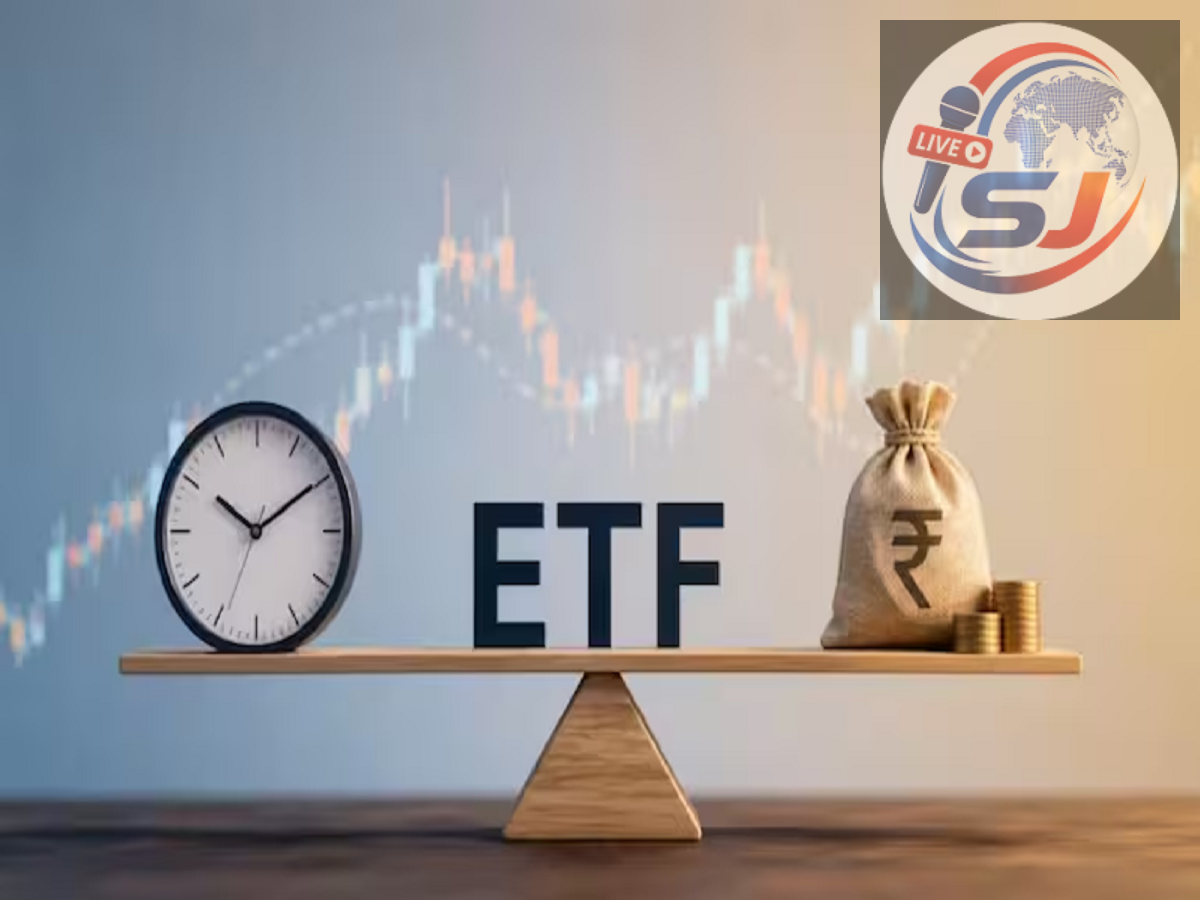
Investors often face the same dilemma when they have money ready to put into the stock market: should they invest now or wait for prices to fall?
The question can become even more tempting with Exchange Traded Funds (ETFs) because their prices move throughout the trading session. An investor may postpone a purchase believing that a better entry point will appear tomorrow, next week or after the next market correction.
For long-term investors, however, repeatedly waiting for the "perfect" market level can create another risk — staying out of the market when an important rally begins.
Instead of trying to predict every market high and low, investors can consider a disciplined approach involving regular investments, diversification and careful execution when buying ETFs.
Why ETF Investors Think More About Market Timing
ETFs differ from conventional mutual funds in an important way.
A mutual fund's Net Asset Value (NAV) is generally determined once for the day, while ETFs are listed on stock exchanges and can be bought and sold during market hours. Their traded prices can therefore keep changing throughout the session.
Watching those movements can make investors feel that selecting the exact time of purchase is crucial.
For a short-term trader, intraday price movements can certainly matter. But someone investing for several years has a different objective.
A long-term investor is generally more concerned with building wealth over time than capturing a small price movement during a single trading session.
Waiting for the 'Perfect Entry' Has Its Own Risk
Market corrections can provide opportunities, but accurately predicting them is difficult.
An investor waiting for a major fall may remain in cash while the market continues rising. By the time that person finally decides to invest, ETF prices may already be considerably higher.
Another problem is that market returns do not necessarily arrive evenly.
Periods of strong performance can occur in relatively short bursts. According to the source article, data across different market indices suggests that outperformance can come in patches. Missing an important rally while waiting on the sidelines can consequently hurt long-term returns.
This is why long-term investing often focuses more on time spent invested than on successfully predicting the perfect entry date.
ETF SIP Can Reduce the Pressure of Choosing One Entry Point
One way to deal with uncertainty is to invest systematically instead of putting the entire amount into an ETF at once.
An investor can allocate a fixed sum at regular intervals — effectively following an ETF SIP-style strategy.
Suppose an investor decides to put ₹10,000 into an ETF every month. In months when the ETF price is higher, the same investment buys fewer units. When the market declines, ₹10,000 can purchase more units.
Over time, purchases take place at several different price levels rather than depending entirely on one entry point.
This approach is commonly associated with rupee-cost averaging and can reduce the pressure of trying to identify the market's lowest point.
It does not eliminate investment risk or guarantee profits, but it provides a disciplined framework for long-term investing. The source specifically identifies periodic ETF investing as one method for reducing market-timing risk.
Diversification Matters Along With Regular Investing
Regular investing alone does not automatically make a portfolio well balanced.
Investors should also consider asset allocation and diversification.
Putting the entire portfolio into one narrow market segment can expose an investor to significant volatility if that segment performs poorly.
Depending on the investor's objectives and risk profile, diversification can involve spreading investments across different segments or considering hybrid approaches.
The source notes that diversification across ETF segments or the use of hybrid index strategies can help manage volatility. It also cites data indicating that hybrid indices can show substantially lower volatility than pure equity indices.
The appropriate allocation, however, depends on factors including investment horizon, financial goals and ability to tolerate losses.
Avoid Trading Immediately After the Market Opens
Long-term investors may not need to predict the market's direction, but the actual execution of an ETF trade still deserves attention.
The source suggests avoiding the first 5-10 minutes after the market opens and the final 5-10 minutes before it closes.
These periods can experience greater price fluctuations and potentially weaker liquidity, which may affect the price at which an ETF order is executed.
Waiting until trading conditions become more settled can therefore be useful when placing an ETF order.
Check Bid-Ask Spread and iNAV Before Buying
Investors should not judge an ETF solely by the number flashing on the trading screen.
Two useful factors to examine are the bid-ask spread and indicative Net Asset Value (iNAV).
The bid-ask spread is the gap between the price buyers are offering and the price sellers are asking. A wide spread can increase the effective cost of entering or exiting an ETF.
Investors should also compare the ETF's traded market price with its indicative NAV where relevant.
If an ETF is trading at a substantial premium to its iNAV, buying at that moment could mean paying considerably more than the indicative value of the underlying portfolio.
The source therefore recommends checking the bid-ask spread and iNAV instead of focusing only on the clock while placing a trade.
Investing in Stages Can Help With a Large Lump Sum
Someone with a large amount available for investment does not necessarily have to deploy everything on the same day.
The money can potentially be invested in stages.
For example, rather than putting an entire lump sum into an ETF at one market level, an investor could divide it into several portions and invest those amounts over a planned period.
If markets fall after the first investment, later instalments can purchase units at lower prices. If markets rise, at least some of the money is already invested.
This strategy cannot guarantee a better return than investing the entire amount immediately, but it can reduce the psychological pressure associated with making one large market-timing decision.
Long-Term Discipline May Matter More Than Finding the Bottom
For long-term ETF investors, constantly searching for the lowest possible market level can become counterproductive.
A more structured approach can involve investing regularly, maintaining suitable diversification, checking ETF liquidity and valuation indicators when placing orders, and remaining focused on long-term financial goals.
Market declines will occur, and investors should be prepared for volatility rather than assuming that any strategy can remove it.
The key distinction is between market timing and disciplined investing. Trying to predict exactly when prices will rise or fall requires making repeated forecasts correctly. A systematic approach instead accepts that short-term market movements are uncertain and spreads investment decisions over time.
For investors with a horizon of several years, consistency may therefore be more practical than indefinitely waiting for a "perfect" entry point.
Disclaimer: ETF and stock-market investments are subject to market risks, and returns are not guaranteed. This article is for informational purposes only and should not be considered investment advice. Investors should evaluate their financial goals, investment horizon and risk tolerance and consider consulting a qualified financial adviser before investing.