
EPFO Wage Ceiling Raised to ₹25,000: Why Your Take-Home Salary May Be Lower and PF Savings Higher
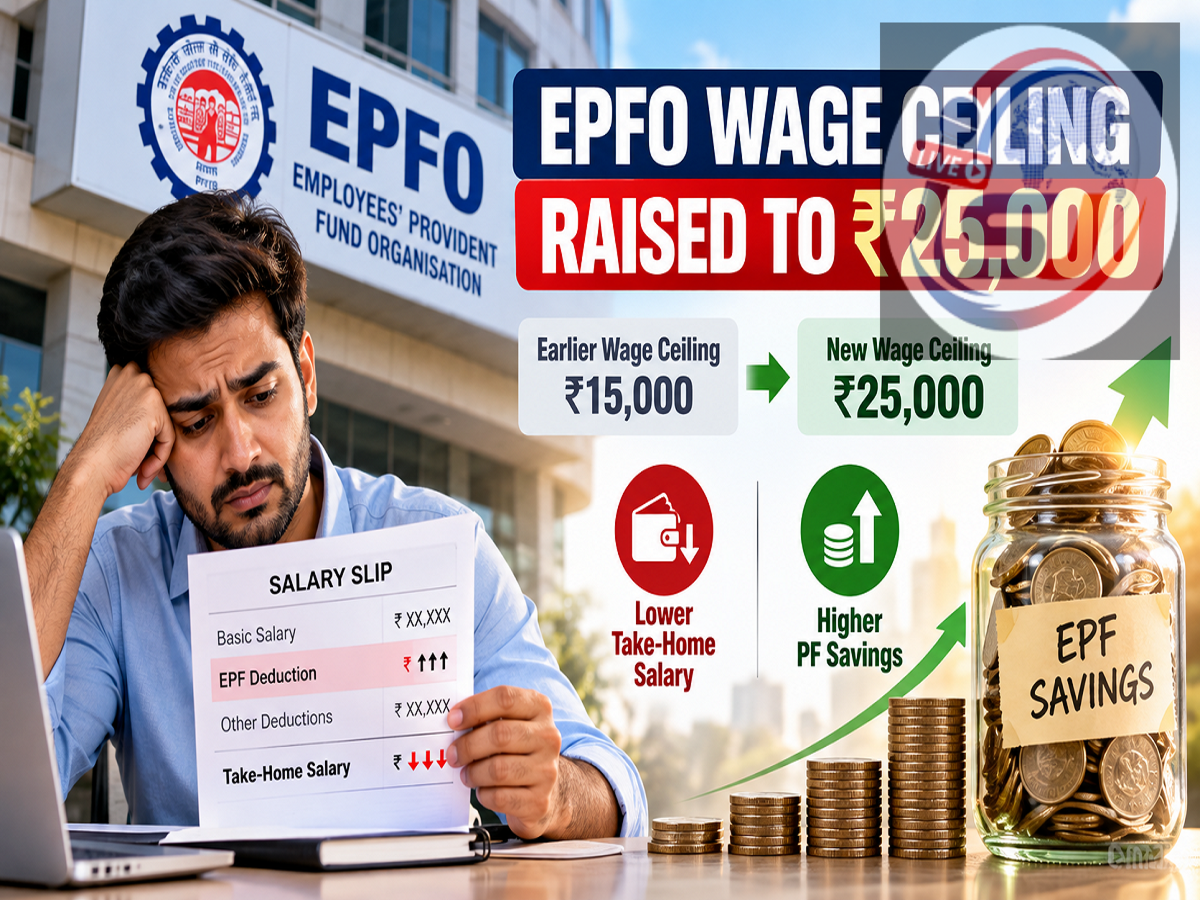
EPFO Wage Ceiling Update: Employees who noticed a lower take-home salary for September may find the reason in their provident fund deduction. Following the increase in the EPFO wage ceiling from ₹15,000 to ₹25,000 per month, the mandatory PF contribution can now be calculated on a higher salary base for employees covered by the revised limit.
For an employee whose Basic Salary plus Dearness Allowance (DA) is ₹25,000 or more, the employee-side contribution at 12% can rise from ₹1,800 to ₹3,000 per month. That translates into an additional deduction of ₹1,200 from monthly salary compared with the earlier ₹15,000 ceiling.
While this may reduce the amount credited to an employee's bank account every month, the change also increases the amount being directed towards long-term retirement benefits.
How PF Contribution Changes Under the ₹25,000 Wage Ceiling
Under EPF contribution rules, employees generally contribute 12% of eligible wages towards provident fund benefits, while the employer also makes a prescribed contribution.
Earlier, the statutory wage ceiling was ₹15,000 per month. At a 12% contribution rate, the employee contribution calculated on this ceiling worked out to:
₹15,000 × 12% = ₹1,800 per month
With the wage ceiling increased to ₹25,000, the corresponding calculation becomes:
₹25,000 × 12% = ₹3,000 per month
Therefore, for an employee to whom the full ₹25,000 ceiling applies, the difference in employee contribution is:
₹3,000 - ₹1,800 = ₹1,200 per month
This explains why some employees may see a higher PF deduction and consequently a lower take-home salary.
How Much Could Your Monthly Take-Home Salary Change?
For an eligible employee earning Basic Salary plus DA of at least ₹25,000, the increase in the contribution base can result in an additional employee-side PF deduction of up to ₹1,200 per month.
For example, if ₹1,800 was previously being deducted from an employee's salary towards PF and the deduction has now increased to ₹3,000, the employee could receive ₹1,200 less as immediate take-home pay, assuming other salary components remain unchanged.
However, employees should check their payslip and PF passbook because the exact impact can depend on their salary structure, existing PF arrangement and the manner in which the employer structures its contribution.
Higher Contributions Can Strengthen Retirement Savings
The immediate reduction in disposable salary needs to be viewed alongside the increase in retirement-linked contributions.
At the ₹25,000 contribution base, the employee is contributing ₹1,200 more than under the previous ₹15,000 ceiling. The employer's statutory contribution is also calculated under the applicable EPF and EPS rules, meaning a greater amount can be directed towards the employee's overall retirement benefits.
Over a long working period, higher recurring contributions can make a significant difference to the amount accumulated for retirement.
What Happens to the EPS Pension Contribution?
The employer's contribution is divided according to the applicable rules between the Employees' Provident Fund and the Employees' Pension Scheme (EPS).
With a ₹25,000 pensionable wage ceiling, an 8.33% calculation works out to approximately ₹2,082.50 per month. This is higher than the amount calculated on the earlier ₹15,000 ceiling.
A higher pensionable salary base can therefore affect pension-related contributions and, subject to EPFO's pension calculation rules, may influence the pension benefit available after retirement.
Employees should remember that the eventual EPS pension is not determined by one month's contribution alone. Pensionable salary, eligible service period and other applicable conditions are also important in calculating the final benefit.
EPF Interest Can Add to the Long-Term Benefit
Another important factor is the interest earned on eligible EPF balances. At an annual EPF interest rate of 8.25%, higher contributions can potentially create a substantially larger retirement corpus over the years because both regular contributions and accumulated interest remain invested.
The impact becomes more significant over longer periods due to compounding. Even an additional monthly contribution that appears relatively small today can add up to a considerable amount over 10, 20 or 30 years.
The actual final corpus will, however, depend on factors including the interest rates declared for future financial years, continuity of contributions, salary changes and withdrawals.
What Employees Should Check in Their September Payslip
Employees who received a lower salary should compare their latest payslip with the previous month's statement. Check the Basic Salary, DA, employee PF contribution and employer contribution carefully.
The EPFO passbook should also be reviewed once the latest contribution is reflected to confirm how the amount has been credited between the applicable retirement benefit components.
In simple terms, a higher PF deduction means less money may be available as immediate monthly take-home salary, but more of the employee's earnings are being directed towards long-term retirement security. For employees covered by the ₹25,000 wage ceiling, understanding the new contribution calculation can help explain the change visible in their salary slips.