
EPFO Wage Ceiling Raised to ₹25,000: See PF Contribution on ₹18,000, ₹20,000 and ₹25,000 Pay
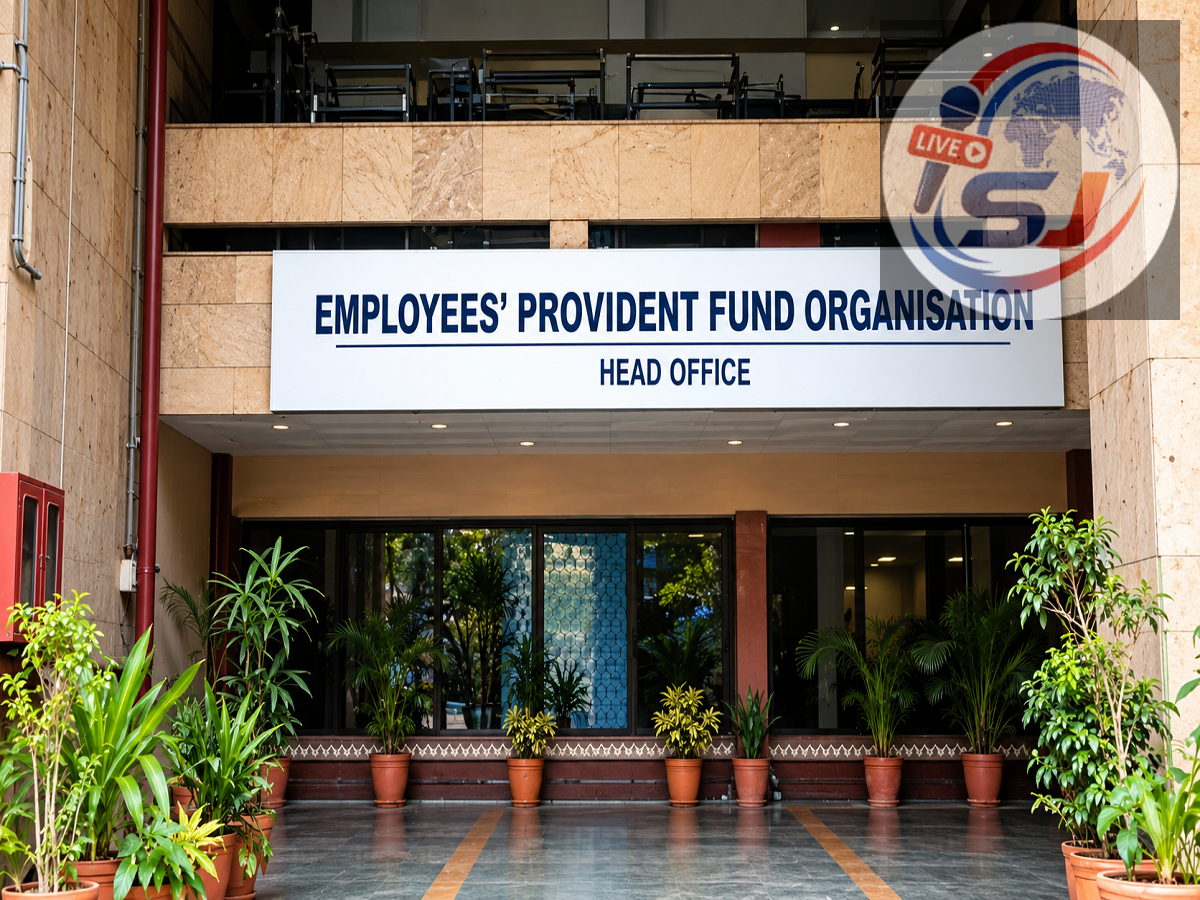
A change in the wage ceiling for mandatory Employees' Provident Fund Organisation (EPFO) coverage could bring a larger group of salaried workers within the social security framework. According to the information cited in the report, the central government has increased the monthly wage ceiling for mandatory EPFO coverage from ₹15,000 to ₹25,000, with the revised limit stated to be effective from September 17, 2026.
The revision is particularly relevant for employees whose PF-eligible wages are above the previous ₹15,000 threshold but do not exceed ₹25,000 per month. Depending on the applicable statutory provisions, more workers in this salary range may now come within mandatory EPFO coverage.
But how does the calculation work for an employee earning PF-eligible wages of ₹18,000, ₹20,000 or ₹25,000? Here is a simple explanation based on the standard 12% employee contribution rate.
What Has Changed in the EPFO Wage Ceiling?
The earlier wage ceiling for mandatory EPF coverage had remained at ₹15,000 per month since September 2014, according to the PIB information cited in the source report.
The revised ceiling has been stated as ₹25,000 per month. This means the threshold used for determining mandatory coverage has increased by ₹10,000.
The change is significant for workers whose PF-eligible monthly wages fall between ₹15,000 and ₹25,000, although the exact treatment of an individual employee can depend on EPF rules, membership status and other applicable provisions.
Employees should also remember that PF-eligible wages are not necessarily the same as the total monthly salary or CTC shown in an employment offer.
How Is an Employee's EPF Contribution Calculated?
Under the standard EPFO contribution structure, an employee generally contributes 12% of PF-eligible wages towards EPF. The employer also makes a contribution in accordance with the applicable rules.
For employees, the relevant amount is deducted from salary and deposited towards their provident fund contribution.
A lower contribution rate of 10% can apply to certain specified establishments or categories. Therefore, the calculations below use the standard 12% rate and should be understood as illustrative examples for employees to whom that rate applies.
PF Calculation on ₹18,000 Monthly Eligible Wages
Suppose an employee has PF-eligible wages of ₹18,000 per month and the standard 12% contribution applies.
The calculation would be:
₹18,000 × 12% = ₹2,160
In this example, the employee's monthly EPF contribution would be ₹2,160.
Over 12 months, assuming the same PF-eligible wages and contribution rate throughout the year, the employee-side contribution alone would amount to ₹25,920.
This annual figure does not include the employer's contribution or interest credited under applicable EPFO rules.
How Much PF Would Be Deducted on ₹20,000?
For PF-eligible monthly wages of ₹20,000, the calculation at the standard 12% employee contribution rate is:
₹20,000 × 12% = ₹2,400
Therefore, ₹2,400 would represent the employee's monthly EPF contribution under this example.
If the contribution remains unchanged for a full year, the employee would contribute ₹28,800 over 12 months.
PF Contribution on ₹25,000 Eligible Monthly Wages
At PF-eligible wages of ₹25,000 per month, the same calculation gives:
₹25,000 × 12% = ₹3,000
Accordingly, the employee-side contribution works out to ₹3,000 per month when the standard 12% rate is calculated on the entire ₹25,000 PF-eligible wage.
At this level, the employee's contribution would total ₹36,000 over 12 months if the eligible wages and contribution rate remained unchanged.
PF Contribution at a Glance
| PF-Eligible Monthly Wages | Employee Contribution at 12% | Illustrative Annual Contribution |
|---|---|---|
| ₹18,000 | ₹2,160 | ₹25,920 |
| ₹20,000 | ₹2,400 | ₹28,800 |
| ₹25,000 | ₹3,000 | ₹36,000 |
The annual figures above represent only the employee's contribution calculated for 12 months. They should not be confused with the total amount eventually accumulated in the EPF account.
Who Could Be Most Affected by the Higher Ceiling?
The most direct impact would be on eligible employees earning more than the earlier ₹15,000 wage threshold but up to the revised ₹25,000 ceiling.
With a higher mandatory coverage threshold, more eligible workers could potentially come under the EPFO social security framework in accordance with the applicable statutory conditions.
EPFO-linked benefits are not limited to retirement savings. Depending on eligibility and the relevant rules, the broader framework can include provident fund benefits, pension coverage through the Employees' Pension Scheme (EPS), and insurance protection through the Employees' Deposit Linked Insurance (EDLI) Scheme.
Does a ₹25,000 Salary Automatically Mean ₹3,000 PF Deduction?
Not necessarily. This is an important distinction for employees.
The ₹3,000 figure applies to the example where ₹25,000 is the employee's PF-eligible monthly wage and the standard 12% contribution is calculated on the full amount.
An employee's gross salary, take-home salary and CTC can contain several components, so a ₹25,000 total salary does not automatically establish that PF will be calculated on the entire ₹25,000.
Existing membership status, the establishment's applicable contribution rate, the definition of PF wages and other statutory conditions can also affect the actual contribution.
Employees who want to know their exact deduction should check their salary slip and EPF passbook or seek clarification from their employer's payroll or HR department.
Why the Revised Ceiling Matters for Employees
A higher EPFO wage ceiling can widen the reach of formal social security protection among salaried workers. For employees newly falling within the applicable coverage rules, monthly take-home pay may be affected by the employee contribution, while money is simultaneously directed towards long-term provident fund savings and associated social security benefits.
For a worker with ₹18,000 in PF-eligible monthly wages, a 12% employee contribution works out to ₹2,160. At ₹20,000, it becomes ₹2,400, while a contribution calculated on ₹25,000 comes to ₹3,000 per month.
The actual deduction appearing on an employee's payslip should ultimately be determined using the applicable EPFO provisions and the employee's PF-eligible wage structure rather than gross salary alone.