
EPFO PF Withdrawal Rules 2026: 12-Month Wait for Full Settlement, 36 Months for EPS; Know the 25% Balance Rule
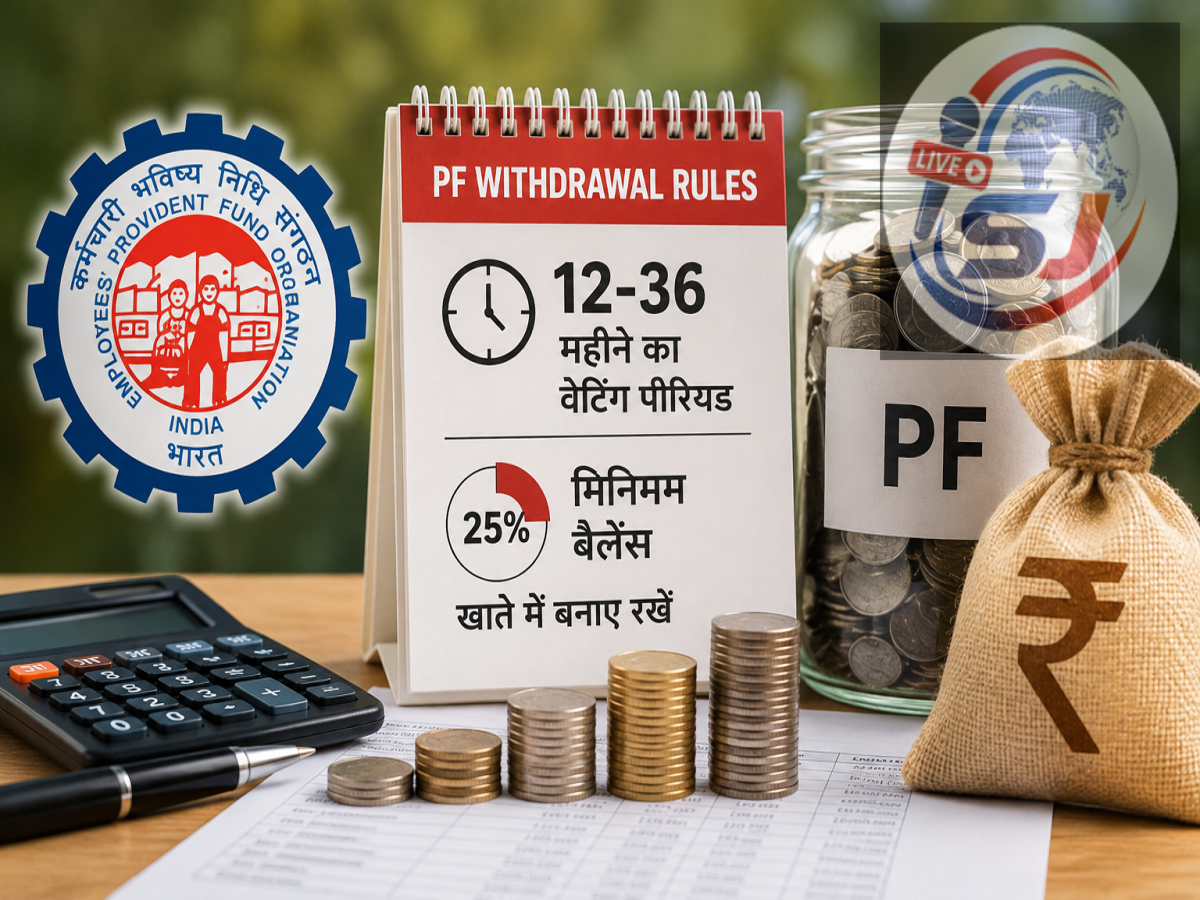
EPFO PF Withdrawal Rules 2026: Provident Fund withdrawal rules have undergone important changes, affecting how quickly employees can access their entire retirement corpus after leaving a job. Under the revised framework, a 12-month waiting period applies to premature final EPF settlement, while withdrawal benefits under the Employees’ Pension Scheme (EPS) carry a 36-month waiting period. The government recently reiterated these provisions in Parliament.
However, this does not mean an unemployed EPFO member has to wait a full year before accessing any PF money. The rules provide for substantial partial withdrawals while keeping a portion of the corpus protected for retirement.
What Is the New 12-Month PF Withdrawal Rule?
Under the revised rules, an employee leaving a job cannot immediately withdraw the entire EPF corpus through premature final settlement.
The government has stated that the waiting period for premature final EPF settlement is 12 months. This is intended to preserve retirement savings and encourage members to transfer their PF balance when they move to another job instead of closing the account.
For an unemployed member, up to 75% of the EPF balance can be accessed, while the remaining portion is protected until the applicable waiting period is completed.
What Does the 25% Minimum Balance Rule Mean?
One of the key elements of the revised withdrawal framework is protection of 25% of the PF corpus in relevant withdrawal situations.
In practical terms, members facing unemployment can access up to 75% of their balance, while the remaining 25% continues in the account. The protected amount continues to form part of the member's retirement savings and earn applicable EPF interest.
The remaining amount can become available for final settlement once the prescribed conditions, including the unemployment waiting period, are met.
EPS Withdrawal Now Has a 36-Month Waiting Period
The waiting period is even longer for withdrawal benefits under the Employees’ Pension Scheme (EPS).
According to the government's parliamentary response, a 36-month waiting period applies to EPS withdrawal benefits.
EPF and EPS should not be confused. EPF primarily builds a retirement corpus, whereas EPS is designed to provide pension benefits subject to eligibility and service conditions.
Can You Withdraw PF During the Waiting Period?
Yes. EPFO has simultaneously simplified provisions for partial withdrawals and advances.
The withdrawal framework broadly covers three categories:
-
Essential needs – including medical treatment, education and similar requirements
-
Housing needs – including eligible housing-related expenses
-
Special circumstances – providing greater flexibility for members facing financial requirements
The government has also stated that members can access up to 75% of their balance twice a year under special circumstances without assigning a specific reason, subject to the applicable rules.
PF Withdrawal Rules 2026 at a Glance
| Rule | Key Provision |
|---|---|
| Premature final EPF settlement | 12-month waiting period |
| EPS withdrawal benefit | 36-month waiting period |
| Access during unemployment | Up to 75% subject to applicable rules |
| Protected balance | 25% in relevant cases |
| Partial withdrawals | Allowed for specified needs |
| Main categories | Essential, housing and special circumstances |
| Special-circumstance withdrawal | Up to 75%, twice a year, subject to rules |
Why Has EPFO Changed the Withdrawal Framework?
The objective is to strike a balance between giving employees access to money during financial emergencies and protecting retirement savings.
Allowing members to empty their PF accounts soon after losing or leaving a job can significantly reduce their long-term retirement corpus. Retaining part of the balance allows that money to remain invested and continue earning EPF interest.
At the same time, the revised framework provides access to a substantial portion of the corpus when members need money for unemployment, medical emergencies, education, housing and other permitted requirements.
What Should Employees Do After Changing Jobs?
Employees joining another EPF-covered organisation generally do not need to close their old PF account. Their accumulated PF can instead be transferred and continued under their UAN.
This helps preserve continuity of retirement savings and can also be important for service-linked EPF and EPS benefits.
Members should keep their UAN, Aadhaar, bank account and KYC details updated to reduce problems when filing online claims.
Important Point for EPFO Members
The headline “12-month waiting period” should not be interpreted to mean that no PF money can be withdrawn for one year after job loss. The restriction primarily concerns premature final settlement of the entire balance. Partial access remains available under the applicable provisions.
Similarly, the 36-month rule relates to EPS withdrawal benefits, not ordinary partial withdrawals from the EPF account.
Employees planning a withdrawal should check their specific eligibility and the latest claim options on the official EPFO website before submitting a request, as the applicable amount can depend on the reason for withdrawal, service history and employment status.
Disclaimer: EPF and EPS rules are subject to statutory conditions and government notifications. Members should verify the latest provisions with EPFO before making financial or retirement decisions.