
EPFO New Wage Ceiling 2026: ₹25,000 Salary Limit Reported, Check PF Deduction and Pension Benefits
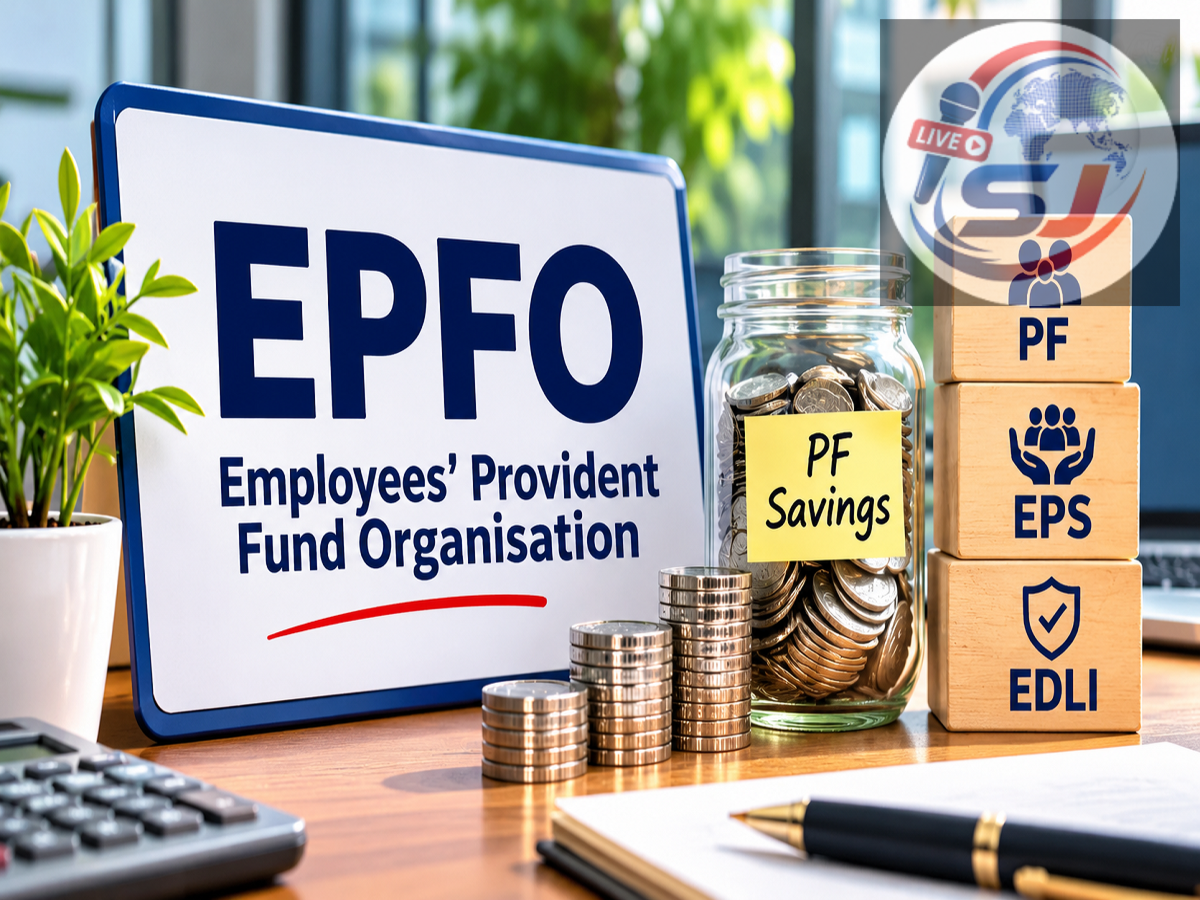
EPFO Wage Ceiling Update 2026: Employees earning between ₹15,000 and ₹25,000 per month could see important changes to their provident fund coverage following reports of an increase in the Employees' Provident Fund Organisation (EPFO) wage ceiling.
According to a Live Hindustan report published on November 5, 2026, the Ministry of Labour and Employment has raised the wage ceiling for Employees' Provident Fund (EPF) coverage from ₹15,000 to ₹25,000 per month, with the change reportedly effective from September 17, 2026.
The reported revision could bring more employees within the mandatory coverage of three major social security schemes: Employees' Provident Fund (EPF), Employees' Pension Scheme (EPS) and Employees' Deposit-Linked Insurance (EDLI).
However, employees should distinguish between the wage ceiling used to determine coverage and the salary amount on which PF contributions are calculated. An increase in the coverage threshold does not necessarily mean that every employee's monthly PF deduction will automatically increase.
EPFO Wage Ceiling Increased From ₹15,000 to ₹25,000
The Central Government approved the revision on September 16, 2026, and the new wage ceiling became effective on September 17, 2026.
The change was formally notified through Gazette Notification S.O. 5109(E), issued under the Code on Social Security, 2020.
According to the Ministry of Labour and Employment, the revision is expected to bring more than 51 lakh additional employees under mandatory EPFO coverage.
Here is a comparison of the previous and revised limits.
| Particulars |
Earlier Rule |
Revised Rule |
|---|---|---|
| Statutory EPF wage ceiling |
₹15,000 |
₹25,000 |
| Effective date |
September 2014 |
September 17, 2026 |
| Employee PF contribution at 12% of ceiling |
₹1,800 |
₹3,000 |
| Maximum standard employer EPS contribution |
₹1,250 |
Approximately ₹2,083 |
The contribution figures are based on the standard rates and applicable scheme conditions.
Which Employees Will Benefit From the New Rule?
The revised ceiling is particularly important for employees whose applicable PF wages fall between ₹15,000 and ₹25,000 per month.
Previously, a newly joining employee earning above ₹15,000 could remain outside mandatory EPF coverage, subject to the relevant membership rules.
With the new threshold, eligible employees earning up to ₹25,000 can come within the mandatory social security framework at covered establishments.
This means more workers may become eligible for retirement savings, pension-related benefits and insurance protection.
However, the ceiling is based on wages defined under the applicable rules, not necessarily an employee's total CTC or take-home salary.
What Happens to Employees Earning Below ₹15,000?
Employees earning less than ₹15,000 per month continue to remain within the applicable EPFO coverage framework.
The increase to ₹25,000 does not remove existing protection for lower-paid workers.
Instead, the change expands the upper wage threshold, potentially covering employees who were previously excluded because their wages exceeded ₹15,000.
Workers already enrolled in EPF should continue checking their contribution records and employment details through official EPFO services.
EPF, EPS and EDLI: Understanding the Three Benefits
The EPFO administers three important social security schemes.
Employees' Provident Fund (EPF) is designed to build retirement savings through contributions from employees and employers. The accumulated balance earns interest at the applicable declared rate.
Employees' Pension Scheme (EPS) provides pension-related benefits to eligible members and their families, subject to qualifying service and other scheme conditions. The applicable employer contribution is directed towards the pension scheme.
Employees' Deposit-Linked Insurance (EDLI) provides insurance protection to eligible employees' nominees or beneficiaries in the event of death during covered employment.
The revised wage ceiling expands access to these protections, subject to individual eligibility and the applicable regulations.
Will Your Monthly PF Deduction Increase?
For some employees, the revised ceiling may increase the amount deducted from monthly salary.
Under the standard contribution arrangement, employees contribute 12% of applicable PF wages.
For example, an employee whose PF wages are ₹20,000 could have a monthly contribution of ₹2,400.
Previously, a contribution restricted to the ₹15,000 ceiling would amount to ₹1,800.
The difference is ₹600 per month.
However, employees who were already contributing on their full applicable wages may not experience the same change.
Example of Monthly PF Contributions
| Monthly PF Wages |
Employee Contribution at 12% |
|---|---|
| ₹15,000 |
₹1,800 |
| ₹18,000 |
₹2,160 |
| ₹20,000 |
₹2,400 |
| ₹22,000 |
₹2,640 |
| ₹25,000 |
₹3,000 |
These figures are illustrative and assume the standard 12% contribution rate.
How Will the New Ceiling Affect EPS Contributions?
The Employees' Pension Scheme is funded through the applicable employer contribution.
Under the revised wage ceiling, the standard maximum employer contribution towards EPS can rise from approximately ₹1,250 to ₹2,083 per month, subject to eligibility and scheme rules.
This does not mean that every employee will automatically receive a higher pension.
The actual pension depends on the pension calculation rules, eligible service period, pensionable wages and other conditions.
Higher PF Contributions May Help Build Retirement Savings
One potential benefit of the revised ceiling is the opportunity to accumulate a larger retirement corpus.
When employees and employers contribute more to provident fund accounts, the amount available for long-term savings can increase.
The final balance will depend on contribution amounts, employment duration, withdrawals and the interest rates declared for the relevant financial years.
Employees should also understand that higher mandatory deductions may reduce their immediate take-home salary, depending on their existing contribution arrangement.
What Should Employers Do Under the New EPFO Rules?
Employers covered by the EPFO framework need to ensure that their payroll and statutory compliance systems reflect the revised wage ceiling.
According to official guidance issued through EPFO regional offices, employers should identify newly eligible employees, update contribution calculations and complete the required enrolment and reporting formalities.
They should also ensure that employee identification and KYC details are correctly recorded.
The revised threshold applies from September 17, 2026, making the effective date important for payroll compliance.
How Can Employees Check Their PF Contributions?
Employees can verify their PF records using the official EPFO website.
They should review their Universal Account Number (UAN), employment details and available passbook information.
If the PF deduction shown on a salary slip differs from the contribution credited to the account, the employee should seek clarification from the employer's payroll or HR department.
Workers can also use official EPFO grievance channels for unresolved contribution-related issues.
Conclusion
The increase in the EPFO statutory wage ceiling from ₹15,000 to ₹25,000 represents an important change for salaried employees.
Effective September 17, 2026, the revision is expected to expand mandatory social security coverage to more than 51 lakh additional workers.
Employees earning between ₹15,000 and ₹25,000 in applicable PF wages may now come within the EPF, EPS and EDLI framework, while some existing members may see higher monthly contributions.
Employees should review their salary structure, PF contribution base and employer records to understand how the revised ceiling affects their take-home pay and retirement savings.