
EPFO Issues Fraud Warning: PF Members Told to Avoid Fake Links, OTP Requests and Suspicious Messages
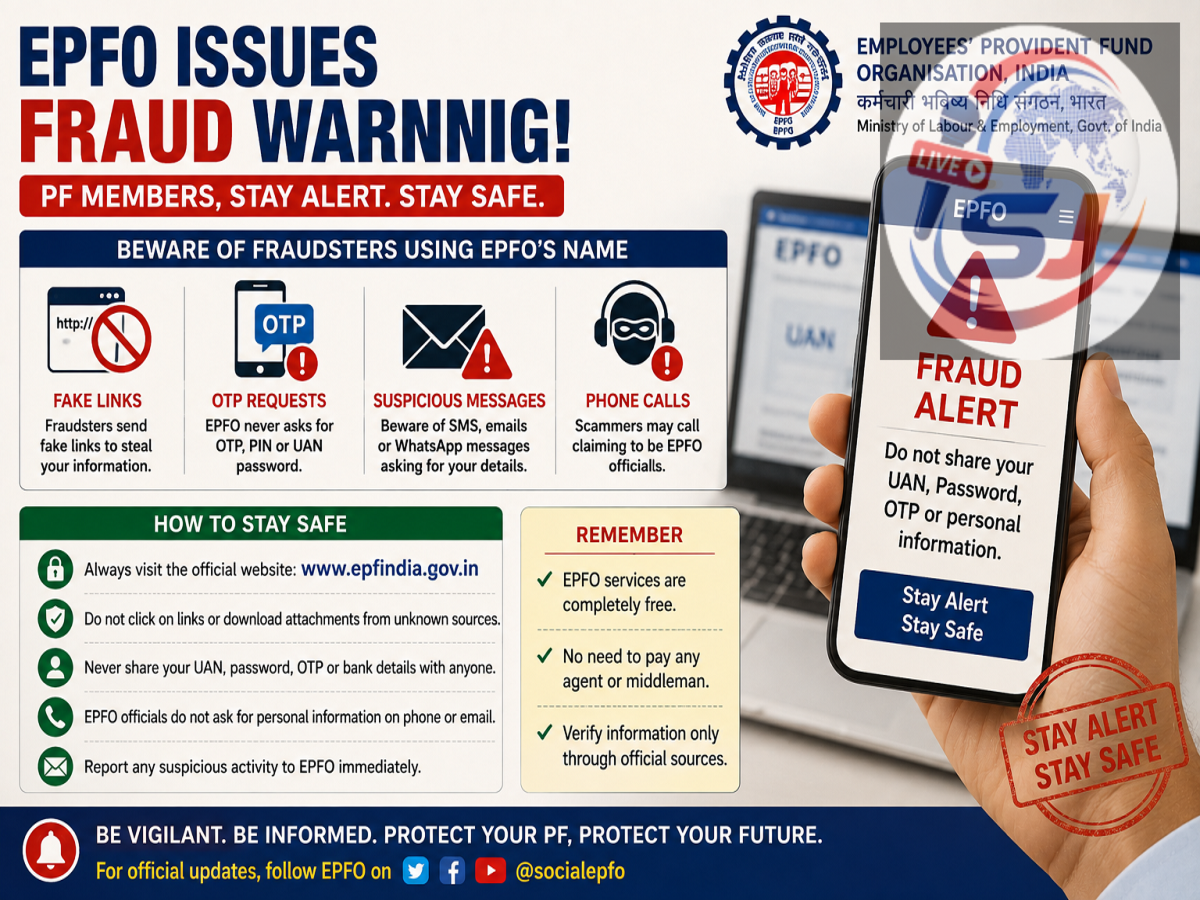
The Employees’ Provident Fund Organisation (EPFO) has issued a fresh cybersecurity warning for its members, urging them to remain cautious while dealing with suspicious links, messages and calls claiming to be related to provident fund services.
Online fraudsters frequently attempt to impersonate trusted organizations to obtain sensitive personal or financial information. EPFO members can become targets because their provident fund accounts are connected with important details such as Universal Account Numbers (UAN), Aadhaar information and bank accounts.
Through its latest awareness message, EPFO has reminded members to “think before you click” and avoid interacting with unknown links or people seeking confidential information in the organization's name.
The warning is particularly important for employees and pension-related account holders who regularly use digital services for checking PF balances, submitting claims, updating account details or accessing other EPFO facilities.
EPFO Warns Members About Fake Links
One of the key points in EPFO's alert is the danger posed by fraudulent links.
Cybercriminals can send links through SMS, WhatsApp, email or social media that appear to direct users to an official provident fund website. In reality, such links may lead to fake pages designed to steal login credentials and personal information.
These websites can sometimes closely resemble legitimate portals, making it difficult for an unsuspecting user to identify the fraud immediately.
Members should therefore avoid clicking links received from unknown or suspicious sources, even if the message claims that urgent action is required to prevent their PF account from being blocked.
EPFO Will Not Ask for Your OTP Through Calls or Messages
Members should be extremely suspicious if someone claiming to represent EPFO asks for an OTP or other confidential information.
EPFO has repeatedly cautioned users against sharing sensitive information through phone calls, WhatsApp, SMS, social media or unsolicited emails.
An OTP is a security credential intended to authorize a particular action. Sharing it with another person can potentially allow unauthorized transactions or changes to an account.
Even when a caller appears to know basic details about the member, this should not be treated as proof that the person is genuinely associated with EPFO.
Never Share These Sensitive Details
PF account holders should treat their personal and financial credentials as confidential.
Information such as Aadhaar details, PAN information, UAN credentials, passwords, OTPs and banking credentials should not be provided in response to unsolicited communication.
Bank account numbers and other details may legitimately be required when members themselves use authorized EPFO services, but users should enter such information only on genuine official platforms.
Members should also remember that a fraudster may create urgency by claiming that their PF account, pension, withdrawal request or KYC verification will be suspended unless they immediately provide information.
Such pressure tactics are a common feature of phishing scams.
Beware of Fake PF Withdrawal Assistance
Another potential fraud involves people offering to help members withdraw their provident fund money.
A scammer may contact a PF member and claim that a withdrawal request has been approved, a refund is pending or additional verification is necessary to release the money.
The fraudster could then ask the member to click a link, download an application or share an OTP.
PF members should avoid such offers and initiate claims only through authorized EPFO channels.
Members should also be cautious of people promising to speed up a claim in exchange for an upfront payment.
Fake KYC Messages Can Also Be Dangerous
KYC-related warnings are commonly used to frighten customers across banking and financial services, and PF accounts are no exception.
A fraudulent message might claim that the member's Aadhaar, PAN or bank details need immediate verification. It may warn that failure to complete the process within a few hours will result in account suspension.
The message then provides a link leading to a fake portal.
Instead of using that link, members should independently access the official EPFO platform and check whether any genuine action is pending.
This simple habit can significantly reduce the risk of phishing.
Check the Website Carefully Before Entering Details
Fraudulent websites may use logos, colors and layouts that resemble an official government portal.
However, the website address can reveal important clues.
Users should check the domain carefully rather than trusting the appearance of the webpage. Typographical errors, unusual domain names, unexpected redirects and requests for unnecessary banking information can all be warning signs.
Searching for EPFO through random advertisements or clicking sponsored links can also create unnecessary risk. Members should access the official portal directly through trusted government sources.
Do Not Install Unknown Apps for PF Services
Fraudsters may also persuade victims to install mobile applications under the pretext of completing PF verification, receiving a refund or resolving an account problem.
Some malicious applications can potentially gain access to SMS messages, notifications, contacts or other information stored on a smartphone.
Remote-access applications are particularly risky when a stranger instructs a user to install them and then asks for permissions.
EPFO members should use only authorized digital platforms for provident fund services and should never allow an unknown caller to remotely control their phone.
What to Do If You Receive a Suspicious EPFO Message
If a message claiming to be from EPFO asks for an OTP, password or sensitive financial information, do not respond immediately.
Avoid clicking any link included in the message. Instead, open the official EPFO platform independently and check your account status.
Members who suspect that they have already shared sensitive information should take immediate steps to protect their accounts. Passwords should be changed where necessary, and the relevant bank or financial institution should be contacted if banking credentials have been compromised.
Suspected cyber fraud should also be reported through the appropriate official cybercrime channels.
Acting quickly can be important, particularly if unauthorized financial activity has already occurred.
EPFO's Key Message: Think Before You Click
As more provident fund services move online, digital convenience also creates opportunities for impersonation and phishing scams.
EPFO's latest warning serves as a reminder that members should not trust a communication simply because it uses the organization's name or logo.
Suspicious links, unsolicited OTP requests, fake KYC warnings and messages promising instant PF withdrawals should all be treated cautiously.
The safest approach is simple: never disclose confidential information in response to an unexpected call or message, avoid unknown links, and access PF services only through authorized platforms.
A few seconds spent verifying a message before clicking can prevent personal information and hard-earned provident fund savings from falling into the hands of cybercriminals.